Geomechanics, Streamlined.
© 2026 Geomechanics.io. All rights reserved.
Improved public–private collaboration, “smarter” financial risk sharing and better asset data are being urged by a new Lloyds Banking Group report to upgrade the UK’s ageing, climate-exposed infrastructure. The report calls for clearer allocation of construction, demand and climate risks between government, institutional investors and asset owners, moving beyond traditional PFI-style models. For engineers, this points to stronger requirements for whole-life performance data, climate stress testing of assets and more transparent condition information to unlock private capital for renewals and resilience upgrades.
Environmental charity the Environmental Law Foundation has warned it may launch a judicial review against the government’s new biodiversity net gain (BNG) regime, arguing that the statutory 10% uplift risks being treated as a de facto cap rather than a minimum. The challenge would focus on how planning authorities apply the Environment Act 2021 BNG provisions and Natural England’s statutory metric in development consents. For civil and geotechnical schemes, this could affect habitat creation areas, earthworks footprints and off-site BNG land agreements already being negotiated.
Carbon-focused procurement is emerging as a practical lever for low-carbon infrastructure, with clients increasingly writing embodied and whole-life carbon limits directly into tender documents alongside cost and programme. Contracting authorities are starting to require Environmental Product Declarations, PAS 2080-aligned carbon management plans and optioneering that compares low-clinker cements, recycled steel and alternative pavement designs on a carbon-per-functional-unit basis. For engineers and contractors, this shifts bid strategy towards quantifiable carbon performance, verifiable data and early supplier engagement rather than purely lowest capital cost.
Pressure on UK water resources is intensifying as Ofwat’s major projects senior director outlines a combined gated process for large strategic schemes, integrating regulatory approval with project delivery milestones. The approach is aimed at multi‑billion‑pound assets such as new reservoirs, regional transfer pipelines and advanced treatment works, where long construction lead times and climate‑driven demand uncertainty have previously deterred private finance. By tying funding decisions to clearly defined technical gates, Ofwat is seeking to give investors greater certainty on cost recovery while maintaining scrutiny of environmental impacts on rivers and aquifers.
Queensland has passed the Criminal Code (Dangerous Driving) and Other Legislation Amendment Act 2026, overhauling dangerous driving offences and substantially increasing penalties to prioritise victims’ rights. The package targets high‑risk behaviours such as excessive speed, drink and drug driving, and repeat offending, with tougher custodial terms and expanded circumstances where dangerous operation of a vehicle can be charged. For road and infrastructure planners, the shift signals stronger legal backing for engineering measures that manage speed, separate vulnerable users, and support enforcement technology on state-controlled roads.
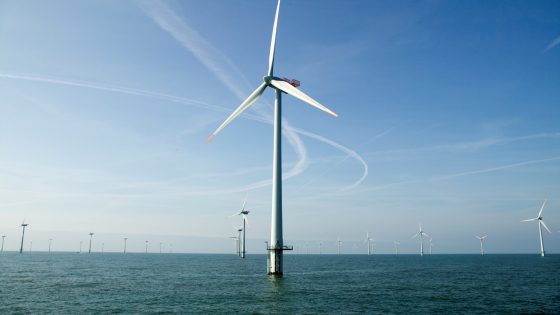
The House of Lords has launched an inquiry into “dunkelflaute” – multi-day periods of low wind and solar output – as the UK grid takes a larger share of variable renewables. Peers will examine how National Grid ESO plans to maintain security of supply during extended calm, overcast conditions, including the roles of long-duration storage, interconnectors and dispatchable plant. Civil and electrical engineers can expect scrutiny of network resilience assumptions, capacity adequacy margins and the cost–risk balance for backup infrastructure.
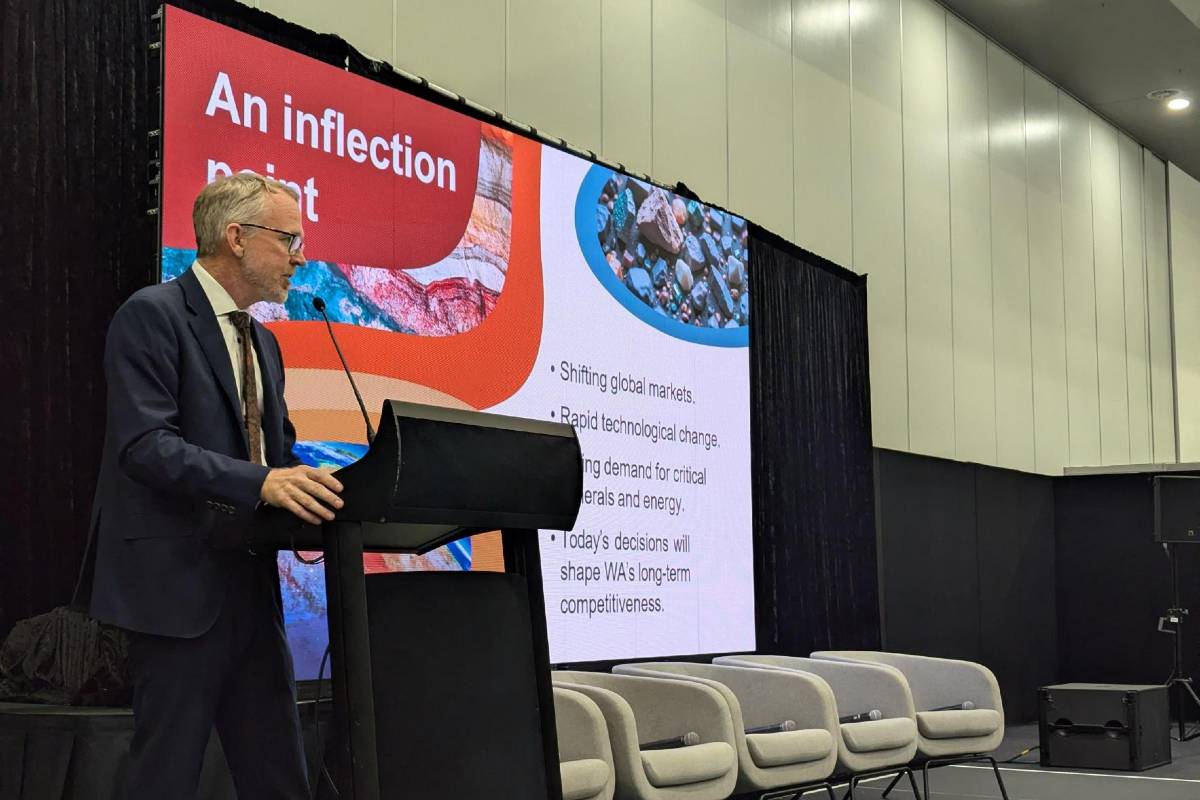
Western Australia’s Department of Mines, Petroleum and Exploration is pushing to cut mining project assessment times and embed more digital workflows in its approvals process, with director general Chris Shaw telling the WA Mining Conference 2026 that timeliness, effectiveness and efficiency are now core performance measures. The regulator is prioritising end‑to‑end online lodgement and tracking of applications, along with better data integration across environmental, geotechnical and safety assessments. For proponents, this signals stronger scrutiny of technical submissions but potentially faster decisions for complex greenfield and brownfield projects.
EU antitrust regulators have issued a formal statement of objections to MMG’s planned acquisition of Anglo American’s Brazilian nickel business, focusing on low-carbon ferronickel output from the Barro Alto mine and processing plant. The European Commission warns MMG, controlled via China Minmetals and SASAC, could reroute Barro Alto ferronickel to affiliated Chinese stainless steel producers, cutting volumes available to EU buyers. For smelters and alloy producers in Europe, the case signals closer scrutiny of supply concentration and long-term offtake structures in critical nickel feedstocks.
Financial author and forecaster Harry Dent blames the latest asset bubble on unprecedented US government money-printing, warning that another “couple trillion” dollars of stimulus will be less effective because investors have already seen repeated crisis rescues. He labels gold’s surge from about $1,600 to roughly $5,600 in three years as “the fastest, most extreme bubble in history”, far above its long-term trend. Dent expects a severe deflationary downturn would drag gold down alongside commodities and equities, though with smaller percentage losses.
Arup has become a Taskforce on Nature-related Financial Disclosures (TNFD) adopter, committing to publish nature-related risks and dependencies across its global project portfolio by the end of 2027. The consultancy plans to embed TNFD-aligned screening into project design and delivery, covering impacts on ecosystems such as wetlands, river catchments and urban green corridors. For geotechnical and civil teams, this signals earlier constraints mapping around biodiversity, soil and groundwater, and more explicit reporting of nature-related liabilities alongside traditional geotechnical and flood risk assessments.
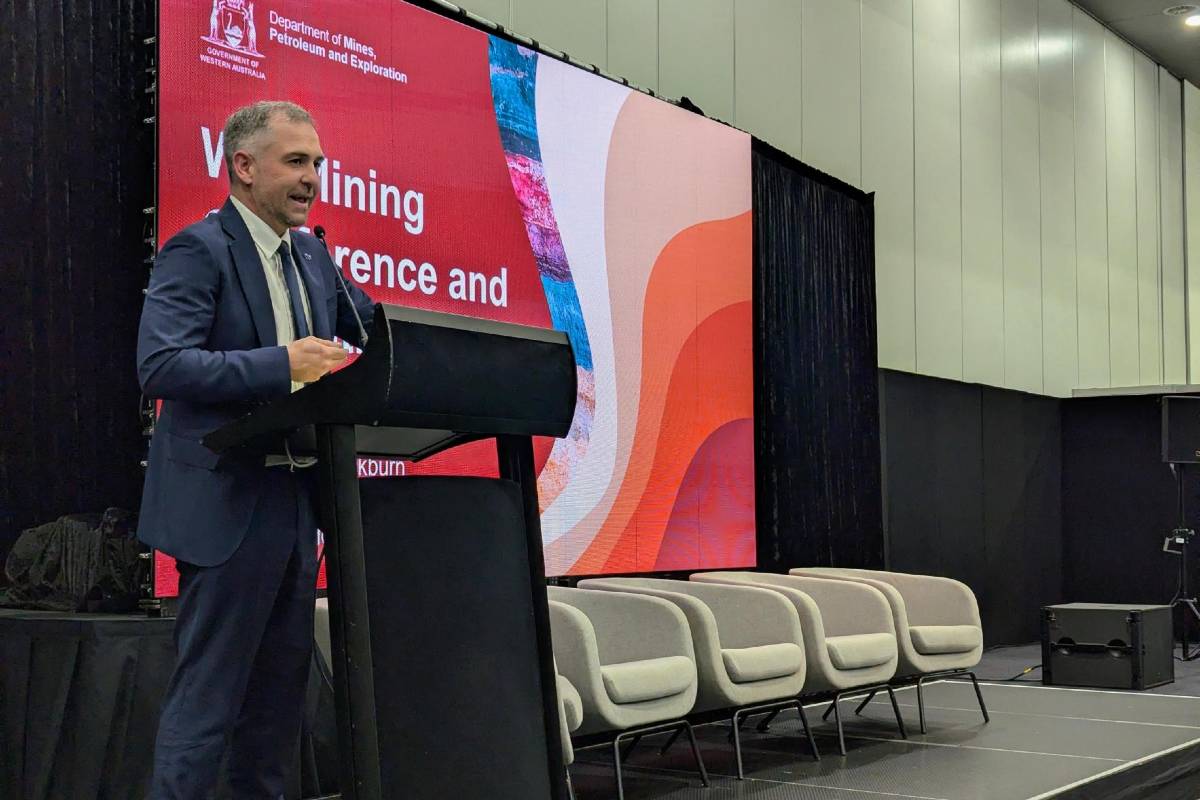
Western Australia is moving to convert decades of mining and petroleum investment into wider industrial capability, with WA MLA David Scaife telling the WA Mining Conference and Exhibition 2026 that the state’s mineral and petroleum sectors now generate a substantial share of gross state product and export revenue. The strategy centres on using established iron ore, LNG and critical minerals supply chains to attract downstream processing, manufacturing and technology services. For miners and engineers, this signals stronger policy backing for value-adding plants, local content requirements and skills development tied to existing operations.
New polling of 1000 New South Wales voters shows 67 per cent would back lifting the state’s uranium mining ban if projects demonstrably cut emissions, giving the Minerals Council of Australia fresh leverage to push for legislative change. The MCA is linking support to nuclear power and pointing to near‑border assets such as Boss Energy’s Honeymoon in‑situ leach operation, about 80km inside South Australia, as evidence NSW is forgoing investment. Any repeal would open large sandstone basins to exploration but trigger stricter radiation, tailings and groundwater controls.
UK and US governments are signing two agreements to accelerate commercial nuclear fusion development by combining national expertise in artificial intelligence and high‑performance computing. The pacts are expected to support faster optimisation of plasma confinement and reactor control algorithms, and to improve simulation of tokamak and stellarator designs that currently demand exascale‑class computing. For civil and nuclear engineers, this signals future design programmes where structural, thermal and neutronic load cases for fusion plants are iterated rapidly using shared AI‑driven modelling frameworks.
Australian mining bodies are urging the Federal Government to extend capital gains tax (CGT) concessions to junior mineral explorers, matching relief already available to tech and other start-up sectors. The Minerals Council of Australia and the Association of Mining and Exploration Companies warn proposed CGT changes could deter high-risk greenfields exploration, particularly for early-stage ASX-listed juniors reliant on equity raisings. Industry groups argue that without tailored CGT treatment, pre-discovery investors may exit earlier and reduce funding for drilling campaigns and resource definition.
Switzerland has banned the purchase, import and transit of Sudanese gold and restricted mining supplies such as mercury and cyanide, aligning its sanctions with European Union measures adopted on 13 July to cut funding to Sudan’s three-year conflict between the SAF and RSF. The Swiss rules also block related technical, brokering and financial services, and will be folded into its existing Ordinance on measures against Sudan, which already enforces a UN arms embargo and financial and travel bans on 36 listed individuals and entities. For refiners, traders and chemical suppliers, this tightens due-diligence and effectively closes a key European route for Sudan-linked gold flows.
Transport for London has released an updated Corporate Environment Plan detailing more than 70 actions to cut operational and embodied carbon and improve network resilience to extreme weather across the Underground, bus and road systems. Measures include accelerating fleet electrification, retrofitting stations and depots for energy efficiency, and upgrading drainage and track assets to cope with more intense rainfall and heat events. Civil and geotechnical engineers can expect tighter carbon requirements in design, materials selection and asset renewal, alongside higher design thresholds for flooding, overheating and slope stability.
Brazil’s newly approved Bill No. 2,780/2024 creates the National Policy on Critical and Strategic Minerals (PNMCE), establishing a CIMCE council of up to 20 members to classify minerals, prioritise projects and oversee transactions involving changes of control, foreign “significant influence”, strategic geological data access and sensitive offtake contracts. Exploration licences for critical/strategic minerals face an absolute 10‑year term with no extensions or tolling except for environmental licensing, raising timing risk where deposits are complex or critical minerals are identified mid‑programme. To offset tighter oversight, the bill enables a BRL 2 billion Mineral Activity Guarantee Fund funded by a 0.2% revenue levy, mandates 0.3–0.5% R&D spend, and offers CSLL tax credits capped at BRL 1 billion per year (2030–2034) for domestic processing investments.
Better traceability of critical minerals such as lithium and nickel is needed to manage operational and governance risks in complex supply chains, with the OECD report flagging fragmented company-level systems, low adoption by miners, and opaque transnational ownership structures in Indonesian and Philippine nickel. Case studies of lithium from Argentina and Chile show heavy dependence on Chinese processing and major data gaps, limiting visibility on foreign upstream ownership despite existing tools like SIMBARA, LME responsible-sourcing rules and local audits. The OECD proposes a phased, risk-based approach: short-term use of current supplier mapping and bilateral mineral agreements, medium-term closure of data gaps via traders, exchanges and smelters, and long-term cross-border data sharing and aligned battery standards through platforms such as the G7 Critical Minerals Action Plan, FORGE and RESourceEU.
Chile is moving to open its capital markets to junior explorers with a Senate-approved bill that creates a dedicated investment framework for early-stage mining and innovation companies, including a simplified regime that avoids full Securities Registry registration and uses sponsoring agents for compliance. The package offers capital gains tax exemptions on share sales, greenfield exploration write-offs and reworked reduced-fee rules for exploration and exploitation concessions, addressing long-standing issues flagged by Agrumin and Sonami over fee-related auctions. With exploration budgets at about $874 million in 2025, 76% in copper and only $206 million in initial exploration, the reform aims to push more private capital into grassroots projects rather than major-led brownfield programmes.
A looming “space race” for critical minerals is set to accelerate state-backed mining investment, with International Council on Mining and Metals chief executive Rohitesh Dhawan arguing that geopolitical competition could rapidly expand permitting, infrastructure funding and offtake guarantees. The 2026 International Mining and Resources Conference (IMARC) in Melbourne is being framed as a test of whether governments will move beyond rhetoric to concrete policy support, including streamlined approvals and public–private financing for new copper, nickel and rare earths projects.
The Institution of Civil Engineers is urging UK ministers to commission an independent economic review to quantify the costs and benefits of climate adaptation across national infrastructure, from flood defences and coastal protection to transport and energy networks. ICE wants a Treasury-level assessment, akin to the Stern Review on climate mitigation, to compare upfront capital for resilience upgrades against avoided damage to assets, service disruption and long-term maintenance. Such a review could directly influence design standards, appraisal methods and funding priorities for major projects and asset renewals.
Infrastructure projects deemed of “critical national importance” will be fast-tracked under new powers allowing Parliament to let ministers designate schemes for accelerated delivery. The chancellor signalled that nationally significant works such as major rail upgrades, strategic highways and large energy or water infrastructure could move more quickly through planning and approvals. For engineers, this points to compressed design and procurement timetables, earlier geotechnical investigations, and tighter coordination of statutory undertaker diversions and environmental consents.
Government will develop a national strategy for applying artificial intelligence across the UK energy system after launching a call for evidence on how AI can support a greener, more flexible grid. The review will look at AI uses such as real‑time optimisation of transmission and distribution networks, forecasting variable wind and solar output, and managing demand response from EV charging and heat pumps. Grid planners, civil engineers and asset owners should expect future guidance on data standards, digital twins and control algorithms influencing reinforcement, storage siting and interconnector design.
International Council on Mining and Metals CEO Rohitesh Dhawan warns a looming “space race” for global mineral supremacy could sharply accelerate government backing for new mining projects and approvals. Organisers say IMARC 2026 in Melbourne will be a key test of this shift, with Dhawan and other senior international delegations expected to gauge policy support, permitting pipelines and cross-border investment appetite. For project developers and consultants, the event is likely to signal how aggressively governments will pursue critical minerals, infrastructure and ESG frameworks over the next decade.
EU regulators are preparing a formal statement of objections to MMG’s planned acquisition of Anglo American’s Brazilian nickel business, which includes two ferronickel operations and two greenfield projects, amid concerns MMG could divert ferronickel away from European stainless steel producers. The Hong Kong-listed miner, controlled by China Minmetals, has already triggered a separate investigation by Brazil’s competition authority after a complaint from regional competitor CoreX Holding. Any EU charge sheet would force MMG to propose remedies or risk the deal being blocked, testing Europe’s stance on Chinese control of critical minerals.
Brazil’s Senate has approved a National Policy for Critical and Strategic Minerals, creating a presidential council empowered to review changes in control of companies holding critical mineral rights, scrutinise foreign influence and tie exports to value‑addition and processing commitments. The move comes as USA Rare Earth’s US$2.8 billion acquisition of Serra Verde and its 15‑year offtake of mixed rare earth carbonate, plus Australian‑backed projects like Viridis’ Colossus ionic‑adsorption clay deposit, position Brazil as a key rare earths supplier. Incentives include a 2‑billion real mineral guarantee fund and up to 5 billion reais in tax credits over five years for processing and transformation plants.
South American governments are moving to coordinate critical-mineral policy, with Chile, Argentina, Bolivia and Peru signing an Aug. 28 declaration on geology, regulation, suppliers, skills and financing, while Chile and Argentina revive a mining integration treaty that could unlock $20.7 billion and add 540,000 t/y of copper via cross-border projects such as El Pachón. Brazil’s new critical-minerals framework couples about $1 billion in tax incentives and a guarantee fund with tighter scrutiny of foreign partnerships and mining titles to expand refining, battery and magnet production. For engineers and operators, the opportunity lies in large copper, lithium and graphite reserves, but project viability will hinge on permitting timelines, fiscal stability and how far states push downstream value capture.
Revisions to England’s National Planning Policy Framework tighten requirements on flood risk assessment and sustainable drainage for new developments, but drainage specialists warn they cannot match the statutory control offered by implementing Schedule 3 of the Flood and Water Management Act. The updated NPPF strengthens policy wording on SuDS, runoff management and surface water exceedance routing, yet still relies on local planning authorities’ capacity and variable guidance. Practitioners are cautioned that, without Schedule 3’s mandatory approval bodies and adoption duties, long-term performance and maintenance of SuDS assets remain uncertain.
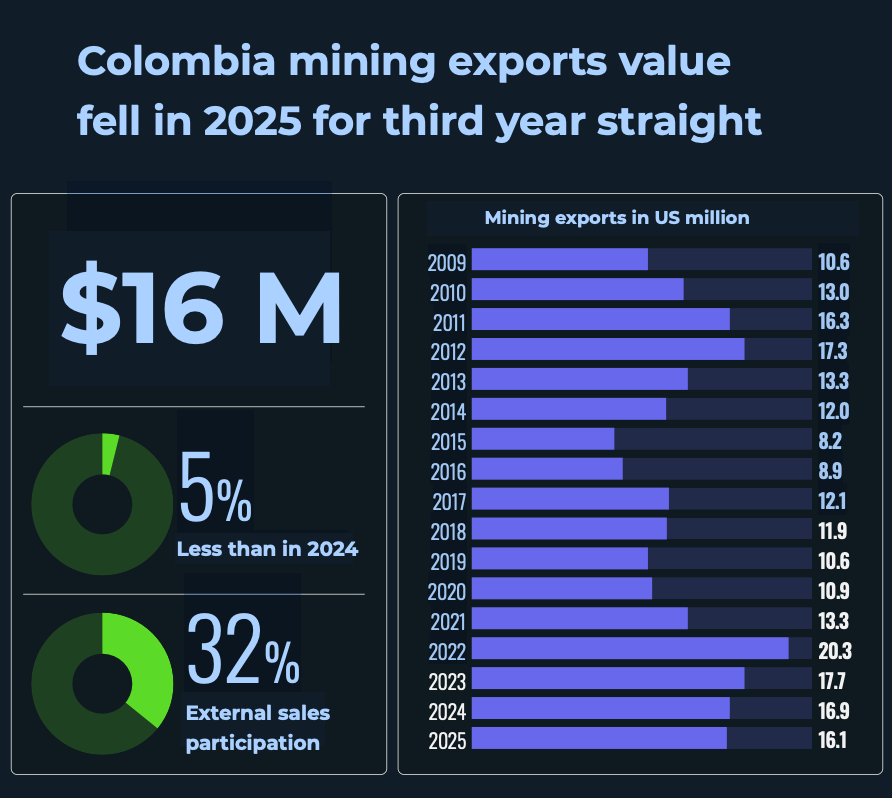
Colombia’s new government has repealed 10 resolutions restricting natural resource exploration and extraction, including measures like Decree 044 that allowed the Environment Ministry to freeze mining in sensitive ecosystems such as páramos for up to 10 years. Mining Minister Maria Nohemi Arboleda says the reforms will cut procedures, shorten licensing timelines and streamline community consultations, directly targeting Fraser Institute rankings that placed Colombia 57th for policy perception. The reset is aimed at unlocking up to $4 billion in copper-focused investment by 2030, with projects such as Quebradona, Alacrán, Mocoa and El Roble’s 4,200‑tonne‑per‑year output forming the early test case.
Venezuela’s push to reopen the Orinoco Mining Arc to global investors for gold, bauxite, coltan, iron ore and nickel is colliding with the presence of at least four uncontacted Indigenous peoples (Jödi/Hoti, Uwottüja/Piaroa, Yanomami and Eñepá/Panare) whose territories overlap or lie close to planned mining zones. Survival International reports 196 uncontacted groups worldwide, over 96% threatened by extractives, with Venezuelan Yanomami already facing mercury contamination, infectious disease and violent crime linked to illegal gold mining. The op-ed argues that without legally recognised territories, buffer zones, FPIC-compliant frameworks and IRMA-level safeguards, large-scale mining and associated access roads risk illegal encroachment, corporate complicity and potentially existential impacts on isolated communities.
Rio Tinto chair Dominic Barton has been appointed chair of Invest in Canada and MEM Growth Partners founder Gurinder Grewal named CEO, tasked with steering a C$1 trillion ($720 billion) investment drive over five years into critical minerals, energy, artificial intelligence and major infrastructure. Ottawa expects about C$280 billion in federal capital and incentives to leverage more than C$1 trillion from public, private and institutional sources, building on C$96.8 billion of foreign direct investment in 2025. Invest in Canada will work closely with the federal Major Projects Office to move foreign investors from early interest to construction.
NatureScot has launched a public consultation on the Scottish Planning Biodiversity Metric, a standardised tool required under National Planning Framework 4 (2023) to evidence biodiversity net gain on large-scale developments. The metric starts from a baseline habitat survey – covering grassland, peatland and woodland – to quantify pre-development biodiversity value and calculate the area and type of habitat creation or restoration needed to offset and enhance losses. Consultation on the working tool, user guide and habitat condition assessment runs to 30 November, with a refined version due in spring 2027.
Public consultation has opened on Tasmania’s next road safety strategy, which will build on the current Towards Zero Tasmanian Road Safety Strategy 2017–2026 and its data on serious and fatal crashes. The new framework will benchmark against national and global best-practice, including Safe System principles and low-speed urban design, while tailoring measures to local conditions such as rural highways and regional freight routes. For civil designers and traffic engineers, outcomes are likely to influence speed zoning, barrier selection, intersection treatments and funding priorities for high‑risk corridors.
Cameroon’s revised Mining Code (Law No. 2023/014) and World Bank-funded PRECASEM geochemical mapping using the Flexicadastre system are opening underexplored iron ore, bauxite, gold, rutile, nickel and cobalt targets, particularly along the Cameroon Volcanic Line and associated shear zones. The code allows three-year exploration permits renewable up to nine years, JORC-based prefeasibility studies for commercial permits, 20-year operating terms, transferability of mining rights and 100% foreign ownership via locally incorporated entities. Investor concerns centre on SONAMINES’ mandatory board seat on licensees, presidential sign-off on operating permits and how transparency and conflicts of interest are managed.
A 25-year US–Venezuela oil pact granting access to 65 billion barrels of recoverable crude across 17 fields, mainly in the Orinoco Belt and around Lake Maracaibo, targets more than 1.5 million barrels per day and a projected US 55% operating stake. Negotiated in secret without competitive bidding and with the US empowered to choose operators, the deal faces legal uncertainty under Venezuela’s Hydrocarbons Law and criticism over “incredibly low” projected taxes and weak institutional safeguards. Deliverability is also in doubt, with extra-heavy crude, ageing Lake Maracaibo infrastructure and an assumed 20% recovery factor yet to be achieved.
Governments are moving from pure lenders to direct “deal participants” in critical minerals, with the US “Project Vault” creating a $12 billion strategic stockpile and helping drive roughly 160 minerals-related deals worth about $40 billion since January 2025. Washington is now combining EXIM, DFC and DOE funding with direct equity, price floors and long-term offtake and stockpiling agreements, while tightening defence sourcing rules to penalise use of restricted suppliers. For project developers, early binding offtake is becoming central to bankability, but Seidl Inglesby warns processing and manufacturing capacity still take years to build.
Green Party leaders are calling for new data centres to lose their automatic “critical infrastructure” status and face stricter planning tests, citing risks to local electricity networks and potable water supplies. The move targets large hyperscale facilities with multi‑MW continuous loads and high cooling water demand, which can compete with housing and industrial users on constrained grids. For civil and infrastructure engineers, this signals potential for tougher connection agreements, more detailed impact assessments on water and power, and possible delays to new server-farm projects.
Major UK infrastructure schemes such as HS2 and the Lower Thames Crossing are increasingly stalled by multi-year Development Consent Order processes, overlapping environmental assessments and repeated judicial reviews. Industry voices are pushing for a single integrated consenting regime, statutory time limits on planning examinations and clearer National Policy Statements to cut delays on projects involving multi-bore tunnels, high-speed rail viaducts and 400kV grid reinforcements. For civil and geotechnical teams, this could mean earlier certainty on alignments, ground investigation scopes and procurement of specialist contractors.
Portfolio manager Tomasz Nadrowski, author of Mineral War: China’s Quest for Weapons of Mineral Destruction, warns that current single‑route supply chains for critical minerals lack sufficient parallel “flows” to balance volatile inflows and outflows in a non‑fungible global market. He argues that for many inputs, buyers effectively face a binary choice of sourcing from China or going without, given Beijing’s dominance in battery and rare earth capacity. Nadrowski advocates higher tariffs, price floors and targeted downstream manufacturing incentives to prevent further de‑industrialisation in Western economies.
James Miller has been appointed Commissioner of the Australian Transport Safety Bureau (ATSB) for a three‑year term, taking responsibility for national rail, marine and aviation safety investigations. Miller brings more than 50 years’ aviation experience, including as Qantas Fleet Captain, into a role that shapes standards and incident analysis across complex, multi‑modal transport networks. For civil and transport engineers, his background suggests continued emphasis on data‑driven accident investigation, operational risk management and interface safety at rail and port infrastructure.
Ontario Premier Doug Ford has warned he is prepared to cut off both electricity exports and critical minerals to the United States after Trump imposed 50% tariffs on about US$20 billion of Canadian goods, including autos, auto parts and steel. Michigan currently receives about 6% of its power from Ontario via four cross-border transmission lines with 2,000 MW transfer capacity, and Ford has already imposed a 25% surcharge on electricity exports to Michigan, Minnesota and New York in 2025. Any suspension of Ontario shipments would hit US supply of high‑grade nickel from the Sudbury Basin (Vale, Glencore) and uranium refined at Cameco’s Blind River facility, the world’s largest commercial uranium refinery.
US export restrictions taking effect later in August will force some lithium-ion battery scrap, including black mass, and tungsten scrap to be sold to US buyers, but GEM Mining Consulting’s Alina Karpunina argues supply security hinges on how much of this material is actually converted into qualified secondary minerals. DOE data show a 2023 US mismatch, with intermediate facilities able to process nearly 175,000 tons of batteries and scrap, but only about 35,500 tons of battery-material recovery capacity and 76,000 tons more merely planned. Karpunina proposes a “scrap-to-security conversion ratio” based on contained critical-mineral units recovered to customer specification, warning that export controls without robust domestic processing risk idle feedstock and continued reliance on primary mining.
New American Industrial Alliance and supply chain AI firm Exiger have launched the “Ground Truth” Critical Minerals Readiness Survey to map gaps between US industrial demand and available domestic or allied supply, following White House Executive Order 14415 on defence supply chains. The survey drills down to unmet needs by spec, grade, alloy and purity, and contrasts reshoring goals with actual sourcing capabilities across NAIA’s member base and wider manufacturers. Results, processed via Exiger’s 1EXIGER.AI platform, will feed a policy and investment “blueprint” to be unveiled on 16 September 2026 in Washington, DC.
Legislative constraints are preventing a Cambridge housing development from commissioning a greywater reuse system installed five years ago, Cambridge Water has confirmed. The scheme, designed to recycle treated wastewater from homes for non-potable uses such as toilet flushing and irrigation, remains idle despite full physical installation. The impasse signals ongoing regulatory misalignment between building-level reuse technologies and current UK water quality and adoption rules, delaying potential reductions in potable demand and wastewater discharge for new high-density schemes.
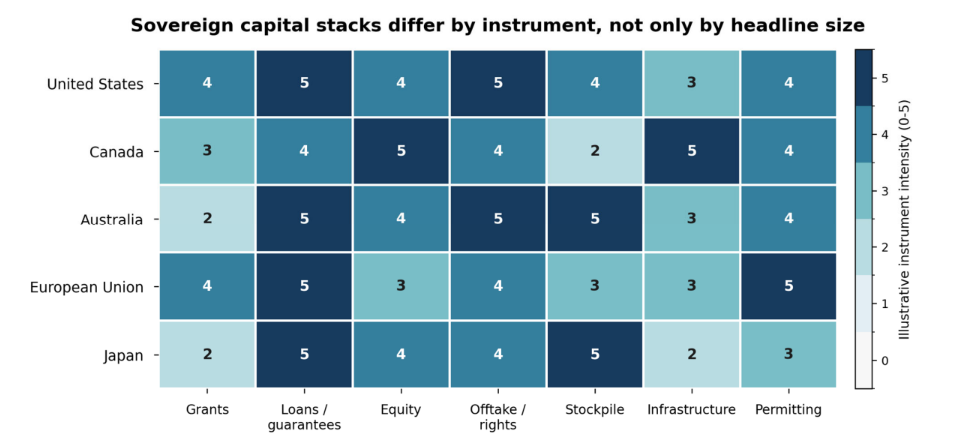
Government funding is reshaping mine finance as the US deploys nearly $2 billion in mixed instruments, including a $1.4 billion conditional loan to Sila, about $400 million to Sunrise Energy Metals, $150 million to Niron Magnetics and over $180 million for mining education. GEM Consulting’s comparative map shows the US using the widest blend of loans, equity, grants, purchase rights and stockpiles, versus Canada’s focus on infrastructure and equity, Australia’s output rights and inventories, the EU’s public credit and permitting coordination, and Japan’s offtake-linked overseas finance. The study warns that without clear disclosure of guarantees, repayments and recovered rights, and without demonstrable “additionality”, public capital risks displacing private funding while expanding state strategic control over critical-mineral projects.
Scrutiny of the Heathrow Expansion National Policy Statement by the Transport Committee has drawn criticism from multiple bodies over the absence of firm commitments to new rail links serving a third runway. Stakeholders argue that without guaranteed delivery of schemes such as Western Rail Link to Heathrow and potential Southern Access routes, surface access capacity and mode-share targets cannot be credibly met. The challenge centres on who funds and delivers these heavy rail connections and how they are secured in the Development Consent Order process.
Minerals Council of Australia’s Victorian division is urging the State Government to rethink proposed fee hikes that would lift exploration licence charges by 40 per cent and work plan fees by 400 per cent. The council argues the changes, tied to exploration licences and renewals, would deter greenfields drilling and early-stage geoscience in a state already seen as high-cost and regulatory-heavy. For explorers, the move could shift budgets interstate, delay drilling campaigns, and reduce appetite for deep or technically complex targets.
Brazil’s Supreme Court has upheld Justice Flávio Dino’s March 2025 ruling allowing the Cinta Larga to conduct legal mineral exploration and mining on four territories in Rondônia and Mato Grosso under a temporary framework while Congress has 24 months to pass national Indigenous mining legislation. The interim rules cap mining footprints at 1% of each territory, require prior community consultation plus environmental, Congressional and National Mining Agency approvals, and give Indigenous groups preference as operators. Where third parties mine, Cinta Larga communities must receive 50% of the value otherwise owed to state and federal governments, directed to safety, environmental recovery, health, education and sustainable production.
Former National Infrastructure Commission for Wales chair David Clubb, who led the body for more than four years, has stepped down, warning that long-term planning is being constrained by tight devolved budgets and fragmented responsibilities between Cardiff Bay, Westminster and local authorities. He points to stalled decisions on major transport corridors, grid reinforcement for new onshore wind and solar, and flood defence upgrades for low-lying coastal communities as critical pinch points. For engineers, he signals that robust business cases, whole-life carbon data and climate-resilient design will be central to securing funding in Wales over the next decade.
Publication of the UK government’s revised Social Value Model (PPN 026) marks a reset for infrastructure procurement by tightening how social, environmental and economic outcomes are evaluated in public works tenders. The update is expected to reshape bid strategies on major frameworks such as the £30bn-plus Construction Playbook pipeline, with more prescriptive metrics on local employment, skills, carbon reduction and SME participation. Contractors and consultants will need more robust data capture and reporting systems to evidence social value delivery across design, construction and asset operation phases.