Geomechanics, Streamlined.
© 2026 Geomechanics.io. All rights reserved.
Strabag and Group company Züblin have secured the design-and-build structural works for the ABS Gäubahn Nord/Pfaffensteig Tunnel in south-west Germany, centred on an 11km twin-bore rail tunnel linking Stuttgart Airport station directly to the Gäubahn line towards Switzerland. About 9.8km will be driven by two TBMs, with conventional tunnelling for the A8 motorway undercrossing and airport connection, plus a 240m cut-and-cover section, retaining structures, railway underpasses and a grade-separated crossing. A 3km surface section will be upgraded and partially realigned for 200km/h operation, delivered under an integrated project delivery model with Ed. Züblin, Wayss & Freytag and Strabag AG sharing tunnelling, structural and earthworks packages.
A 271.5‑tonne Herrenknecht Mixshield TBM, Caroline, has started driving a 2.2km electricity cable tunnel with a 4m internal diameter beneath the River Thames in Essex for National Grid’s Grain to Tilbury project, delivered by the Ferrovial BEMO joint venture. The drive will pass through variable Thames estuary ground conditions between 35m‑deep launch and reception shafts of 15m and 12m diameter, with tunnelling continuing into 2026 and overall scheme completion targeted for 2029. The new tunnel will replace the 1969 Thames Cable Tunnel and carry new high‑voltage circuits between Grain and Tilbury substations.
A 13.46m diameter Herrenknecht Mixshield TBM has broken through into the future Balboa station on Panama Metro Line 3 after completing the first-ever TBM undercrossing of the Panama Canal at depths exceeding 60m below sea level. The 5,600kW, 26,616kNm machine, fitted with an accessible cutterhead and more than 4,500 sensors linked via the Herrenknecht.Connected platform, has achieved peak advance of 150 segment rings (about 300m) per month through mixed sandstone, tuff, breccias and basalt. Around 1.5km of the 4.5km twin-track tunnel remains to final breakthrough.
Federal funding for New York’s US$16bn Hudson Tunnel Project has been frozen, forcing the Gateway Development Commission to suspend works from 6 February after spending over US$1bn and employing about 1,000 site workers. A Manhattan federal judge has issued a temporary restraining order, giving the administration until 5 p.m. on 12 February to restore reimbursements or appeal, while contractors warn that demobilisation, resequencing and remobilisation will add cost and delay. Sites are now in “safe-pause” mode, with dewatering, ground support and environmental monitoring maintained, and assembly of two Herrenknecht TBMs in New Jersey likely to slip beyond the planned spring 2026 launch without funding certainty.
Associated Asphalt has completed a major maintenance programme on the M40, resurfacing and repairing approximately 75km of carriageway on one of the UK’s key north–south motorway links. Works are understood to have focused on high-stress sections, including lane 1 heavy goods vehicle tracks and junction merge/diverge areas, using modern asphalt surfacing systems to improve skid resistance and durability. For geotechnical and pavement engineers, the scale of intervention on a live motorway highlights ongoing asset management demands on ageing flexible pavements under rising traffic and axle loads.
Two low‑carbon heat network schemes spanning seven London boroughs have secured a combined £53.1M in government funding to expand district-scale, pipe‑fed heating infrastructure. The awards back large‑diameter buried distribution mains, central energy centres and building‑level heat interface units designed to displace individual gas boilers in dense urban housing and mixed‑use stock. For civil and geotechnical teams, the projects signal substantial trenching, utility coordination and shaft works in constrained streets, with long linear workfronts and tight programmes across multiple local authorities.
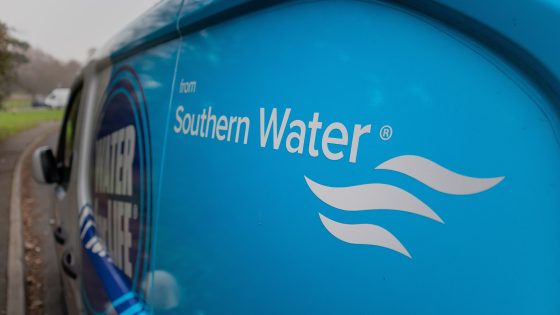
Southern Water is rolling out a distributed fibre‑optic leak‑detection system from UK firm Lightsonic on trunk mains across the south of England to cut losses as drought risk and network age increase. The technology uses continuous fibre along the pipeline to sense acoustic and temperature changes in real time, allowing operators to pinpoint leaks to within metres and respond before major bursts develop. For civil and water engineers, this signals growing deployment of long‑range, permanently installed monitoring rather than spot surveys on critical transmission assets.
Network Rail will invest £1.4M to renew over 730m of track between Hubbert’s Bridge and Swineshead on the Boston–Sleaford line in Lincolnshire, targeting a known maintenance pinch point. Works will involve lifting and replacing rail, sleepers and ballast on this rural two-track section, where drainage and formation condition have previously constrained line speed and imposed temporary speed restrictions. Contractors will need to manage possessions on a mixed-traffic route carrying passenger services and agricultural freight, with careful staging to minimise disruption during the renewal.
Via East Midlands, the highways arm of Nottinghamshire County Council, is launching early market engagement for a proposed £5M highways maintenance and civil engineering framework covering local roads and associated assets. The framework is expected to bundle routine carriageway and footway works, minor structures, drainage and associated civils into a multi-year arrangement, giving SMEs and regional contractors clearer visibility of work pipelines. Contractors should prepare capability evidence on reactive and planned maintenance, traffic management on constrained local networks, and delivery of small to medium civils packages under framework call-offs.
Voltempo has installed a six-bay, 1MW HyperCharger hub at Welch’s Transport’s Duxford HQ, adding to a similar six-bay, 1MW depot in Bedford under the Innovate UK-backed eFreight 2030 programme, with spare capacity opened to third-party fleets via the DepotCharge model. Welch’s now operates 19-tonne and 42-tonne Renault Trucks E-Tech electric HGVs plus a DAF electric tractor, with three 28-tonne E-Techs on order and a target for 12% of its fleet to be electric by January 2027. The eFreight 2030 consortium will deploy 88 electric HGVs and 36 charging sites, including 25 megawatt-scale hubs, as part of the UK Government’s ZEHID real-world trial.
Barhale has secured a £14.6M contract from Anglian Water to build a twin pumped rising main at Alconbury Weald, Cambridgeshire, increasing wastewater network capacity for planned large-scale development on the former airfield site. The scheme will require parallel pressure pipelines, new pumping infrastructure and tie-ins to the existing foul network, with construction likely to involve trenching through mixed glacial and alluvial deposits and careful management of groundwater and settlement risk. For geotechnical and civils teams, key issues will include pipeline alignment optimisation, surge control, and long-term access for maintenance.
Civil engineering and plant hire contractor John McGeady has bought its 4.3-acre HQ at 1071 South Street, Glasgow, using a £1.5m Bank of Scotland loan, securing a central base for its 56-strong plant fleet and operations across Glasgow, Dumfries and Galloway and wider Scotland. Turnover has climbed from about £900,000 in 2018 to over £20m, with revenues forecast around £30m this year, as typical project values have risen from £150,000 to up to £4m. Headcount has grown from 35 to about 60, with plans to reach 100 within three to five years and potential investment in expanded offices, a recycling facility and a training centre.
Watkin Jones has completed the £200m Tai Afon build-to-rent scheme on the former Brains Brewery site in Cardiff, delivering 718 units in two phases (402 homes in phase one and 316 apartments in the final phase) masterplanned by Rightacres and forward funded for L&G. The scheme, described as Wales’ most significant BTR development, comprises studios plus one, two and three-bedroom apartments adjacent to Cardiff Central Station and within walking distance of the city centre and Principality Stadium. Completion of Tai Afon finalises the first phase of the Central Quay regeneration, contributing to L&G’s £1bn total investment in Cardiff and its £4bn BTR deployment across 12 UK cities.
WindowMaster and Fieger have agreed a façade partnership that combines EN 12101-2 tested smoke extraction and natural/hybrid ventilation into a single, integrated louvre-window system planned from the first design meeting. The deal gives WindowMaster exclusive sales rights for Fieger louvre solutions in the UK, Ireland, Nordics, Baltic states and North America, with non-exclusive rights in Germany, Switzerland and France, targeting major façade markets. For high-rises, multi-storey stairwells, atriums and public buildings, one façade opening now provides both everyday comfort ventilation and automatic smoke and heat exhaust linked to detectors and fire panels.
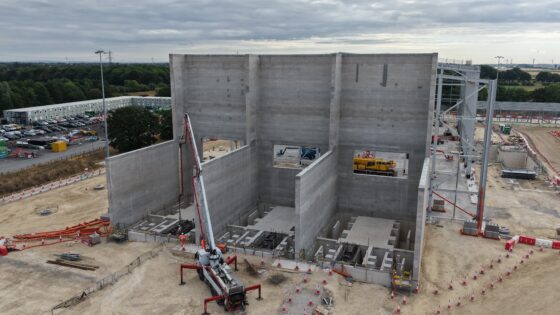
Steel erection has finished on the Next National Supercomputer facility in Edinburgh, with Robertson Construction Central East placing the final beam on a building described as roughly supermarket-scale for the University of Edinburgh’s EPCC. Funded by UK Research and Innovation, the data centre is scheduled to host the UK’s next national supercomputer by early 2028, serving both academic and industrial users. Structural completion now shifts focus to high-spec M&E, cooling, power distribution and vibration control fit-out critical for dense compute loads.
Accenture has launched Accenture Construct, a global owner-side capital projects business led by CEO Adam J. Shaw, uniting more than 5,000 practitioners across the Americas, EMEA and APAC and integrating specialist acquisitions such as Anser Advisory (US), Soben (UK), BOSLAN and Alfa Consulting (Spain). Targeting AI data centres, energy transition assets and long-life infrastructure like airports, rail and power grids, the unit addresses a $260bn market forecast to reach $348bn by 2030. The offer centres on a single project data foundation to give owners one accountable partner and a unified operational view across fragmented delivery teams.
Anglian Water’s @one Alliance has awarded Barhale a £14.8m contract to build a 7.5km twin wastewater pipeline, with 400mm, 315mm and 250mm diameters, to serve the 6,200-home Alconbury Weald development and 190,000 sq m of employment space in Cambridgeshire. The line, mainly open-cut around the eastern side of Huntingdon and discharging 144 l/s to Huntingdon Water Recycling Centre, avoids the town centre and crosses mostly agricultural land. Ten HDD drives include 355m-long 630mm sleeves under the East Coast Main Line and 292m-long 400mm sleeves beneath the River Great Ouse, with completion targeted for November 2027.
Geopolitical and economic uncertainty is pushing 61% of construction businesses to increase their commitment to innovation, according to Ayming’s International Innovation Barometer 2027. The survey points to firms prioritising digital tools, new construction materials and process optimisation to manage cost volatility and supply chain disruption. For civil and infrastructure engineers, this signals stronger client appetite for technologies such as BIM-based design coordination, offsite fabrication and alternative material specifications to de-risk programme and budget.
Delivering a 505km high-voltage “electricity superhighway” between Scotland and England is exposing complex consenting, land access and interface issues across multiple local authorities and environmentally sensitive corridors. Engineers are having to integrate new high-capacity transmission circuits with existing substations and overhead line routes while maintaining system security, often relying on long HDD river crossings, constrained construction compounds and tight outage windows. The project is setting practical benchmarks for routing, stakeholder management and constructability on future UK grid reinforcements needed for large-scale offshore wind and other renewables.
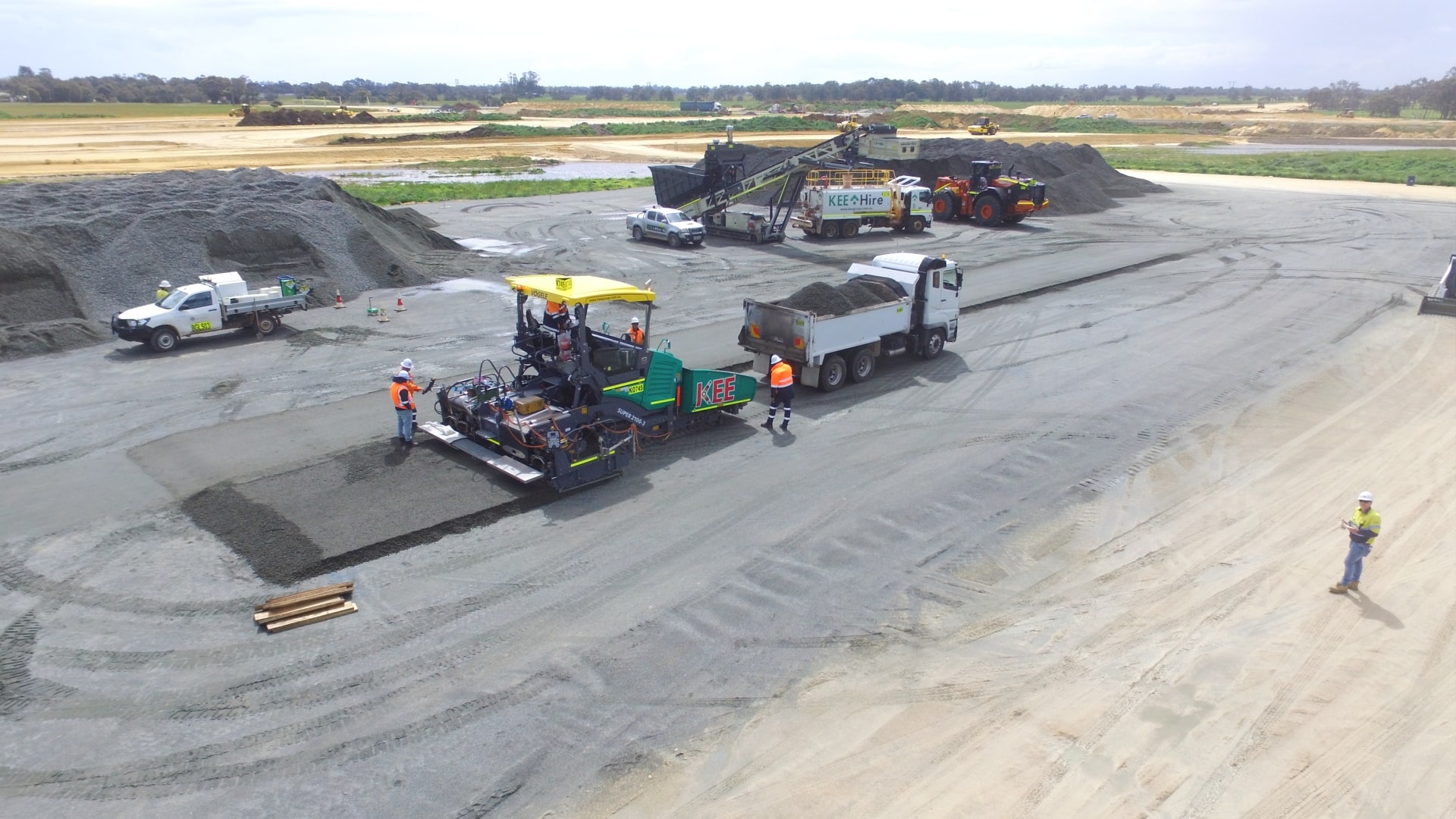
STRABAG Australia has agreed to acquire KEE Surfacing from the KEE Group, combining STRABAG’s global road construction, materials production and asphalt technology capability with KEE’s established Western Australian surfacing operations. The deal strengthens STRABAG’s position in the Australian transport infrastructure market, particularly in asphalt laying, spray sealing and associated plant operations on state and national road corridors. For contractors and suppliers, the move signals potential consolidation of asphalt supply chains and surfacing expertise across major projects in Western Australia and, longer term, other Australian states.
Roads & Traffic AU 2026 will convene in Sydney’s International Convention Centre on 14–15 October, bringing together government, engineers, contractors and technology suppliers to tackle Australia’s next wave of road and transport investment. The conference program is split into seven technical tracks, each focused on a specific pressure point such as project delivery, procurement, traffic management, digital systems, and asset operations. For practitioners, the event signals where agencies and Tier 1s are likely to steer specifications, procurement models and technology adoption over the next programme cycle.
Major construction has begun on Stage Two of Melbourne’s Yan Yean Road Upgrade, adding an extra lane in each direction between Kurrak Road and Bridge Inn Road to cater for around 24,000 daily motorists. The works include upgraded signalised intersections and a segregated walking and cycling path along the corridor, targeting smoother traffic flow and reduced conflict points. For designers and contractors, key tasks will centre on pavement widening, intersection reconfiguration and active transport integration within a constrained peri-urban road reserve.
Geoquest Australia has launched TerraStack, a modular precast concrete retaining wall system engineered for Australian and New Zealand conditions and already applied on major transport projects including Cross River Rail, West Gate Tunnel and Sydney Gateway. The system uses stacked, interlocking units to form gravity or reinforced soil walls, enabling rapid installation with standard lifting equipment and minimising on-site formwork. For designers and contractors, TerraStack offers a repeatable solution for cuttings, bridge abutments and approach embankments where tight footprints and staged construction are critical.
Grid connection delays of up to 10 years are deterring investment in UK infrastructure, according to a new report by Centrica and climate think tank Ceres. The report warns that major low‑carbon schemes, including large-scale renewables and grid‑scale battery storage, are being forced into long connection queues despite available capital and consented sites. For civil and energy engineers, the key risk is stranded or re‑phased projects where grid access, not design or finance, becomes the critical path constraint.
Medway Council has gone to tender for a new Highways Infrastructure Contract valued at £110M excluding VAT (£132M including VAT), covering maintenance and improvement of the local road network. The framework is expected to bundle routine carriageway and footway works, structures maintenance and associated drainage and traffic management into a single long-term package. Contractors will be assessing risk around inflation, materials pricing and resource availability over the contract term, with bid strategies likely to hinge on surfacing productivity, night‑time possession planning and drainage asset condition.
A major gas leak in the Ladygrove area of Didcot, Oxfordshire forced suspension of GWR rail services between Reading and Swindon and long-distance trains routed through the corridor, as SGN engineers worked overnight to locate and make safe the affected main. Rail operations were halted while gas levels were monitored and exclusion zones maintained around the railway and nearby properties, with emergency access coordinated along the Didcot–Swindon line. The incident underlines the operational vulnerability of busy electrified main lines to third-party utility failures and the need for tightly managed rail–utility interfaces.
Further details on the Atomic Weapons Establishment’s Future Materials Campus confirm it as a core facility within a multi-year, multi‑billion‑pound infrastructure upgrade to support UK nuclear warhead research and lifecycle management. The FMC will concentrate advanced materials characterisation, high‑integrity manufacturing development and long‑term performance testing on a single secure site, reducing reliance on ageing dispersed laboratories. For civil and structural engineers, the scheme signals demand for heavily serviced, high‑specification laboratories and containment structures with stringent security, vibration control and resilience requirements.
HS2 Ltd is seeking market input on a 10-year professional services partnering arrangement to support the remaining phases of the UK’s high-speed rail programme as it moves beyond major civils delivery. The proposed framework is expected to cover multidisciplinary design, systems integration and programme management for stations, rail systems and operational readiness, replacing the current civils-focused consultancy model. Consultants will need long-term capability in high-speed rail systems, digital design and assurance, and integration with existing classic rail infrastructure.
The North Sea Transition Taskforce now says the “window of opportunity” for an orderly energy transition in the UK Continental Shelf has “narrowed”, a year after first warning it was closing. The group is focused on coordinating offshore platform electrification, large-scale carbon capture and storage in depleted gas fields, and integration of new offshore wind capacity with existing oil and gas infrastructure. For civil and geotechnical engineers, this signals tighter timelines for repurposing ageing jackets, subsea pipelines and onshore terminals while maintaining structural integrity and regulatory compliance.
Algeco UK, part of Modulaire Group, has secured an EcoVadis Platinum rating, placing its modular building operations in the top 1% of companies assessed globally for sustainability performance. The business has introduced a Supply Chain Sustainability Handbook, SBTi-validated carbon reduction targets aligned with a net-zero pathway, and a UN Global Compact training programme to embed requirements across its supplier base. Recent projects include a permanent modular building for Gridserve’s A1 Stevenage EV charging station, signalling growing use of offsite solutions on high-traffic infrastructure sites.
Liebherr is launching the 22‑tonne RE 22 M Litronic rail excavator at InnoTrans, combining a newly developed hydrostatic rail-wheel undercarriage with the 120 kW engine from the A 922 Rail and a standard 2,000 mm rear swing radius (2,110 mm with optional counterweight). The rail axle delivers 50 kN tractive force and, subject to national approvals, allows travel up to 40 km/h on rails and emergency towing up to 60 km/h, with the option to run on road tyres directly on the railhead to reduce track wear. A redesigned dual cab with the INTUSI adaptive operating concept removes the steering-column control panel, improving sightlines and ergonomics, while an optional centre-mounted two-point support system boosts lifting capacity without sacrificing compactness for tight rail possessions.
Scotland’s Trust Housing Association, which manages almost 4,000 homes nationwide, has appointed David Knight as chair following the departure of Dr Norval Bryson after a four-year term. Knight brings over 35 years’ senior experience in Scottish housebuilding, including managing director roles at Bryant Homes, Miller Homes and Avant Homes, and a previous chairmanship of Homes for Scotland. Having served as Trust’s vice-chair and convenor of the audit and performance committee since 2021, he is expected to steer delivery of the association’s “Ready, together” growth and modernisation strategy.
Balfour Beatty is delivering a £65m two-storey terminal expansion at Edinburgh Airport, adding eight new departure gates as the first phase of a £500m, five-year capital programme to increase passenger capacity. Recent works include installing eight link bridges in a live, fully operational airside environment, building on earlier upgrades such as the £8m Security Futures Project with new CT security screening, a baggage hall expansion and modernised fire station facilities. The scheme demands tight phasing, airside safety controls and minimal disruption to Scotland’s busiest airport.
AGD Equipment has introduced the fully electric Marchetti CW23.35 HY compact crawler crane to the UK hire market, offering a 25‑tonne lifting capacity and up to 35m reach with fly‑jib. The machine operates pick‑and‑carry loads up to 17 tonnes, powered by a 210Ah battery and 110kW electric motor, and was first shown at Vertikal Days. With a transport width of 2.5m, it targets constrained urban or industrial sites where emissions limits, access restrictions and tight lifting radii drive crane selection.
Willmott Dixon has secured a £46m Department for Education contract to deliver a Sheppard Robson-designed, three-storey 9,252 m² rebuild of Bramhall High School in Stockport, including specialist provision for pupils with special educational needs. One existing single-storey block will be retained and remodelled, while six current blocks are to be demolished after decanting into the new structure, requiring careful phasing and temporary works on a live school site. Construction is due to start in October 2026, with the main building completing August 2028 and full site completion in September 2029.
A deepening shortage of engineering talent in the UK is forcing infrastructure employers to overhaul recruitment, with firms competing aggressively for chartered civil, geotechnical and structural engineers on major programmes such as HS2 and Lower Thames Crossing. Contractors and consultants are offering flexible working, fast‑tracked ICE/IStructE professional development and retention bonuses targeted at mid‑career staff with design-and-build experience on NEC4 contracts. The squeeze is delaying detailed design and site supervision capacity, pushing up salary benchmarks and increasing reliance on overseas hires and specialist agencies for critical roles.
The upgraded Granite Creek Rest Area between Gin Gin and Benaraby on Queensland’s Bruce Highway has reopened, adding dedicated heavy vehicle parking and improved amenities for long-distance freight and light vehicle traffic. Works include reconfigured parking bays to separate trucks from cars, upgraded lighting and sightlines, and safer entry/exit tapers designed for highway speeds. For road designers and asset managers, the project signals continued incremental safety upgrades along this high‑volume freight corridor rather than major capacity expansion.
The National Transport Research Organisation is expanding technical partnerships across Pacific nations to embed best-practice design, asset management and materials research into local road and bridge networks. Programmes include joint pavement investigations, climate-resilience assessments for coastal and low-lying corridors, and training on performance-based specifications for asphalt and sprayed seals under cyclone, flooding and high-salinity conditions. For geotechnical and civil teams, this means greater access to shared datasets, design tools and failure case histories tailored to volcanic soils, steep terrain and remote island logistics.
Removal of the Webster Street level crossing in Dandenong marks Victoria’s 96th level crossing removal under the State Government’s 10‑year programme to improve rail–road interfaces across greater Melbourne. The project delivers a 450‑metre road underpass extending Cheltenham Road beneath the rail corridor, eliminating at‑grade conflict and allowing Webster Street to be closed at the former crossing. For designers and contractors, the scheme adds another cut‑and‑cover underpass to Melbourne’s portfolio, with ongoing implications for groundwater control, retaining structures and long‑term settlement performance along the corridor.
Vögele, the paver specialist within the Wirtgen Group, is marking 190 years of continuous operation, tracing its evolution from early mechanical road-building equipment to today’s sensor-guided asphalt pavers and material feeders. Service Manager Chris Adams notes the brand’s impact in Australia and New Zealand, particularly with high-output highway pavers paired with AB 600 extending screeds for wide-lane construction and tight compaction control. The anniversary reinforces long-term OEM support for fleets relying on integrated levelling systems, grade sensors and telematics-based service across major road and airport projects.
Network Rail will invest £13M over Christmas to replace 1960s overhead line equipment at Birmingham New Street station, targeting ageing gantries, contact wires and insulators that have become a major cause of unplanned power failures. Works will be concentrated in a tight blockade to minimise disruption on the West Coast Main Line, with staged isolations and temporary speed restrictions required as spans are rewired and new structures installed. For designers and contractors, the scheme signals continued priority for OLE resilience upgrades on intensively used, multi-track urban throats.
Balfour Beatty is advancing the £65M South East Pier Expansion (Sepex) at Edinburgh Airport, a landside–airside interface project expected to increase stand capacity and passenger processing space. The scheme will extend the existing pier structure to serve additional aircraft gates, requiring new foundations, service diversions and airfield pavement works within a live operational environment. For civil and geotechnical teams, key challenges will centre on phasing construction around runway and taxiway operations, managing ground risk adjacent to existing assets, and integrating new M&E and baggage systems into constrained terminal infrastructure.
Hundreds of new apprentices have been recruited into UK infrastructure by firms including Thames Water, Amey and Spencer Group, signalling a push to rebuild site-based and technical capability. Intakes are focused on civil engineering, utilities and rail maintenance roles, feeding skills into long-term asset programmes such as water network upgrades and major highways frameworks. Contractors are likely to use the expanded apprentice cohorts to address ageing workforces and shortages in groundworks, structures and asset inspection competencies.
Trustee’s view on “Growing together” stresses that civil engineers and technicians must adapt their skills and professional standards to deliver resilient infrastructure under climate stress, ageing assets and tighter carbon targets. The piece focuses on supporting sustainable communities through better whole-life asset management, more collaborative project delivery and stronger links between design offices, site teams and local authorities. For practitioners, it signals continued emphasis on competence, ethics and ongoing training as core to managing risk and performance on complex infrastructure networks.
Mental health in construction is being reframed as a shared duty across project teams, with particular concern for site-based staff working long shifts, irregular nights and high-pressure possession windows. Industry bodies such as the Institution of Civil Engineers and major contractors are expanding mental health first aider schemes, toolbox talks and confidential helplines alongside traditional safety briefings. For engineers, this means factoring psychological risk into CDM planning, site supervision and contract programming, not just physical hazards and productivity targets.
Strike action by uranium enrichment workers at Urenco’s Capenhurst nuclear site in Cheshire has been called off after management tabled an improved pay offer. The Capenhurst facility, which handles enrichment and deconversion operations for nuclear fuel supply, had faced potential disruption that could have affected maintenance schedules on critical process plant and associated civil infrastructure. Resolution of the dispute stabilises workforce availability for ongoing asset integrity work, including inspection, containment upgrades and long-term decommissioning planning.
Construction has started on 41 new council homes in Shirecliffe, delivered by Sheffield Housing Company – a joint venture between Sheffield City Council, Keepmoat and Great Places Housing Group – with all units to be purchased by the council for mainly affordable rent plus some shared ownership. The scheme, part funded by the South Yorkshire Mayoral Combined Authority, provides a mix of one- to four-bedroom properties targeted at local demand. It forms part of SHC’s wider programme for 2,300 multi-tenure homes across 23 sites, over 70% for open-market sale.
Blue Sky Building has been appointed construction manager for the Barbican Renewal Programme, a major upgrade of the Grade II-listed arts complex and residential estate in the City of London. The works will focus on restoring the original architectural vision while supporting the City’s environmental targets, all delivered in a fully operational setting with residents, performance venues and public circulation remaining in use. Blue Sky’s selection leans on its track record managing complex refurbishments in live environments at the National Gallery, British Museum, Selfridges and United Kingdom House.
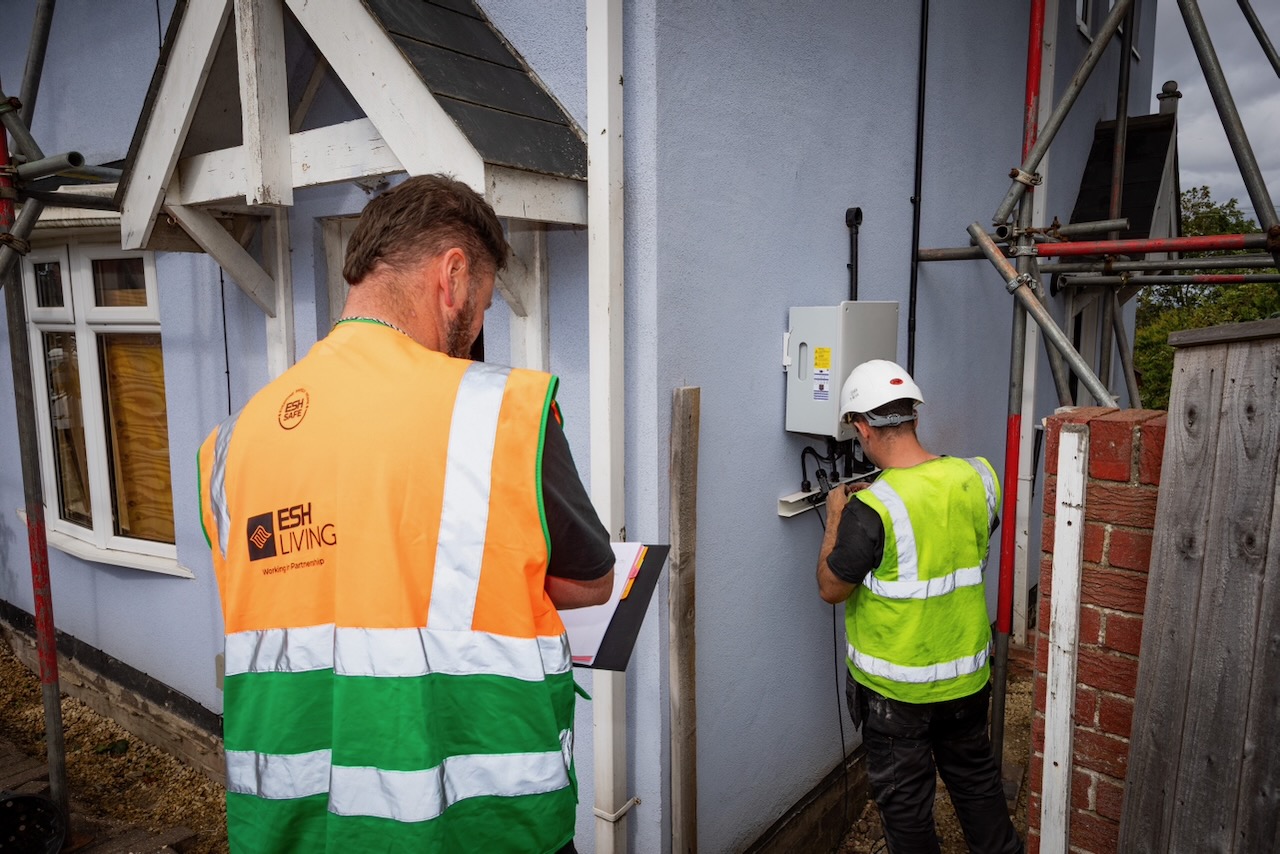
Esh Construction has secured a £2.5m Gateshead Council contract under the Warm Homes: Social Housing Fund Wave 3 to upgrade the energy performance of 82 homes over six months. Works include installing photovoltaic panels and ventilation measures to 70 bungalows and insulated flat roof upgrades to 12 flats, with retrofit designs informed by pre-construction technical surveys and updated EPC ratings. Storm Tempest has been appointed to deliver retrofit assessment, design and coordination in line with PAS retrofit standards, signalling structured, standards-led delivery for future social housing schemes.
Severfield has created a new chief commercial officer role and appointed Terry Fitzmaurice to lead the structural steel group’s commercial, procurement and estimating functions across its UK and international projects. Fitzmaurice joins from Manchester Airports Group, where he was group procurement and contracts director, and previously held senior commercial roles at Mitie. Reporting directly to CEO Paul McNerney and working closely with CFO Andrew Page on strategy deployment, he is expected to tighten cost, contract and supply-chain control on complex steelwork packages.