Geomechanics, Streamlined.
© 2026 Geomechanics.io. All rights reserved.
Egis has appointed Jamie Gleave as senior environmental impact assessment technical director for the UK, bringing more than 25 years’ experience across energy, transport and water infrastructure, including Wylfa Newydd nuclear power station and National Grid electricity transmission schemes. Gleave previously served as EIA technical director at AECOM, where he led its global EIA technical excellence practice and directed environmental work on the A428 Black Cat to Caxton Gibbet and M42 Junction 6 DCO schemes, acting as expert witness. He will work with UK–Ireland head of environment Afshan Rasheed to build Egis’s EIA, DCO and technical assurance capability.
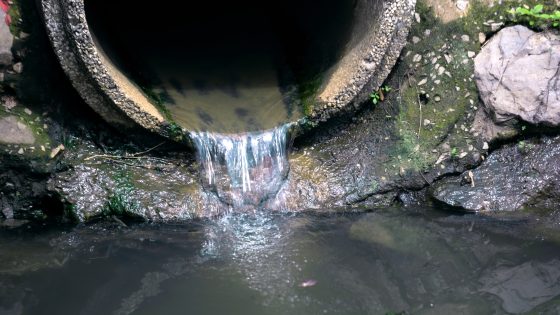
United Utilities has been fined £900,000 after admitting five environmental permit breaches linked to a major raw sewage discharge on the Fylde coast in June 2023, following failures in its wastewater treatment and overflow control systems. The incident involved untreated effluent bypassing normal screening and settlement processes during storm conditions, leading to prolonged discharge through combined sewer overflows into coastal waters used for bathing. For civil and environmental engineers, the case reinforces regulatory scrutiny on stormwater storage capacity, real-time CSO monitoring, and resilience of ageing sewer networks under intense rainfall events.
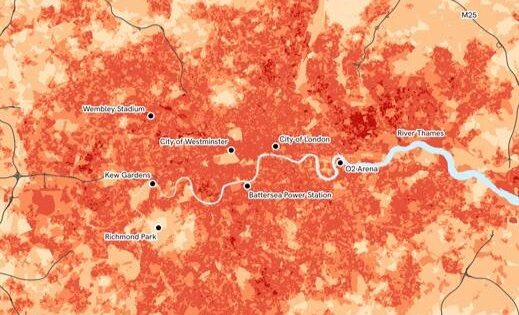
Eighty-three per cent of Britain’s cities – 59 urban areas – are classed as highly vulnerable to urban heat in new spatial analysis by Ordnance Survey, the Met Office and 4 Earth Intelligence. The dataset combines OS building footprints, surface cover and green space with Met Office temperature projections to map local heat exposure at street-block scale. For civil and geotechnical engineers, this points to urgent retrofit of shading, permeable and high-albedo surfaces, and revised pavement and rail design to cope with more frequent extreme surface temperatures.
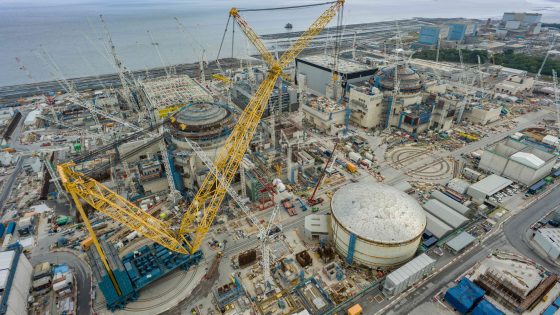
EDF’s Hinkley Point C nuclear project has applied for permission to appeal a tribunal decision that would bring the 3.2GW plant under Environmental Information Regulations, forcing greater disclosure of environmental data. The ruling, won by campaigners, could require release of detailed monitoring on coastal impacts, cooling water abstraction and construction emissions from major works such as the 900m seawater intake tunnels. Designers, contractors and consultants on similar large infrastructure schemes may face tighter scrutiny over environmental modelling assumptions, baseline data and ongoing performance reporting.
Galliford Try’s environment business has secured a £110M contract from Severn Trent Water to deliver the River Mease improvement project, targeting water quality upgrades on the protected River Mease catchment in the Midlands. Works are expected to centre on wastewater treatment enhancements, sewer network upgrades and nature-based solutions to cut nutrient loading into this Special Area of Conservation. The scale of the programme signals significant opportunities for geotechnical input on riverbank stabilisation, outfall structures and construction in sensitive, high-groundwater environments.
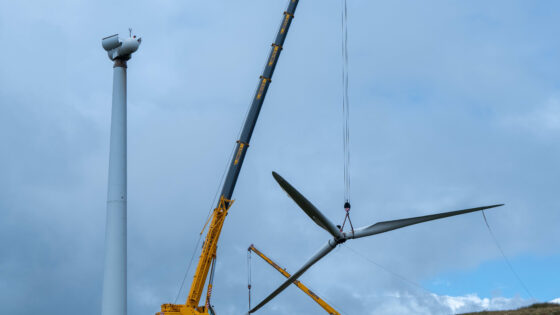
Decommissioning of Scotland’s first commercial wind farm, operated by ScottishPower, is being used as a UK-first testbed to align turbine end-of-life with material reuse and circular economy principles. Analysis of the dismantling process tracks recovery pathways for steel towers, concrete foundations and composite blades, examining options such as onshore recycling, repowering and secondary construction uses. Outcomes will inform future decommissioning strategies for UK wind assets, with direct implications for design-for-disassembly, waste permitting and contractual requirements on recyclability.
InCapture and Yara Pilbara Fertilisers have signed a non-binding MoU to evaluate large-scale offshore carbon storage infrastructure for industrial emitters in Western Australia’s Pilbara region. The partners will study technical options for multi-user CO₂ transport and injection, along with regulatory approvals for offshore storage permits and long-term liability. Outcomes could shape future capture hubs for gas, fertiliser and mining operations in the Pilbara, influencing pipeline routing, injection well design and integration with existing process plants.
Stantec has acquired Sydney-headquartered environmental consultancy Niche and its wholly owned subsidiary Ausecology, expanding its environmental and approvals capability across Australia. Niche brings specialist services in ecology, biodiversity assessment and environmental impact studies for transport, energy and resources projects, complementing Stantec’s existing design and engineering portfolio. The deal signals stronger in-house capacity for early-stage constraints mapping, permitting support and ecological monitoring on major linear infrastructure and mining-related developments in sensitive habitats.
Petrobras has confirmed an oil discovery at the Morpho exploration well in ultra-deep water block FZA-M-59, about 175 km off Amapá in Brazil’s Foz do Amazonas basin, after drilling that began in October 2025 at roughly $1 million per day. The company has already spent $300 million on the well, about half on environmental protection measures, and plans a wider Equatorial Margin campaign with three further wells in this block and six elsewhere, pending IBAMA licences. Environmental and Indigenous groups have launched legal challenges over spill risk, climate impacts and lack of community consultation, creating significant permitting and ESG uncertainty for future offshore development.
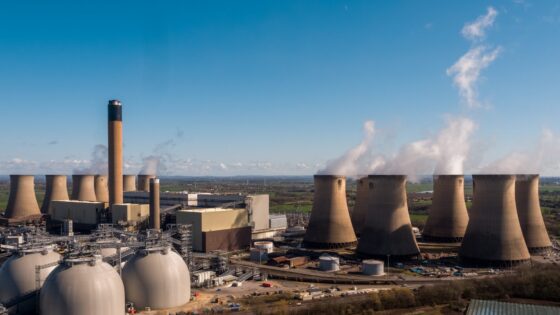
The Environment Agency has approved a variation to Drax Power Limited’s environmental permit, allowing post-combustion carbon capture to be added to its biomass-fired generating units at the Selby bioenergy plant in North Yorkshire. The decision enables integration of large-scale carbon capture and storage (CCS) infrastructure with existing flue gas treatment systems, including new absorber columns, solvent regeneration equipment and CO₂ compression and export facilities. Civil and geotechnical works will need to accommodate additional foundations, pipe racks and tie-ins within a live, high-load power station site.
New Environment Agency classifications under the Water Environment (Water Framework Directive) Regulations show only 14.3% of England’s surface water bodies achieve “Good ecological status” against retained EU standards. The results cover rivers, lakes, estuaries and coastal waters, and are based on biological, chemical and hydromorphological quality elements defined in the Directive. For civil and water engineers, the figures signal continued regulatory pressure on combined sewer overflows, wastewater treatment works and diffuse pollution controls in drainage and catchment management schemes.
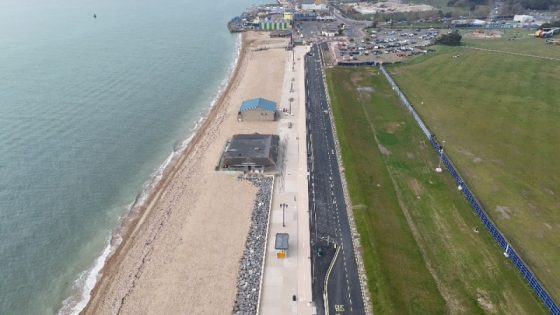
Grey coastal protection is challenged as a default choice, with the Sir John Armitt Prize going to a coastal defence scheme that departs from traditional concrete and rock armour. The award citation is used to argue that hard, grey infrastructure is often a habit rather than an engineering necessity, opening the door for nature-based solutions such as dunes, saltmarsh and managed realignment. For coastal engineers, this signals growing professional backing for hybrid and soft defences where hydraulic loading, sediment transport and long-term adaptability allow.
Era4 is proposing a landfill gas-powered data centre in Canterbury, using on-site electricity generation from captured methane to run high-density AI compute loads rather than exporting power to the grid. The developer aims to integrate gas engines with modular data hall construction to match generation profiles, arguing this could provide lower-carbon, baseload power compared with diesel backup and grid-only supply. For civil and geotechnical teams, the concept raises design questions around foundation vibration from reciprocating engines, gas collection infrastructure, and long-term settlement on or adjacent to landfill.
Explosive growth in artificial intelligence is sharply increasing water demand at data centres, where server cooling for every AI prompt can consume vast volumes of water through evaporative and chiller-based systems. New analysis cited by ISOIL Industria points to “hidden” withdrawals at hyperscale facilities, particularly in water‑stressed regions, where cooling towers and adiabatic systems can rival local industrial use. For miners hosting or supplying power to such centres, the findings signal a need for integrated water‑balance modelling, metering and reuse strategies to protect allocations for processing plants and communities.
Plans for the Northfleet Harbourside regeneration in Gravesend, Kent – including 3,500 homes on a 20ha Thames waterfront site – have been refused over concerns residents could face “chronic exposure to toxic lead”. The brownfield site, formerly used for heavy industry, was judged to pose an unacceptable long-term health risk despite proposed remediation measures. The decision signals tougher scrutiny of contamination risk assessments and remediation strategies on large riverside regeneration schemes with legacy industrial pollution.
Dice Environmental has expanded its ecology services under new associate ecologist Rob Halcrow to support clients with Biodiversity Net Gain (BNG) planning requirements. The offer now covers Preliminary Ecological Appraisals, UKHab habitat surveys, BNG assessments with statutory metric calculations, protected species and bat surveys, Ecological Impact Assessments, and Ecological Clerk of Works (ECoW) support. Early-stage ecological input is positioned to help developers, architects and planning consultants identify constraints sooner, commission proportionate surveys and reduce programme and planning consent risk on infrastructure schemes.
Keltbray has completed environmental remediation of the 9ha Waterfront East Park brownfield site on Chappell Drive in Doncaster, preparing it for future mixed-use development. Works are understood to have focused on treatment and removal of contaminated made ground typical of former industrial riverfront land, along with re-engineering of soils to achieve development-ready bearing capacities and platform levels. The scheme provides a cleaned and remediated development platform in a constrained urban setting, reducing geotechnical and contamination risk for follow-on infrastructure and building foundations.
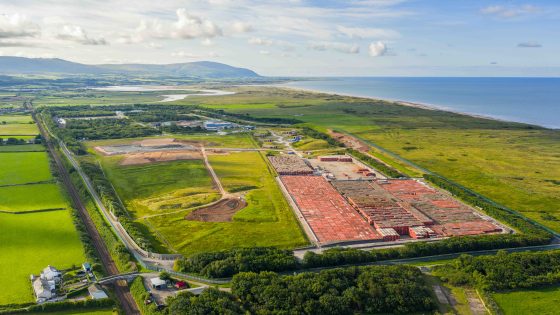
Nuclear Waste Services is procuring specialist technical support under a £17.8M Environmental Safety Case: General Tech inc Geological & Hydrogeological framework for the Low Level Waste Repository (LLWR) in Cumbria. The framework will cover geological, hydrogeological and wider environmental safety case inputs needed to justify continued operation and long‑term post‑closure performance of engineered vaults and near‑surface disposal structures. Consultants will be expected to provide site characterisation, groundwater and contaminant transport modelling, and support for regulatory submissions under the UK nuclear and environmental permitting regime.
The first UK carbon storage scheme to reuse existing infrastructure has secured a lease with The Crown Estate, clearing a key regulatory hurdle for offshore CO₂ injection and long-term subsurface storage. Repurposing existing offshore pipelines, platforms and wells is expected to cut upfront capex versus newbuild assets and shorten the timeline to first injection. For civil and geotechnical teams, the focus will be on verifying legacy asset integrity, adapting well and pipeline materials for CO₂ service, and reassessing seabed and reservoir behaviour under cyclic injection pressures.
WSP has been appointed to all three lots of the Environment Agency’s National Groundwater Modelling Framework, covering strategic modelling, regional and catchment-scale studies, and site-specific assessments. The framework will support regulation of abstraction, flood risk and drought management by standardising numerical groundwater models used to assess aquifer behaviour, contaminant migration and interactions with rivers and infrastructure. Consultants working on EA-regulated projects should expect closer alignment to EA-approved modelling tools, datasets and calibration approaches over the framework term.
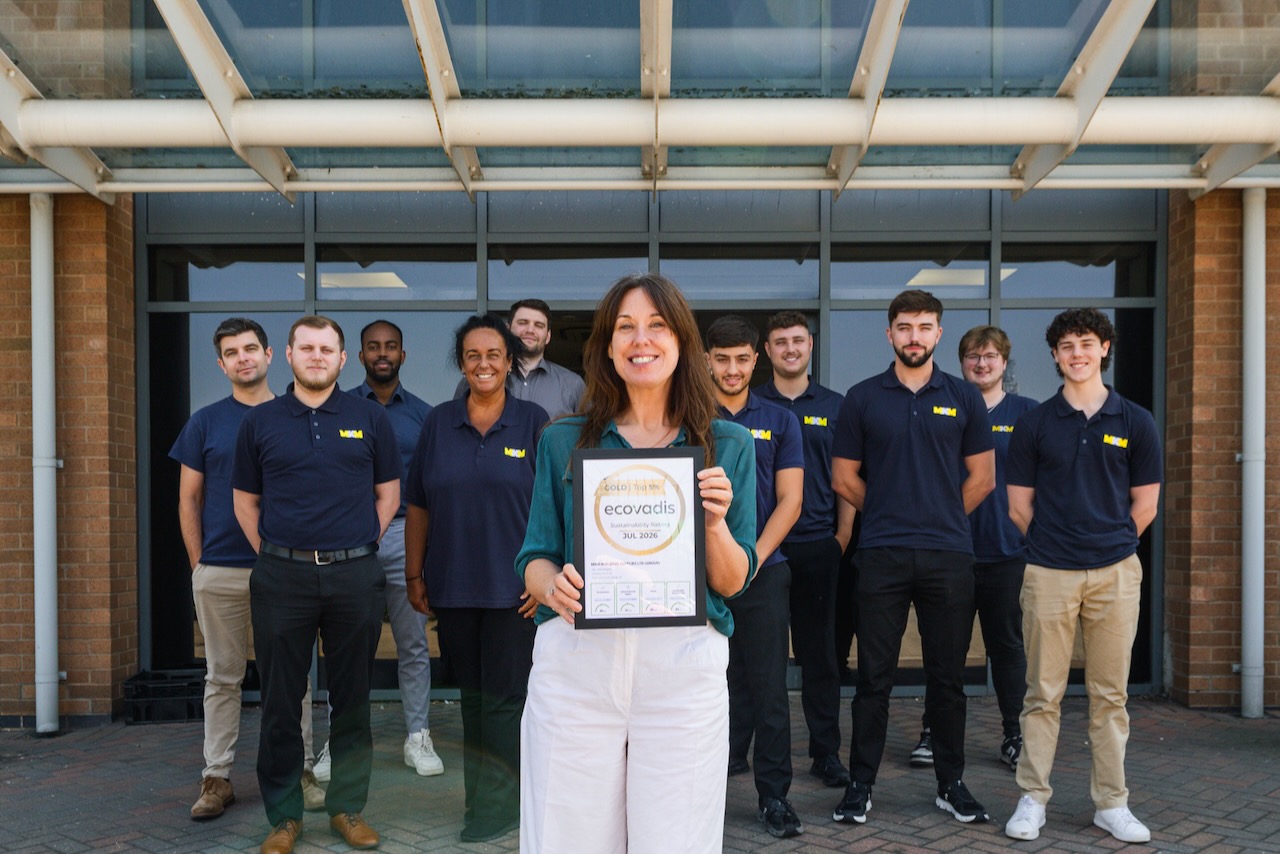
EcoVadis has awarded MKM Building Supplies a Gold medal, placing the independent merchant in the top 5% of 150,000 companies assessed worldwide for environmental, ethical, labour and human rights, and sustainable procurement performance. Key measures include opening its first two BREEAM Excellent certified branches in Cheltenham and Wolverhampton, rolling out electric forklift trucks across the network, and tightening supplier requirements via a strengthened Code of Conduct. For specifiers and contractors, MKM is also widening access to renewable heating technologies, energy‑efficient products and lower‑carbon construction solutions aligned with evolving UK building regulations.
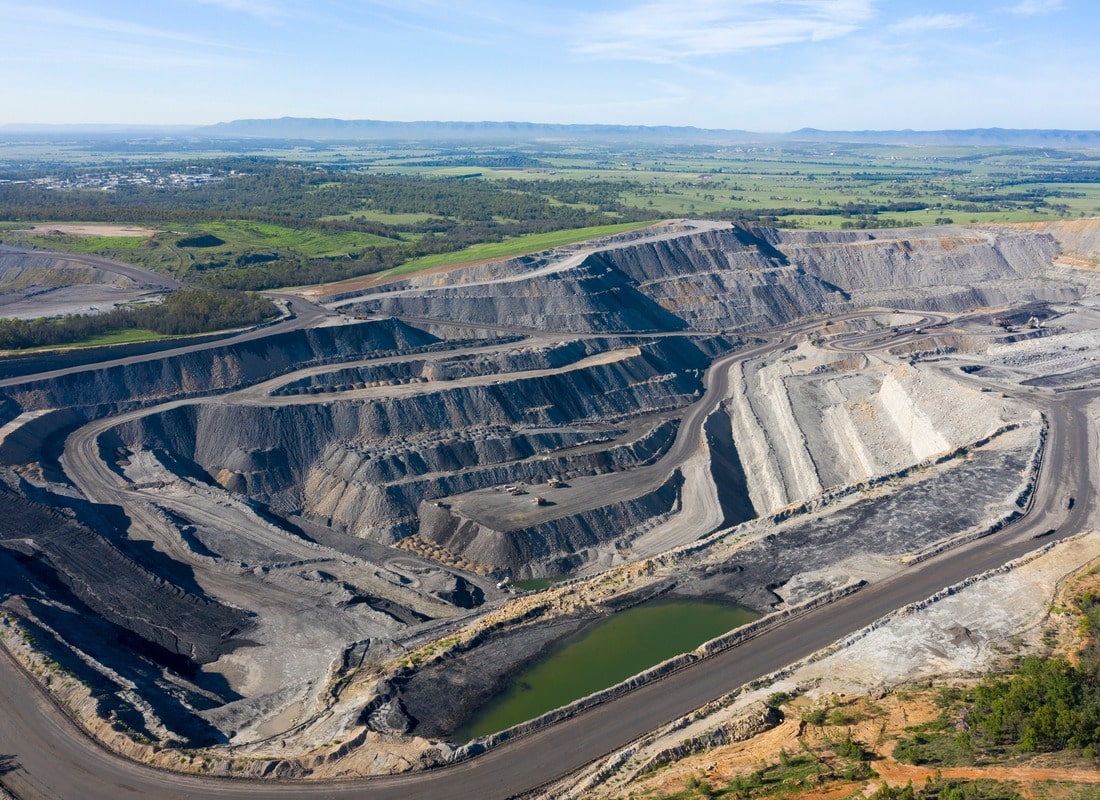
New South Wales coal mining has cut direct emissions by 30 per cent since 2005 and net emissions by 35 per cent once the federal Safeguard Mechanism is included, making it the fastest‑reducing sector in the state. The industry is now on track to meet legislated 2030 emissions targets, driven by mine‑site efficiency gains, progressive rehabilitation and changes in operational energy use. For mine planners and environmental engineers, the data signal mounting pressure on lagging sectors and a likely tightening of baseline and offset settings beyond 2030.
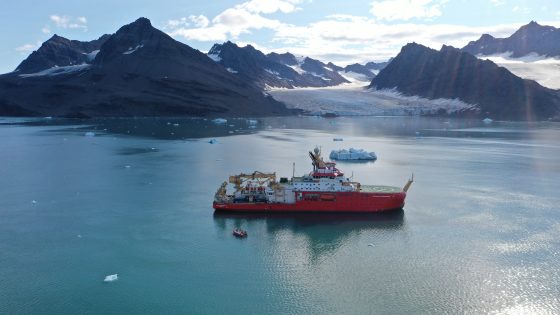
A fleet of autonomous marine robots, including the long‑range Autosub “Boaty McBoatface”, will be launched from the polar research vessel RRS Sir David Attenborough to survey rapidly melting Greenland outlet glaciers and adjacent fjords. The mission will map sub‑ice shelf geometry, measure water column temperature and salinity, and track glacier–ocean interactions that influence Atlantic Meridional Overturning Circulation. Data on seabed morphology, grounding line position and meltwater plumes will feed into improved sea level rise projections and coastal infrastructure design criteria.
Government has set out a delivery plan to protect 30% of England’s land for nature by 2030, coupling the target with new funding for national parks, Areas of Outstanding Natural Beauty and other protected landscapes. The plan includes support for climate adaptation research relevant to floodplain management, coastal erosion and peatland restoration, with implications for drainage design, embankment stability and long-term asset resilience. Additional investment in new national forests will drive large-scale tree planting and soil restoration, affecting ground investigation, slope design and hydrological modelling on adjacent infrastructure schemes.
Severn Trent Water has avoided a financial penalty from Ofwat despite “serious failings” in wastewater and sewage management, after committing to wastewater treatment works expansions and nature-based interventions such as wetlands and catchment measures. The company’s programme includes increasing capacity at existing wastewater facilities and deploying natural attenuation and storage solutions to reduce storm overflow discharges. For civil and environmental engineers, the case signals regulatory weight behind early engagement, demonstrable upgrade plans and integrated grey–green infrastructure rather than purely end-of-pipe compliance.
More than 60% of known hydrothermal vent mollusc species – 125 of 201 assessed – are now classed as threatened on the IUCN Red List due to prospective deep-sea mining for copper, cobalt, zinc and polymetallic nodules. IUCN is urging a moratorium ahead of the International Seabed Authority’s 13–31 July meeting in Jamaica, citing evidence from a 3,000‑tonne nodule removal test at 4,280 m in the Clarion‑Clipperton Zone that cut macrofaunal density by 37% and species richness by 32% within two years. For project planners and ESG teams, the findings signal rising regulatory and reputational risk for vent-proximal licences, while marine protected areas like the Mariana Arc of Fire currently shield some species such as Provanna exquisita.
Google.org has awarded a £1M grant to the FloodAction Coalition to build a UK-wide water resilience intelligence platform targeting both fluvial flooding and drought risk. The system is expected to aggregate hydrological, land-use and socio-economic data to identify priority catchments where nature-based solutions—such as floodplain reconnection, wetland restoration and upstream storage—offer the greatest cost–benefit. For civil and geotechnical teams, the platform should provide more granular evidence to justify green infrastructure schemes in business cases and long-term asset management plans.
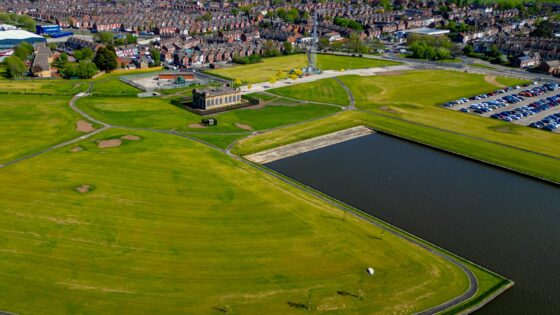
Market engagement has opened for a £382M vault optimisation and capping delivery contract at Nuclear Waste Services’ Low Level Waste Repository (LLWR) in Cumbria, signalling a major phase of engineered containment works. The package is expected to cover optimisation of existing disposal vaults and installation of multi-layer capping systems over legacy trenches and vaults to long-term standards for low-level radioactive waste isolation. Contractors will need deep experience in complex earthworks, geosynthetic barrier systems, and long-duration performance of engineered covers in aggressive coastal conditions.
United Utilities has created new woodlands and restored peatlands across more than 2,200 football pitches’ worth of land at its North West water catchment sites, signalling a major landscape-scale intervention in source protection. Large-scale peatland preservation and tree planting in upland catchments can materially reduce peak runoff, improve raw water quality by cutting colour and turbidity, and stabilise slopes, with long-term implications for reservoir yield, treatment costs and geotechnical performance of adjacent infrastructure.
United Utilities has announced a £30M programme to retrofit sustainable drainage across Liverpool, aiming to make the city “spongier” by intercepting and attenuating rainfall before it reaches combined sewers. Measures are expected to include permeable paving, rain gardens and other SuDS features on highways and public realm to cut surface runoff volumes and peak flows during intense storms. For civil and drainage engineers, the scheme signals more retrofit SuDS design in dense urban streetscapes, with a premium on hydraulic modelling, utility coordination and constructability in constrained corridors.
Ofwat has accepted a £44.7M enforcement package from Dŵr Cymru Welsh Water to remediate wastewater network failures and cut sewage spills across Wales. The measures will target storm overflows and underperforming treatment works, with investment directed to upgrading sewer infrastructure, increasing storage capacity and improving process control at key wastewater treatment plants. For civil and environmental engineers, the programme signals near-term demand for hydraulic modelling, network rehabilitation, and construction of additional attenuation and treatment assets under tighter regulatory scrutiny.
The Environment Agency has appointed a consortium led by AtkinsRéalis, with Stantec and Waterman as subconsultants, to deliver professional services for a new flood and coastal risk management framework across England. The framework will support planning, design and appraisal of defences and nature-based solutions for rivers, estuaries and coasts, shaping future capital works and asset management programmes. Consultants can expect significant workloads in hydraulic modelling, coastal processes, climate change allowances and whole-life risk assessments for Environment Agency schemes.
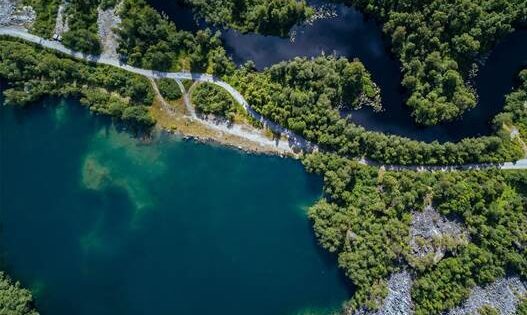
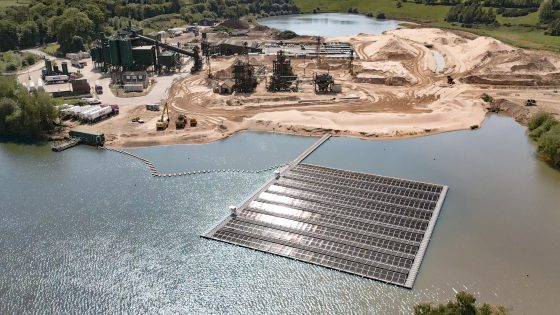
Nova has switched on a floating solar farm at a Cheshire silica sand quarry, delivering on-site power generation for one of the UK’s largest producers of high-quality industrial silica sand. Developed with environmental consultancy RSK, the array is mounted on a buoyant platform system on the quarry lake, preserving limited land area for extraction and processing infrastructure. The installation reduces grid dependence for energy-intensive washing and grading plant, and will require geotechnical and hydraulic checks on anchoring, bank stability and water-level variability over the quarry’s remaining life.
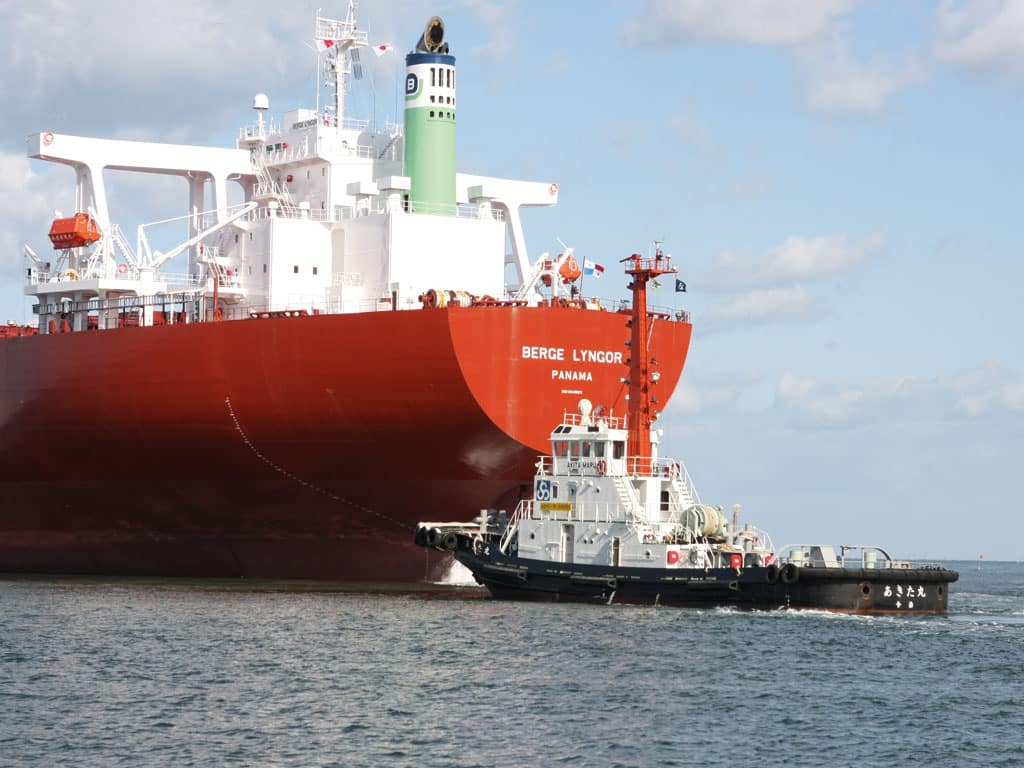
BHP and the Global Centre for Maritime Decarbonisation are trialling a marine biofuel blend derived from used cooking oil and waste animal fats on a BHP‑chartered bulk carrier voyage from Australia to China. The pilot focuses on blending, handling and tracing multi‑feedstock biofuels through existing bunker supply chains, using current marine fuel infrastructure rather than dedicated new storage or pipelines. Outcomes will inform fuel specification, engine performance and contamination risk management for large dry bulk vessels on long‑haul export routes.
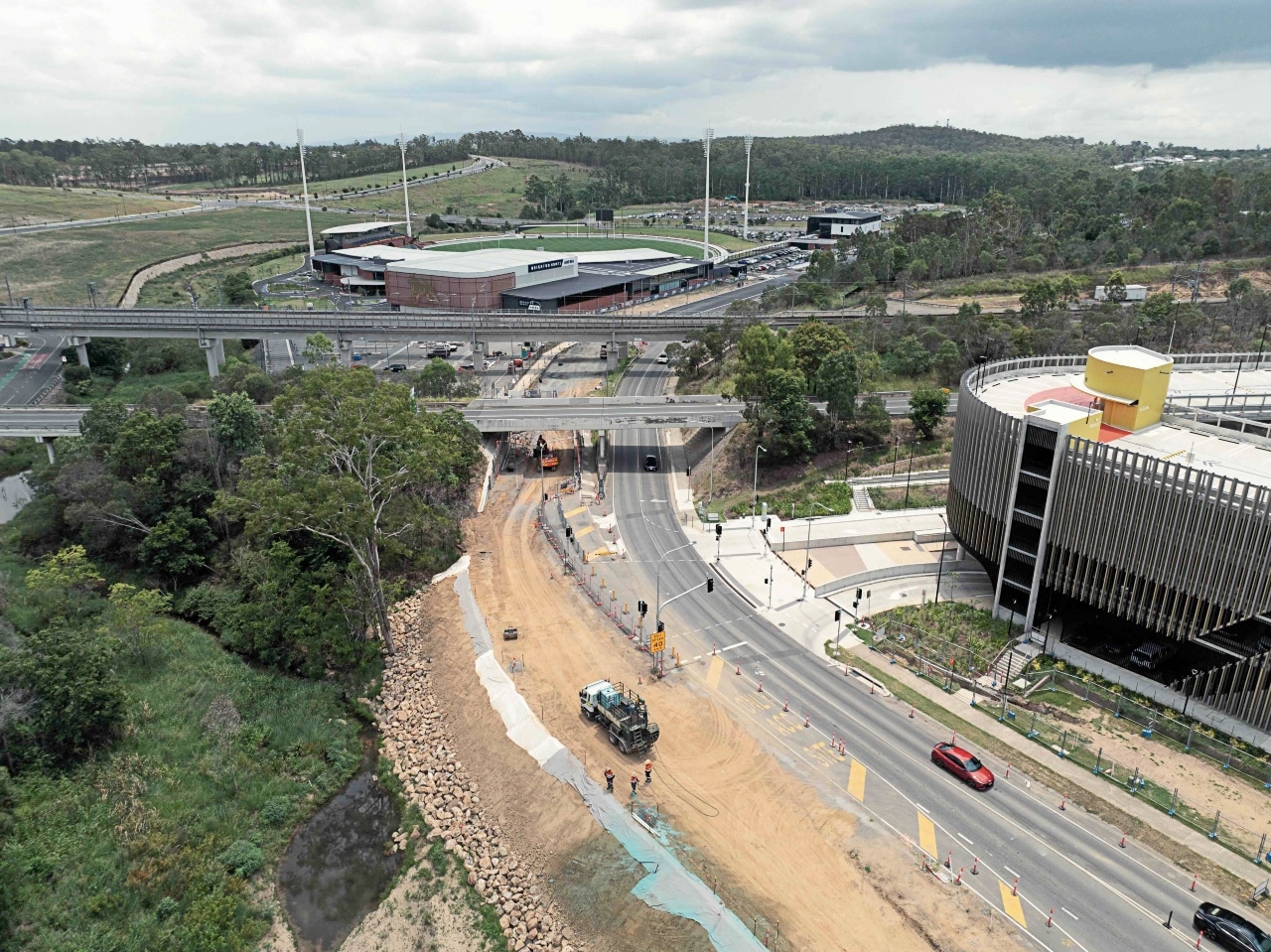
Australian-owned Vital Chemical, approaching its 50th year, is supplying erosion and dust control solutions to major Queensland civil and construction projects, with products formulated for environmentally and sustainably sound performance. The company’s portfolio targets typical road and earthworks issues such as exposed batter erosion, haul road dust and stockpile stabilisation, aiming to reduce sediment run-off and particulate emissions without relying on traditional solvent-based binders. For geotechnical and civil contractors, this signals wider availability of project-scale, compliance-focused surface treatments that can be integrated into construction environmental management plans.
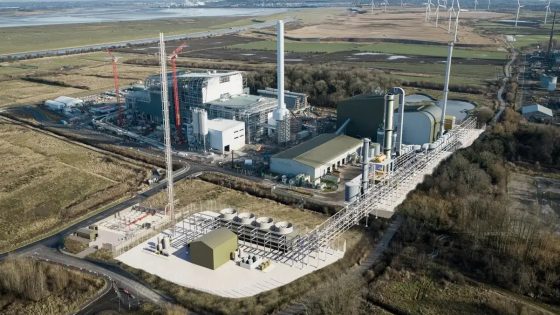
Carbon Capture, Usage and Storage (CCUS) is being positioned as a core element of UK decarbonisation strategy for gas-fired power and hard-to-abate materials such as cement and concrete, with Mitsubishi Heavy Industries promoting large-scale post-combustion capture units integrated with existing plants. Critics question lifecycle emissions, high energy penalties for solvent-based capture, and long-term integrity of offshore geological storage. For civil and materials engineers, the debate centres on retrofit feasibility at existing cement kilns, pipeline and compression infrastructure requirements, and whether CCUS investment may delay process changes or clinker substitution.
Panama will publish on Friday a third‑party environmental audit of First Quantum Minerals’ shuttered Cobre Panamá mine, a 350,000‑tonne‑per‑year copper operation that previously generated about 5% of national GDP, to guide President José Raúl Mulino’s decision on its future after the 2023 Supreme Court ruling voided the concession. Environment minister Juan Carlos Navarro and commerce minister Julio Moltó say the extensive report, following six preliminary technical reviews, will be released “with full transparency” and is the only basis for assessing environmental compliance. The move comes as new protests in Panama City, led by Sal de las Redes and Movimiento Independiente Voluntad, oppose any restart amid claims of irreversible environmental damage and debate over an estimated $3.5 billion economic loss since shutdown.
ArcelorMittal Exploitation Minière Canada has been fined C$100 million, the largest penalty ever under Canada’s Fisheries Act, after pleading guilty to 100 counts for discharging low‑pH effluents and waters with elevated zinc, nickel and suspended solids from its Mont‑Wright and Fire Lake iron ore operations between 2014 and 2022. Nearly C$250,000 in investigation costs must also be repaid, and a detailed effluent and mine drainage management plan for both complexes is due to federal enforcement officers by mid‑February 2027. The company says it has since invested over C$400 million in permanent water control and treatment infrastructure.
Arca Technologies has secured up to C$2 million from NRC IRAP’s Clean Tech initiative towards a C$7.4 million project to move its mineral activation and engineered carbonation processes from lab to field scale, targeting alkaline wastes such as mine tailings and steel slag. The company will design containerised, field‑deployable mineralisation units and prepare a first‑of‑kind industrial pilot, billed as the first field‑scale system to accelerate carbon mineralisation in mine waste. Commercial traction includes a 10‑year offtake with Microsoft for nearly 300,000 tonnes of CO₂ removal and an early pre‑purchase from Frontier.
Jacobs has been appointed by Great British Energy – Nuclear to deliver environmental consultancy and baselining at the Oldbury site in Gloucestershire, earmarked as a potential location for a new nuclear power station. The work will characterise existing ground, groundwater, ecological and radiological conditions to support future nuclear site licensing, environmental permits and design optioneering. Early baselining data will be critical for later geotechnical investigations, foundation design, flood and coastal risk assessments, and long-term monitoring strategies if the project proceeds.
A UK Government research paper concludes that Nature-based Solutions such as floodplain reconnection, riparian woodland and leaky barriers are most effective when planned and modelled across whole catchments rather than as isolated site schemes. The study stresses integrating NbS with existing hard defences, using hydrological and hydraulic modelling to quantify peak flow attenuation and downstream level reductions under design storm events. For civil and drainage engineers, this points to earlier basin-scale option appraisal, multi-landowner agreements and long-term monitoring of storage volumes, infiltration rates and sediment behaviour.
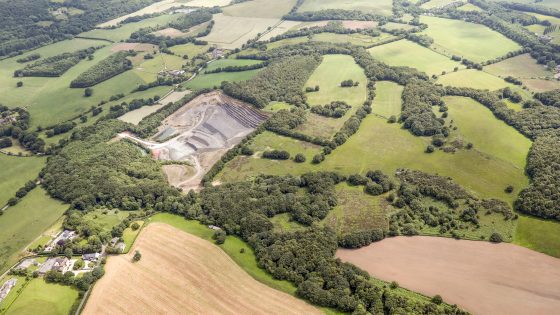
A former Ibstock extraction site, Dalton Quarry, is being converted by Green Earth Developments Group into a biodiversity “bank” of engineered habitats to generate tradable biodiversity net gain (BNG) units for UK infrastructure schemes. The project will create a mosaic of habitat types on previously worked quarry land, allowing developers to purchase pre-accredited BNG units rather than delivering all ecological uplift within constrained project footprints. For civil and geotechnical teams, this model could influence land-take, earthworks design and long-term aftercare obligations on major road, rail and housing projects.
National Highways has appointed WSP to lead a multi-disciplinary team to deliver its Water Quality Plan targeting pollution from road run-off across the strategic road network. The commission will focus on identifying high-risk outfalls, retrofitting drainage and treatment assets such as interceptors, swales and attenuation ponds, and improving monitoring of contaminants including hydrocarbons and suspended solids. For civil and geotechnical designers, the move signals more retrofit water treatment structures at existing junctions, cuttings and embankments, with tighter controls on discharge consents.
National Highways has appointed WSP as technical partner, supported by Mott MacDonald, Ramboll, Arup and Aecom, to deliver its Water Quality Plan targeting the most polluting road run‑off discharges on the Strategic Road Network by 2030. The programme will design and implement treatment for high‑risk outfalls using nature‑based systems (e.g. swales, wetlands) and mechanical solutions installed within existing highway boundaries, focusing on oils, tyre‑derived suspended solids and brake‑related metals. For designers and geotechnical teams, this signals significant upcoming work on retrofit drainage, attenuation and treatment assets constrained by current carriageway footprints.
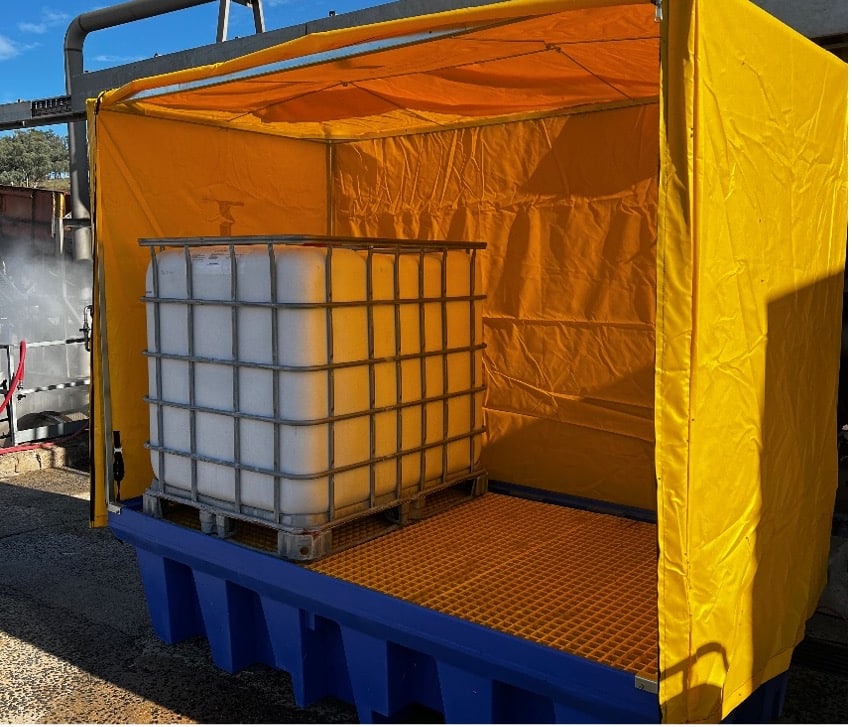
Mining operators are increasingly using spill bunded pallets to contain fuels, lubricants and other hazardous liquids stored in workshops, laydown yards and processing areas, reducing the risk of unplanned releases to soil and drainage systems. Eco Pallets’ moulded polyethylene bunded units, shown in use at Tanafloc Australia, integrate forklift pockets, removable grates and corrosion‑resistant sumps sized to capture typical drum and IBC failure volumes. For geotechnical and environmental teams, this simplifies compliance with bunding requirements, reduces contaminated run‑off, and limits the footprint of lined or remediated ground.
Carbon Direct has partnered with Arca to co-develop and market Arca’s Industrial Mineralization (IMin) carbon dioxide removal credits, based on accelerated mineralisation of alkaline mine and steelmaking waste. The technology, validated in an 18‑month pilot with BHP at an active Australian mine, has already secured a 10‑year offtake from Microsoft for nearly 300,000 tonnes of CO₂ and an early prepurchase from Frontier. With 16.5 billion tonnes of suitable legacy waste and 3 billion tonnes produced annually, Arca targets durable (>10,000‑year) CO₂ storage with potential tailings stabilisation co‑benefits.
Construction clients and contractors are starting to embed biodiversity metrics alongside whole‑life carbon assessment, using quantified habitat units and standardised biodiversity net gain (BNG) calculators to track performance through design, procurement and delivery. Supply chains are being asked to evidence habitat creation, connectivity and species outcomes in product data sheets and contracts, linking materials choices and temporary works to measurable on‑site ecological change rather than qualitative statements. For geotechnical and civil teams, this signals future schemes where cut‑and‑fill, drainage, earthworks phasing and landscape design must all be optimised against both carbon and biodiversity targets.
Natural England has approved the Stodmarsh stream enhancement scheme under the Habitats Regulations, unlocking nutrient neutrality credits to support several thousand new homes around Ashford, Kent. The scheme centres on watercourse and wetland improvements in the Stodmarsh catchment to offset additional nitrogen and phosphorus loads from new foul drainage. Planners, drainage designers and geotechnical teams will need to integrate on-site attenuation, SuDS and connection strategies that align with the credit conditions tied to the Stodmarsh enhancement works.
The Metals Company’s NORI and TOML subsidiaries have submitted 2013–2022 exploration data from the eastern Clarion‑Clipperton Zone to the ISA’s DeepData system, including 777 equipment deployments, over 4,800 environmental samples, 76,000 biological records and 69,185 geochemical data points from depths beyond 4,000 m. The dataset now accounts for roughly one‑third of all CCZ entries in DeepData and 54% of biological records in the OBIS‑ISA node, positioning it as a key reference for Environmental Impact Assessments. TMC argues this evidence base is sufficient to start monitored commercial nodule collection, despite ongoing calls from NGOs for a moratorium.
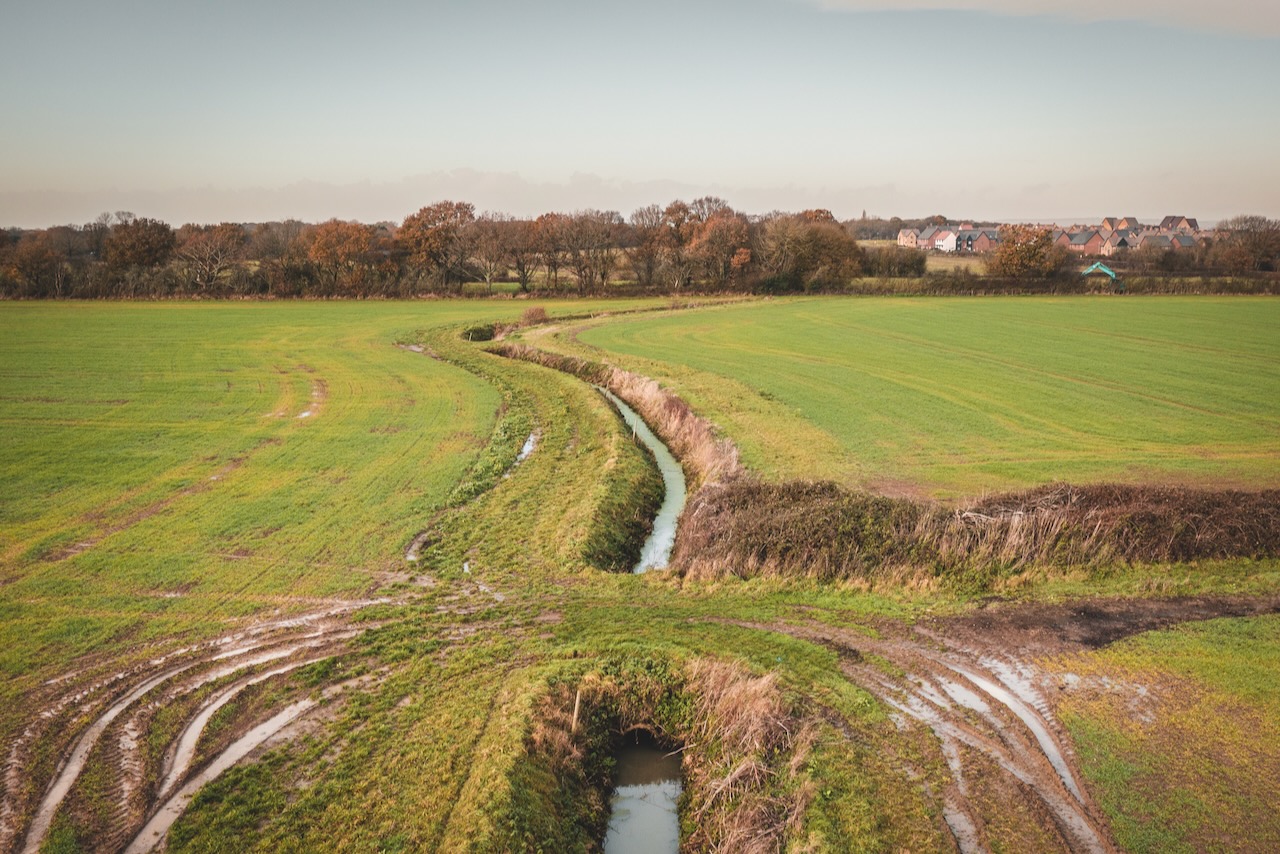
Construction’s role in more than one-third of UK carbon emissions is widely acknowledged, but its contribution to acute silt pollution from earthworks, dewatering and runoff from haul roads and stockpiles is still largely overlooked. Fine sediment washed from sites into watercourses can smother spawning gravels, clog culverts and foul SuDS assets, often breaching Environment Agency permits and triggering costly stop-work notices. The piece calls for more rigorous use of silt fences, settlement lagoons and lamella clarifiers, plus better phasing of bulk earthworks to keep disturbed areas and exposed cohesive soils to a minimum.