Geomechanics.io

  • Free Tools
Sign UpLog In

    Geomechanics.io

    Geomechanics, Streamlined.

    © 2026 Geomechanics.io. All rights reserved.

    Geomechanics.io

    CMRR-ioGEODB-ioHYDROGEO-ioQCDB-ioFree Tools & CalculatorsBlogLatest Industry News

    Industries

    MiningConstructionTunnelling

    Company

    Terms of UsePrivacy PolicyLinkedIn

    Top Stories

    National Grid TBM under the Thames: tunnelling design and risk notes for engineers
    Infrastructure
    in 8 months

    National Grid TBM under the Thames: tunnelling design and risk notes for engineers

    A 271.5‑tonne Herrenknecht Mixshield TBM, Caroline, has started driving a 2.2km electricity cable tunnel with a 4m internal diameter beneath the River Thames in Essex for National Grid’s Grain to Tilbury project, delivered by the Ferrovial BEMO joint venture. The drive will pass through variable Thames estuary ground conditions between 35m‑deep launch and reception shafts of 15m and 12m diameter, with tunnelling continuing into 2026 and overall scheme completion targeted for 2029. The new tunnel will replace the 1969 Thames Cable Tunnel and carry new high‑voltage circuits between Grain and Tilbury substations.

    Panama Canal Mixshield undercrossing: design and tunnelling lessons for engineers
    Infrastructure
    in 8 months

    Panama Canal Mixshield undercrossing: design and tunnelling lessons for engineers

    Hudson Tunnel funding deadline: schedule and risk takeaways for project teams
    Infrastructure
    in 7 months

    Hudson Tunnel funding deadline: schedule and risk takeaways for project teams

    Implenia/Marti JV MehrSpur Zurich–Winterthur: design and risk notes for engineers
    Infrastructure
    in 4 months

    Implenia/Marti JV MehrSpur Zurich–Winterthur: design and risk notes for engineers

    Melbourne sinkhole investigations: geotechnical lessons for tunnel project teams
    Hazards
    in 3 months

    Melbourne sinkhole investigations: geotechnical lessons for tunnel project teams

    Xihe on Tung Chung Line down-track: TBM turnback method and risks for tunnel engineers
    Infrastructure
    in 2 months

    Xihe on Tung Chung Line down-track: TBM turnback method and risks for tunnel engineers

    Latest News

    Sydney Metro Stations Package West: design and delivery notes for engineers
    Infrastructure
    in about 1 month

    Sydney Metro Stations Package West: design and delivery notes for engineers

    Gamuda Engineering has secured the Sydney Metro Stations Package West as principal contractor, covering design and construction of five new underground stations at Westmead, North Strathfield, Burwood North, Five Dock and The Bays on the 24km Sydney Metro West line between Greater Parramatta and the CBD. The scope includes deep station boxes, entrances and access points, full station fit-out and integration with surrounding precincts, with Laing O’Rourke and DT Infrastructure joining as MetroVista delivery partners. Site works are scheduled to start on Monday, 5 January 2026.

    Bankstown Station precinct: retrofit design and access lessons for engineers
    Infrastructure
    about 11 hours ago

    Bankstown Station precinct: retrofit design and access lessons for engineers

    The new transit interchange and community precinct at Bankstown Station in New South Wales has opened, following the largest upgrade to the station since it began operation in 1909. A new 90‑metre, tree‑lined central plaza links the precinct, with a centralised walkway designed to streamline passenger flows and provide step‑free, accessible interchange between modes. For civil and transport engineers, the project signals continued retrofitting of early‑20th‑century rail assets to contemporary accessibility and multimodal design standards.

    Hexham Straight Widening Project: geotechnical and drainage notes for engineers
    Infrastructure
    about 11 hours ago

    Hexham Straight Widening Project: geotechnical and drainage notes for engineers

    Hexham Straight Widening in New South Wales’ Hunter Valley has been completed as part of the M1 Pacific Motorway extension to Raymond Terrace, backed by more than $1.79 billion in joint Federal–State funding. The upgrade removes the long‑standing Hexham bottleneck on this key freight and commuter corridor, improving capacity and reducing stop–start traffic on the approach to Newcastle. For pavement and geotechnical teams, the works sit within a flood‑prone, soft-ground estuarine environment, implying substantial ground improvement, drainage and settlement control measures along the widened carriageway.

    Deep Sea Minerals exploration licence: CCZ project implications for mine planners
    Mining
    about 11 hours ago

    Deep Sea Minerals exploration licence: CCZ project implications for mine planners

    Deep Sea Minerals (CSE: SEAS), via its US subsidiary American Ocean Minerals Corp., has applied to NOAA for a DSHMRA exploration licence targeting polymetallic nodules in a defined tract of the Clarion-Clipperton Zone in the Pacific. The submission includes baseline environmental data, proposed monitoring and mitigation measures, and a phased exploration plan with specified expenditure commitments. NOAA has recently pledged extra resources to accelerate licence and permit reviews, following a 2025 US executive order promoting deep-sea mining for nickel, copper and manganese.

    Tivan’s Speewah fluorite project: MSP backing and mine planning notes for engineers
    Mining
    about 11 hours ago

    Tivan’s Speewah fluorite project: MSP backing and mine planning notes for engineers

    Tivan Limited’s Speewah fluorite project in Western Australia has been selected as a priority initiative under the US–Japan–Australia Minerals Security Partnership, giving it access to coordinated government backing for critical minerals development. The project targets high-purity fluorite (fluorspar) suitable for aluminium smelting and battery materials supply chains, positioning it as a potential non-Chinese source of acid-grade concentrate. For geotechnical and mine planners, the designation signals likely acceleration of resource drilling, pit design and processing studies, with funding support tied to export-oriented offtake into US and Japanese markets.

    Rio Tinto’s $2bn Boyne smelter energy deal: grid and load insights for engineers
    Infrastructure
    about 12 hours ago

    Rio Tinto’s $2bn Boyne smelter energy deal: grid and load insights for engineers

    Rio Tinto has agreed a $2 billion energy deal with the Queensland and Commonwealth governments to secure long-term power for the 560,000 tonne-per-year Boyne aluminium smelter near Gladstone. The package centres on access to firmed renewable generation from new Queensland projects and transitional support as coal-fired capacity retires, aiming to keep the smelter operating beyond 2030. For process engineers and power planners, the arrangement signals continued high baseload demand on the Gladstone grid and a need to integrate smelter load with variable solar and wind output.
    Geoscience Australia 80‑year strategy: data and risk takeaways for miners
    Policy
    about 12 hours ago

    Geoscience Australia 80‑year strategy: data and risk takeaways for miners

    Geoscience Australia is marking 80 years of geological and geophysical operations by launching a new 10‑year national geoscience strategy to guide exploration, resource assessment and hazard mapping. The strategy is expected to steer federal investment in continent‑scale datasets such as deep seismic profiles, gravity and magnetics surveys, and national drilling programs that support critical minerals targeting. For miners and consultants, the roadmap signals continued access to pre‑competitive data to de‑risk greenfields exploration and infrastructure planning across remote basins.

    Kal Tire–Decoda haul road hazard tech: design and maintenance insights for mines
    Mining
    about 12 hours ago

    Kal Tire–Decoda haul road hazard tech: design and maintenance insights for mines

    Kal Tire’s Mining Tire Group has partnered with Australian mining technology firm Decoda to deploy a real-time haul road hazard detection system for large open-pit haul trucks. Using on-board sensors and analytics integrated with fleet management platforms, the system flags issues such as potholes, spillage, standing water and excessive grade or crossfall as trucks travel, rather than relying solely on periodic road inspections. The approach targets reduced tyre damage and unplanned downtime, and gives mine planners continuous data to prioritise road maintenance and adjust haul profiles.

    Liberty Gold–Heliostar Goldstrike sale: funding and schedule lens for mine planners
    Mining
    about 12 hours ago

    Liberty Gold–Heliostar Goldstrike sale: funding and schedule lens for mine planners

    Liberty Gold is selling its Goldstrike oxide gold project in southern Utah to Heliostar Metals for US$72.5 million, structured as US$10 million cash plus 1.6 million Heliostar shares on closing, followed by four staged cash payments over five years tied to infrastructure milestones and feasibility/construction decisions. Proceeds will fund Liberty’s Black Pine project in Idaho, which a 2024 prefeasibility study pegs at US$552 million NPV (5%), 32% IRR and 2.2 million oz output over 17 years at US$1,380/oz AISC. The non-dilutive deal supports feasibility work and long-lead procurement ahead of a targeted 2028 construction start.

    Sustainably safe and sound: recycled plastic noise walls explained for designers
    Infrastructure
    about 12 hours ago

    Sustainably safe and sound: recycled plastic noise walls explained for designers

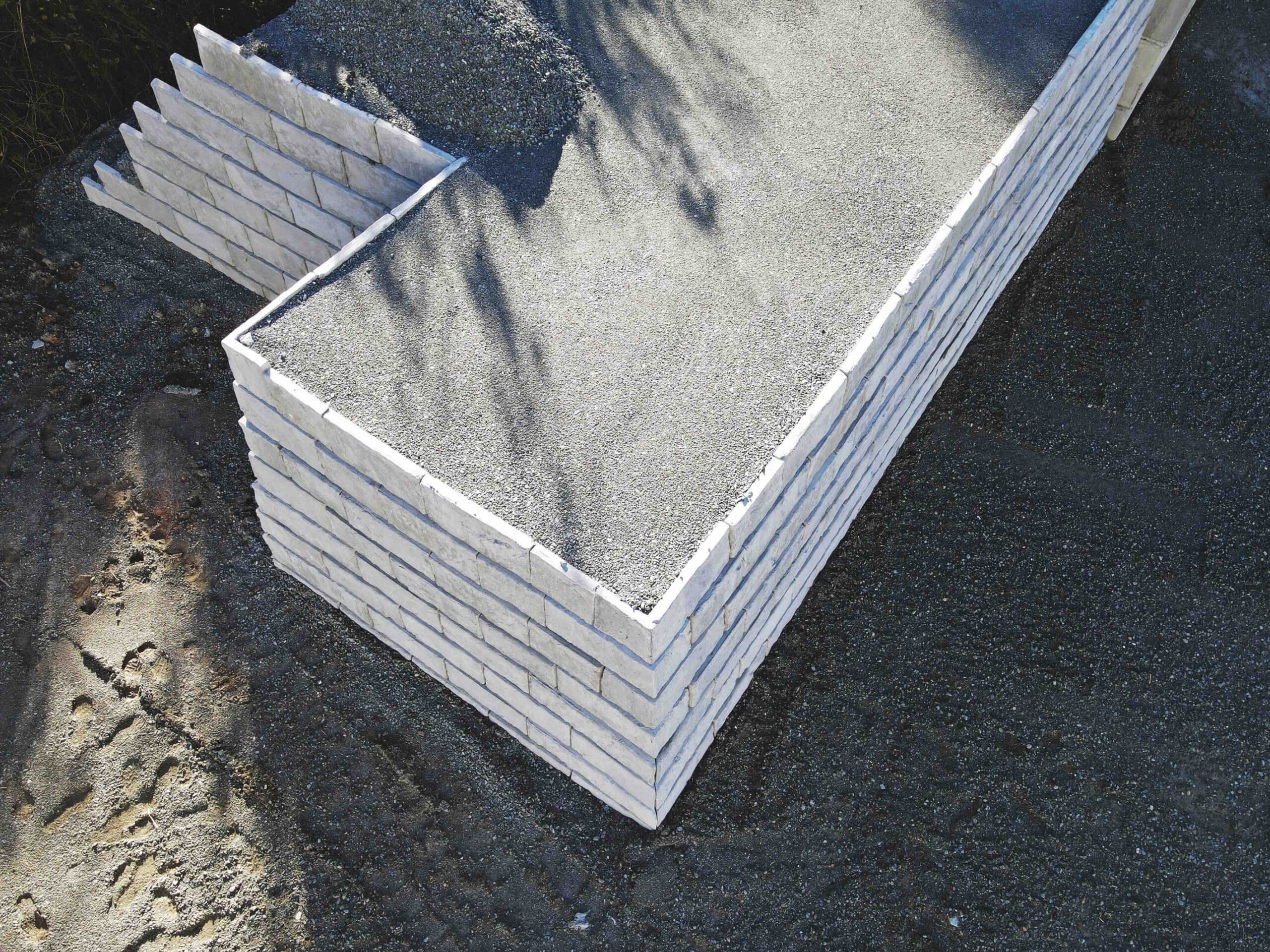
    More than 10 kilometres of noise walls on Victoria’s North East Link are being built using a new recycled plastic formulation developed through a design–delivery collaboration between Kyriacou Architects and BKK Architects. The system replaces conventional precast concrete panels with modular recycled plastic elements, cutting virgin material use and embodied carbon while meeting acoustic and impact performance requirements for a major urban motorway. For civil designers, the project provides an in-field precedent for large-scale use of recycled polymers in roadside barrier infrastructure.

    Neverfail Spring Water at remote mines: safety and compliance notes for site teams
    Mining
    about 12 hours ago

    Neverfail Spring Water at remote mines: safety and compliance notes for site teams

    Hydration that holds up focuses on Neverfail Spring Water’s approach to supplying potable water to remote mine sites using bulk 15L and 19L returnable bottles, integrated filtration units and scheduled delivery to crib rooms and processing areas. The company uses a multi-stage production process with high-frequency microbiological and chemical testing to meet Australian Drinking Water Guidelines, targeting contaminants such as dissolved metals, pathogens and suspended solids common in mining regions. For site managers, the system reduces reliance on trucked single-use bottles, simplifies water-quality compliance, and supports fatigue management and heat-stress controls in high-temperature pits and plants.

    Cat 6040 mining shovel: productivity and unit cost takeaways for mine planners
    Mining
    about 12 hours ago

    Cat 6040 mining shovel: productivity and unit cost takeaways for mine planners

    Caterpillar has introduced a next-generation Cat 6040 hydraulic mining shovel in the 400 t class, targeting mines needing higher material movement with tighter fuel budgets and labour constraints. Building on the existing 6040 platform, the new model focuses on productivity-enhancing features and increased structural durability to support longer uptime in high-hour, hard-rock applications. For mine planners and maintenance teams, the key implications are higher payload capability per pass and potentially reduced unit cost of material moved, subject to site-specific haulage and bench geometry.

    Fenner INFINITYSERIES belts: design and maintenance notes for mine conveyors
    Mining
    about 13 hours ago

    Fenner INFINITYSERIES belts: design and maintenance notes for mine conveyors

    Fenner Conveyors, a Michelin Group company, has launched its INFINITYSERIES range of recycled‑content conveyor belts for Australian heavy industries after previewing the line at its K‑MIX Material Innovation Hub Open Day. The belts incorporate reclaimed materials to cut lifecycle environmental impact while targeting the same mechanical performance envelope as conventional Fenner products used on high‑load mining and bulk‑handling conveyors. For operators, the move signals growing availability of circular belt options without major changes to existing conveyor design, splice practices or maintenance regimes.

    Central banks’ gold buying momentum into 2026: supply and project signals for miners
    Mining
    about 15 hours ago

    Central banks’ gold buying momentum into 2026: supply and project signals for miners

    Central banks are on track to buy roughly 850 tonnes of gold in 2026, only slightly below the 863 tonnes purchased in 2025, even after prices hit a record near $5,600/oz before sliding towards bear-market territory. China, Kazakhstan, Poland and Brazil remain key buyers, with Indonesia and Malaysia re-entering the market after long absences, while the US still holds over 8,100 tonnes and Germany about 3,350 tonnes in reserves. Analysts warn that the Middle East war and elevated oil prices could force some states to sell bullion to support foreign exchange reserves, injecting further price volatility.

    Uranium Energy capacity build‑out: production and UF6 refinery lens for engineers
    Mining
    about 17 hours ago

    Uranium Energy capacity build‑out: production and UF6 refinery lens for engineers

    Uranium Energy Corp has started uranium extraction from three new header houses at wellfield 11 of its Christensen Ranch ISR operation in Wyoming, with one more awaiting approval and three additional units under construction in wellfield 12 and the 10-extension, as it targets up to 4 million lb/year of capacity across three new wellfields. The recovered uranium feeds the Irigaray central processing plant, now being upgraded after first drummed production in February 2025 to handle output from 11 Powder River Basin projects. In parallel, UEC has received a US NRC docket number for a proposed uranium refining and conversion facility, planned with Fluor for 10,000 t/year UF6 capacity, exceeding half current US demand.

    Croydon rail overhaul and Gatwick expansion: capacity and junction design lens
    Infrastructure
    about 18 hours ago

    Croydon rail overhaul and Gatwick expansion: capacity and junction design lens

    MPs are pressing the Department for Transport to revive the stalled Croydon rail remodelling, arguing the existing bottleneck on the Brighton Main Line will worsen with Gatwick Airport’s planned second runway and the proposed Universal Studios theme park. The scheme, previously paused amid cost pressures, would untangle flat junctions around East Croydon and expand track capacity through the Selhurst triangle, a critical node for south London and Sussex services. Rail engineers face renewed scrutiny over junction geometry, signalling headways and resilience for peak airport and leisure traffic.

    E&P’s US$1.2bn Tarkwa and Damang push: fleet and slope impacts for planners
    Mining
    about 18 hours ago

    E&P’s US$1.2bn Tarkwa and Damang push: fleet and slope impacts for planners

    Ghanaian mining contractor Engineers & Planners Co Ltd is committing about US$1.2 billion to its contract mining operations at Gold Fields’ Tarkwa and Damang gold mines. The company has already dispatched 30 Caterpillar 785D haul trucks to site, signalling a major fleet expansion for the open-pit operations. For mine planners and geotechnical teams, the larger 785D fleet points to higher material movement rates, potential push for deeper cutbacks, and increased focus on haul road design, pit slope performance, and equipment–ground interaction.

    UK cash retentions ban: commercial and risk implications for project teams
    Policy
    about 18 hours ago

    UK cash retentions ban: commercial and risk implications for project teams

    The UK government’s proposed ban on cash retentions in construction, following a year-long consultation, is being hailed by trade bodies such as the ECA and NFRC as a long-fought win for specialist contractors previously exposed to withheld payments used as free working capital. Legal and commercial advisers including Kennedy’s Amanda Hanmore and Osborne Clarke’s Daniel Cashmore warn the ban could drive higher project costs via performance bonds, more back‑loaded payment schedules and milestone‑only payments, and trigger more disputes over incomplete or defective works. BCIS chief economist David Crosthwaite points to project bank accounts and alternative defects and quality mechanisms as critical to maintaining delivery standards and payment security across supply chains.

    The people problem: apprenticeship lessons for site and ground engineers
    Infrastructure
    about 18 hours ago

    The people problem: apprenticeship lessons for site and ground engineers

    National Apprenticeship Week saw contractors, consultants and suppliers use site visits, taster days and structured Level 2–6 apprenticeship schemes to tackle construction’s chronic skills shortage. Interviewees point to clearer progression routes from T-levels to degree apprenticeships, better on-site mentoring, and earlier engagement with schools as critical to attracting site engineers, quantity surveyors and trades. For geotechnical and civil practices, the message is to embed apprentices on live ground investigation, piling and temporary works packages rather than confining training to classroom or lab settings.

    Southbound again: Antarctic Discovery Building and causeway design notes for engineers
    Infrastructure
    about 18 hours ago

    Southbound again: Antarctic Discovery Building and causeway design notes for engineers

    The British Antarctic Survey’s £100m Discovery Building at Rothera Research Station has been completed on time and budget, centralising field prep, storage, offices, training, medical and welfare facilities under one BMS-controlled roof designed for -22°C to +15°C conditions and targeting a 25% cut in station carbon emissions. Six redundant buildings are being deconstructed piece-by-piece, with cladding and other materials reused on site and waste containerised for controlled removal. Separately, Southbay Civil Engineering’s new 240m replacement causeway at Port Stanley, Falkland Islands, will use an inner rock core, outer rock armour and a heavy steel ramp, with local labour and materials.

    IAMGOLD’s 4G/5G private network at Côté Gold: design takeaways for mine engineers
    Mining
    about 19 hours ago

    IAMGOLD’s 4G/5G private network at Côté Gold: design takeaways for mine engineers

    IAMGOLD has installed a private 4G/5G network at the Côté Gold open-pit mine between Timmins and Sudbury, using Ambra Solutions’ mining-focused design and Nokia industrial-grade wireless equipment to modernise all site communications. The LTE/5G system is intended to support autonomous haulage, high-precision drilling and real-time fleet monitoring across the large greenfield pit and associated process plant. For engineers, the move signals growing expectation that new Canadian gold operations will be built around low-latency, high-bandwidth wireless backbones rather than legacy leaky-feeder or Wi-Fi.

    Gold price holds steady: planning implications for mine project economics
    Mining
    about 19 hours ago

    Gold price holds steady: planning implications for mine project economics

    Gold steadied on Tuesday above $4,400/oz after falling as much as 2.7% in Asian trading, pausing a nine-day slide that has left bullion 21% below its all‑time high and 15% lower since the start of the Middle East war. Frank Monkam of Buffalo Bayou Commodities cites hawkish repricing of US rate expectations, a stronger dollar, and forced selling amid bond and equity declines, with deleveraging by retail investors and emerging‑market central banks liquidating reserves. Despite near‑term downside flagged by Standard Chartered and TD Securities, Ed Yardeni still targets $5,000/oz by end‑2026 and $10,000 by 2030.

    Leading the charge: second-life EV batteries on site – safety and design notes
    Infrastructure
    about 19 hours ago

    Leading the charge: second-life EV batteries on site – safety and design notes

    Rapid adoption of electric vehicles is creating a growing stream of “nearly new” traction batteries, and a specialist firm is repurposing these packs into temporary power units for construction sites. The systems aggregate multiple second-life EV modules into containerised battery energy storage, capable of running site cabins, tower cranes and small plant that would traditionally rely on 100–300kVA diesel generators. For contractors, this points to lower fuel logistics, reduced local emissions and quieter operation, but also raises questions on battery health monitoring, fire safety strategy and end-of-second-life recycling routes.

    RAIB rail crane crushing incident: safety and signalling lessons for engineers
    Infrastructure
    about 19 hours ago

    RAIB rail crane crushing incident: safety and signalling lessons for engineers

    A Rail Accident Investigation Branch report on a Port Glasgow possession details how a Kirow rail crane slewed unexpectedly and crushed two track workers between the crane and a wagon, leaving one with serious injuries. Investigators found the crane operator and controller were using unclear hand signals, with no agreed communication protocol, and that inadequate task lighting on the wagon meant the operator could not reliably see staff positions. The findings point to the need for formalised crane communication plans, better illumination of work areas, and stricter exclusion zones around on‑track plant.

    The Electric Mine 2026: electrification roadmaps and risks for mine engineers
    Mining
    about 19 hours ago

    The Electric Mine 2026: electrification roadmaps and risks for mine engineers

    The Electric Mine 2026 conference will run from 5–7 May in Lisbon, Portugal, as its sixth edition convenes miners, OEMs and power suppliers against a backdrop of heightened energy security concerns linked to the evolving war in the Middle East. Delegates are expected to focus on mine-wide electrification roadmaps, high‑power charging for large haul fleets, and grid‑constrained operations. For engineers, the event signals growing pressure to integrate trolley-assist, battery‑electric and hybrid power systems into brownfield pits while managing power quality and network stability.

    Palfinger picks APS for UK access: fleet and project implications for engineers
    Infrastructure
    about 19 hours ago

    Palfinger picks APS for UK access: fleet and project implications for engineers

    Austrian crane and access manufacturer Palfinger has appointed APS as exclusive UK distributor for its aerial work platforms, replacing CPL (Cumberland Platforms Ltd.), which held the role since 2021. APS will handle distribution, sales and after-sales support nationwide, leveraging its 35 years’ experience and existing national service network to support Palfinger’s truck-mounted and self-propelled access equipment. The move is positioned as a core element of Palfinger’s 2030 strategy, signalling stable long-term product support for contractors and plant hire fleets specifying Palfinger platforms on UK infrastructure and construction projects.

    Outokumpu’s Kemi mine circular ecosystem: design and flowsheet notes for engineers
    Mining
    about 20 hours ago

    Outokumpu’s Kemi mine circular ecosystem: design and flowsheet notes for engineers

    Outokumpu’s Kemi chrome mine in Finland is launching what it calls a European-first, data-driven circular economy ecosystem with the EU-funded Lapland Mining Hub and local industrial cluster Digipolis to convert mine side streams into saleable materials. Digital tracking and analytics will be used to characterise and route waste rock, tailings and process residues to regional processors, cutting reliance on virgin raw materials in Outokumpu’s stainless steel value chain. For mine planners and process engineers, this signals growing pressure to design flowsheets, stockpiles and permits around secondary material recovery from the outset.

    Atco backs Nunavut road project: corridor design and risk notes for engineers
    Infrastructure
    about 20 hours ago

    Atco backs Nunavut road project: corridor design and risk notes for engineers

    Atco is investing C$10 million for a 40% stake in Inuit-backed West Kitikmeot Resources to advance the Grays Bay Road and Port Project, centred on a deepwater Arctic Ocean port, airstrip and 230 km all-season road linking Nunavut deposits to tidewater. The scheme, paired with the proposed 400 km Arctic Economic and Security Corridor from the Northwest Territories, is costed at a minimum C$2 billion, with construction of GBRP targeted to start in 2028 and open by 2035. The corridor would connect Izok zinc, High Lake copper, diamond, gold and base metal prospects to Canada’s national road network and dual-use civilian–military logistics.

    Nevada King–Centerra 9.9% stake: project and drilling lens for mine planners
    Mining
    about 20 hours ago

    Nevada King–Centerra 9.9% stake: project and drilling lens for mine planners

    Nevada King Gold’s share price jumped 24% to C$0.205 after Centerra Gold agreed to invest C$10 million at C$0.21 per share for a 9.9% stake as part of a C$16 million financing, valuing Nevada King at about C$87 million. Proceeds will accelerate drilling and exploration at the past-producing Atlanta open-pit project on Nevada’s Battle Mountain trend, where a 2025 resource estimate outlines 27.7 million tonnes at 1.14 g/t Au (about 1 million oz) and follows more than 100,000 metres of drilling over a 130 sq. km land package. An investor rights agreement will give Centerra participation and information rights, signalling closer technical involvement alongside its existing Goldfield and Liberty Gold (Black Pine) positions in the region.

    Flender N‑ZAPEX gear couplings: lifecycle and downtime impacts for mine engineers
    Mining
    about 20 hours ago

    Flender N‑ZAPEX gear couplings: lifecycle and downtime impacts for mine engineers

    Flender has launched the N‑ZAPEX gear coupling series as a new standard for heavy-duty drive applications in steel, cement, mining, and oil and gas plants operating under harsh conditions. The couplings target lower lifecycle costs by combining high torque transmission with misalignment tolerance and long service intervals, aiming to reduce unplanned downtime in critical drives such as mill, conveyor, and crusher systems. For mining engineers, the key implication is a standardised coupling platform that can simplify spares strategies and maintenance planning across multiple drive trains.

    Viridien Global Tailings Monitoring Service: portfolio-level TSF insights for engineers
    Mining
    about 21 hours ago

    Viridien Global Tailings Monitoring Service: portfolio-level TSF insights for engineers

    Viridien has launched a Global Tailings Monitoring Service (GTMS), an automated, remote platform for continuous surveillance of tailings storage facilities (TSFs) across single or multiple mine sites. The service integrates multi-sensor data into “actionable intelligence” for engineers and operators, aiming to standardise TSF condition tracking and anomaly detection without relying solely on on-site inspections. For geotechnical teams managing large TSF portfolios, GTMS signals further movement towards centralised, portfolio-level monitoring and earlier warning of stability or performance issues.

    Julong copper mine HPGRs at 4,000 m: design and performance notes for engineers
    Mining
    about 21 hours ago

    Julong copper mine HPGRs at 4,000 m: design and performance notes for engineers

    High‑altitude installation of two CITIC Heavy Industries HPGR units at Zijin Mining’s Julong copper mine in Tibet is reported as successfully commissioned, replacing conventional cone crushing of hard SAG mill pebbles. Operating at over 4,000 m elevation, the HPGRs are designed to treat very hard porphyry copper ore, improving pebble‑crushing capacity and generating finer product for downstream ball milling. The project signals growing confidence in HPGR performance under low‑oxygen, low‑temperature conditions, with implications for power draw, wear behaviour and maintenance planning at high‑altitude sites.

    Swansea Bay Tidal Lagoon revival: marine civil design notes for engineers
    Infrastructure
    about 22 hours ago

    Swansea Bay Tidal Lagoon revival: marine civil design notes for engineers

    Swansea Bay Tidal Lagoon has been revived after Swansea Council agreed a multi-phase renewable energy development deal with Batri, reopening prospects for a large breakwater and impoundment structure in the Severn Estuary’s high-tidal-range environment. The agreement paves the way for detailed design and consenting of marine civil works, including caisson or rock-armour sea walls, turbine housings and associated grid connection infrastructure. Geotechnical and coastal engineers should expect complex foundation design in soft marine sediments, aggressive chloride exposure conditions and stringent flood and scour performance requirements.

    First Quantum’s Taca Taca report: trolley-assist haulage lens for mine planners
    Mining
    about 22 hours ago

    First Quantum’s Taca Taca report: trolley-assist haulage lens for mine planners

    First Quantum Minerals has filed a new NI 43-101 Technical Report for its Taca Taca porphyry copper-gold-molybdenum project in Argentina’s Puna region, again incorporating the option of trolley-assist haulage for the open pit. The study continues to evaluate overhead electric trolley lines on key ramp segments to cut diesel consumption and unit costs for large ultra-class haul trucks. For mine planners and electrical engineers, the report signals ongoing commitment to high-capacity pit electrification rather than a purely diesel truck fleet.

    UK ban on retention payments: NEC/JCT contract impacts for project teams
    Policy
    about 23 hours ago

    UK ban on retention payments: NEC/JCT contract impacts for project teams

    Government plans to ban cash retentions in construction contracts aim to “prevent the abuse of retention payments in construction”, signalling a major shift in how risk and defects liability are managed across UK projects. The move would directly affect standard forms such as NEC and JCT, where 3–5% retentions are commonly withheld through practical completion and defects periods. Contractors and subcontractors could see significant changes to cashflow, security instruments (bonds, project bank accounts) and commercial negotiation of quality and defect-remedy provisions.

    Carbon-catching concrete: Paebbl’s CO₂ mineralisation explained for engineers
    Materials
    about 23 hours ago

    Carbon-catching concrete: Paebbl’s CO₂ mineralisation explained for engineers

    Nordic–Dutch startup Paebbl is producing an olivine-based cement substitute via accelerated CO2 mineralisation in low-energy reactors, claiming a net negative footprint of –14.4kg CO2‑equivalent per tonne (cradle-to-gate) and storage of about 21kg CO2 per m³ of concrete at typical replacement rates. The material has moved from gramme-scale tests to an operational pilot in 18 months and has already been used in a Rotterdam quay wall grout by Hakkers, the 1917 Veerhuis restoration, and a 7m-span “carbon-neutral” concrete footbridge by Heijmans. Classified as CCUS, the process permanently binds captured industrial CO2 into stable carbonate minerals that remain locked in even after demolition, offering structural-grade, carbon-storing concrete mixes rather than purely low-embodied-carbon variants.

    Prolonged Iran war and copper: cost, demand and margin risks for mine planners
    Mining
    about 23 hours ago

    Prolonged Iran war and copper: cost, demand and margin risks for mine planners

    A prolonged Iran conflict that drives oil above $150 a barrel and constrains Strait of Hormuz flows could cap global copper demand growth at 0.5%–1%, push prices below $10,000/t and create a 100,000–200,000 t refined surplus, Bloomberg Intelligence warns. Under this scenario, 2026 earnings may drop about 20% at Southern Copper, 32% at Antofagasta and up to 55% at First Quantum, with unit costs rising 10%–20% and high-cost producer margins compressing from ~70% to ~40%. Sulfur and sulfuric acid supply from the Gulf emerges as a key constraint, particularly for DRC operations where 50%–60% of output depends on acid leaching.

    UK ‘roads to ruin?’ funding push: maintenance priorities for highway engineers
    Infrastructure
    about 23 hours ago

    UK ‘roads to ruin?’ funding push: maintenance priorities for highway engineers

    The UK government has launched a funding scheme in January to push local authorities to accelerate pothole repairs on deteriorating local roads ahead of National Pothole Day. The initiative targets winter damage when freeze–thaw cycles and water ingress most aggressively break down asphalt surfacings and sub-base, increasing rutting, edge failure and surface spalling. For highway engineers, this signals pressure to prioritise reactive patching and short-term resurfacing programmes over longer-term pavement strengthening and drainage upgrades within constrained maintenance budgets.

    PFAS ‘forever chemicals’: design and risk implications for civil engineers
    Environmental
    about 23 hours ago

    PFAS ‘forever chemicals’: design and risk implications for civil engineers

    Per- and polyfluoroalkyl substances (PFAS) are shifting from a niche contamination issue to a core design constraint for water, wastewater and brownfield infrastructure, as regulators tighten limits on “forever chemicals” in soil and groundwater. Civil engineers are being pushed to integrate PFAS-specific measures such as high-pressure membrane treatment, granular activated carbon and specialised landfill liners into drainage, flood defence and remediation schemes. The trend signals more complex risk assessments, higher lifecycle costs and potential redesign of legacy assets where PFAS-impacted leachate or run-off was not previously considered.

    Gemfields 2025 loss outlook: Montepuez and Kagem constraints explained for mine planners
    Mining
    1 day ago

    Gemfields 2025 loss outlook: Montepuez and Kagem constraints explained for mine planners

    Gemfields expects a 2025 loss per share of 2.6¢, narrowed from 7¢ in 2024, as weaker gemstone prices, illegal mining and grade volatility hit the Montepuez ruby mine in Mozambique and the Kagem emerald mine in Zambia, cutting output and cash flow. Commissioning of Montepuez’s second processing plant, already producing rubies since September 2025, is now delayed well into H1 2026, constraining volume recovery and auction scheduling. Seven gemstone auctions raised $129 million in 2025, down 34% from $195.9 million, despite firmer prices for top-tier emeralds and rubies.

    Komatsu Advanced Technician Competition 2026: maintenance lessons for mine fleets
    Mining
    1 day ago

    Komatsu Advanced Technician Competition 2026: maintenance lessons for mine fleets

    Komatsu has run its 2026 North America Advanced Technician Competition at its Cartersville Customer Center in Georgia, putting 10 dealer-network diesel technicians through two days of scored tasks. Participants were evaluated on technical capability, quality of work and safety while working on Komatsu mining and construction equipment, mirroring field diagnostics and repair conditions. The event signals continued OEM emphasis on high-skill diesel maintenance as fleets integrate more complex hydraulics, electronics and emissions systems, with dealer technicians remaining critical to uptime and asset life.

    Stanhope selects Mace for Red Lion Court: construction and design notes for engineers
    Infrastructure
    1 day ago

    Stanhope selects Mace for Red Lion Court: construction and design notes for engineers

    Stanhope has appointed Mace Construct as main contractor for Red Lion Court, an 11-storey, 249,500 sq ft office tower with two basement levels on a 1.24-acre riverside site between London Bridge and Southwark Bridge, valued at about £450m. Enabling and piling works are already under way next to Borough Yards, with the main construction phase due to start in Q4 2026 and practical completion targeted for early 2029. The Bjarke Ingels Group design includes four river-facing terraces, 719 cycle spaces, 54 showers and 1,000 sq ft of café space, signalling high servicing and amenity loads for structural and MEP coordination.

    Graham’s £45m Stratford lecture block: delivery and design notes for project teams
    Infrastructure
    1 day ago

    Graham’s £45m Stratford lecture block: delivery and design notes for project teams

    Graham has started construction of a £45m academic building on the University of East London’s Stratford Health Campus on Water Lane, forming part of a £170m, three-year expansion of the university’s healthcare teaching facilities. The building will house a range of healthcare-related courses aimed at training future NHS professionals and tackling health inequalities, with completion targeted for July 2027. The contract followed a competitive procurement that prioritised Graham’s track record in higher education and healthcare projects.

    London skyscraper costs up 40%: design and viability lessons for project teams
    Infrastructure
    1 day ago

    London skyscraper costs up 40%: design and viability lessons for project teams

    Construction costs for new high‑rise office towers in London have risen by up to 40% since 2020, making schemes more than three times as expensive as in Seoul and around 10 times Mumbai, according to Turner & Townsend’s Global Tall Buildings report. The firm notes that tower massing and form can create up to a 25% cost difference between ambitious landmark designs such as The Shard and more efficient blocks like 22 Bishopsgate. London is now in a fifth “doing more with less” wave, forcing early‑stage viability testing, tighter detailing, and closer supply‑chain engagement.

    AllGeotechnicalMiningInfrastructureMaterialsHazardsEnvironmentalSoftwarePolicy