Trump deep-sea mining permitting overhaul: legal and design notes for engineers
Reviewed by Tom Sullivan
First reported on MINING.com
30 Second Briefing
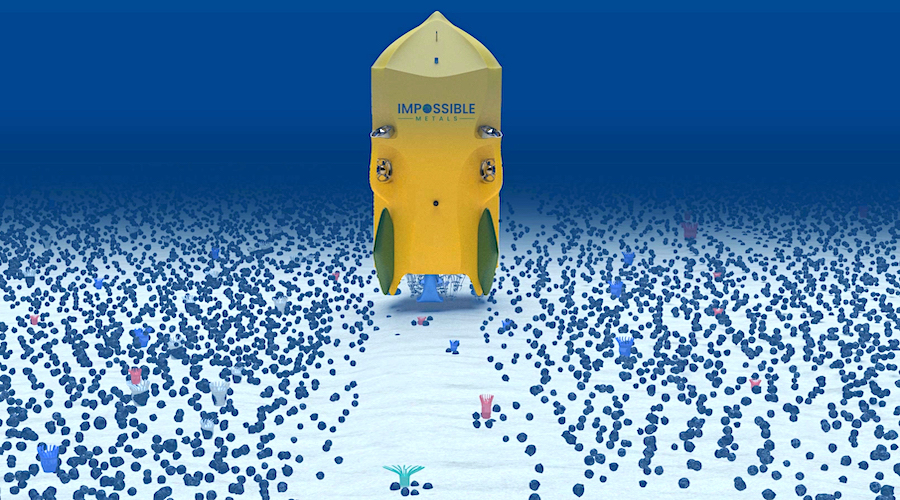
Trump’s National Oceanic and Atmospheric Administration has overhauled Deep Seabed Hard Mineral Resources Act regulations to merge the two-step exploration licence and commercial recovery permit into a single, shorter review, potentially halving permitting times for polymetallic nodule projects in US and international waters. The Metals Company has already applied under the Trump-era framework for exploration over 199,895 sq. km and a 25,160 sq. km commercial recovery area in the Clarion-Clipperton Zone, while Impossible Metals is pursuing AI-guided AUV nodule collection off American Samoa and in Bahraini waters. The move raises legal and environmental uncertainty because the US has not ratified the UN Convention on the Law of the Sea or the International Seabed Authority regime governing mining beyond national jurisdiction.
Technical Brief
- NOAA’s revised DSHMRA rules allow applicants to choose either the legacy two-step or new consolidated pathway.
- The regulatory change was first tabled in July 2025, following a Trump executive order targeting deep-sea mining growth.
- NOAA states the consolidation “modernises the law” and explicitly links it to an “America First” critical minerals agenda.
Our Take
Among the 90 Policy stories in our database, deep-sea extraction in the Clarion-Clipperton Zone is still a niche compared with onshore critical minerals projects, so any US move to clarify permitting for polymetallic nodules could quickly reposition it from a fringe to a mainstream supply option for cobalt, nickel and manganese.
The estimated 1 billion metric tons of polymetallic nodules in US waters, if even partially commercialised, would give Washington a domestic lever over battery metals that currently feature in many of our ‘critical minerals’ pieces as being dominated by supply chains routed through China and the Guangzhou Futures Exchange.
Because the Clarion-Clipperton Zone spans multiple Pacific jurisdictions including US-linked areas such as Hawaii and American Samoa, streamlined US permitting would likely increase the strategic importance of negotiations with the International Seabed Authority relative to the more conventional land-based projects that dominate our sustainability-tagged coverage.
Prepared by collating external sources, AI-assisted tools, and Geomechanics.io’s proprietary mining database, then reviewed for technical accuracy & edited by our geotechnical team.
Related Articles


Related Industries & Products
Mining
Geotechnical software solutions for mining operations including CMRR analysis, hydrogeological testing, and data management.
CMRR-io
Streamline coal mine roof stability assessments with our cloud-based CMRR software featuring automated calculations, multi-scenario analysis, and collaborative workflows.
HYDROGEO-io
Comprehensive hydrogeological testing platform for managing, analysing, and reporting on packer tests, lugeon values, and hydraulic conductivity assessments.
GEODB-io
Centralised geotechnical data management solution for storing, accessing, and analysing all your site investigation and material testing data.