Vistry Birmingham hospital redevelopment: phasing, density and risk notes for engineers
Reviewed by Tom Sullivan
First reported on The Construction Index
30 Second Briefing
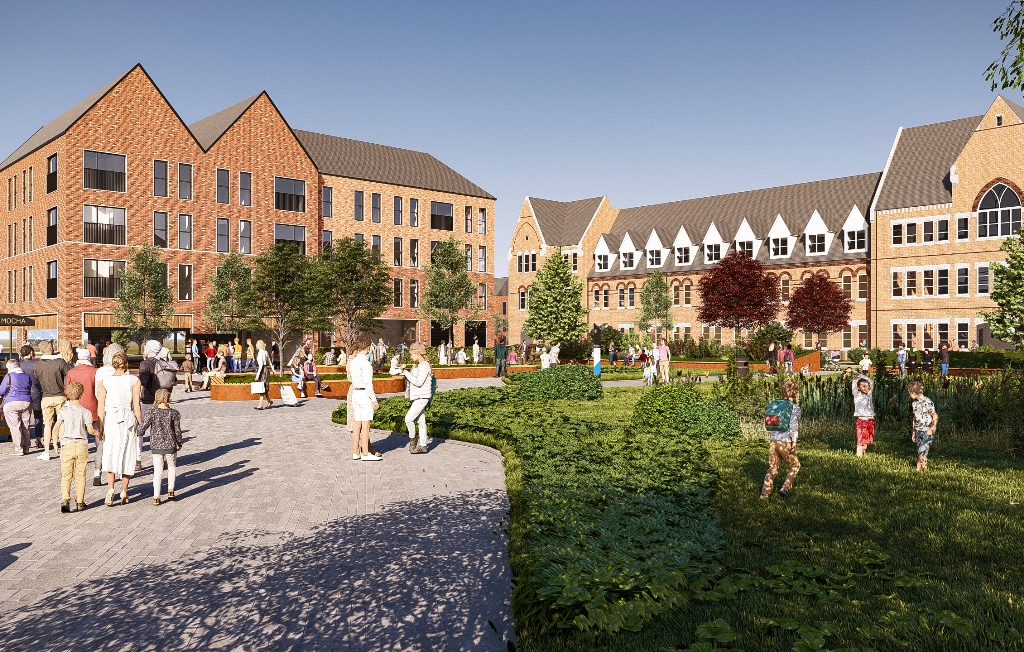
Homes England has signed a building lease with Vistry to redevelop Birmingham’s decommissioned City Hospital site into 750 homes, including 698 new-build units and 52 one- and two-bedroom apartments within the converted former infirmary, with 35% of the scheme designated as affordable housing. Asbestos removal began in December 2025, with major demolition of most existing hospital structures to follow and main construction scheduled for the second half of 2026. First completions are targeted for early 2027, turning a complex brownfield healthcare estate into a dense, mixed-tenure urban neighbourhood with some commercial uses.
Technical Brief
- Demolition will remove most existing City Hospital buildings, retaining only the historic infirmary for conversion.
- Vistry holds separate planning consents for 698 new-build homes and for the infirmary conversion.
- Affordable provision is fixed at 35% of total units, delivered across multiple tenure types.
- Site decommissioning required coordinated decant of patients and staff to Midland Metropolitan Hospital.
- Midland Metropolitan Hospital opened in October 2024, delayed around eight years after Carillion’s collapse.
- Asbestos removal commenced December 2025 as the first intrusive enabling package on the brownfield estate.
- Demolition completion is the critical path predecessor to main construction, programmed to start H2 2026.
Our Take
Vistry appears repeatedly in our Infrastructure coverage, including through Vistry Merseyside’s role on Torus’s £224m framework, signalling that the group is positioning itself as a go‑to delivery partner for large-scale, mixed-tenure housing in the North West and Midlands.
An affordable housing share of 35% on the former City Hospital site is at the upper end of what we see on comparable urban regeneration schemes in the United Kingdom, which may help Birmingham City Council justify higher density and faster planning support on subsequent phases.
The long lead-in to asbestos removal starting in 2025, after the Midland Metropolitan Hospital’s delayed 2024 opening, underlines how legacy hospital estates in Birmingham and similar UK cities can lock up brownfield capacity for years, affecting housing pipeline timing even where political will is strong.
Prepared by collating external sources, AI-assisted tools, and Geomechanics.io’s proprietary mining database, then reviewed for technical accuracy & edited by our geotechnical team.


