Key Integrated Services COO move: delivery and decarbonisation lens for M&E engineers
Reviewed by Tom Sullivan
First reported on The Construction Index
30 Second Briefing
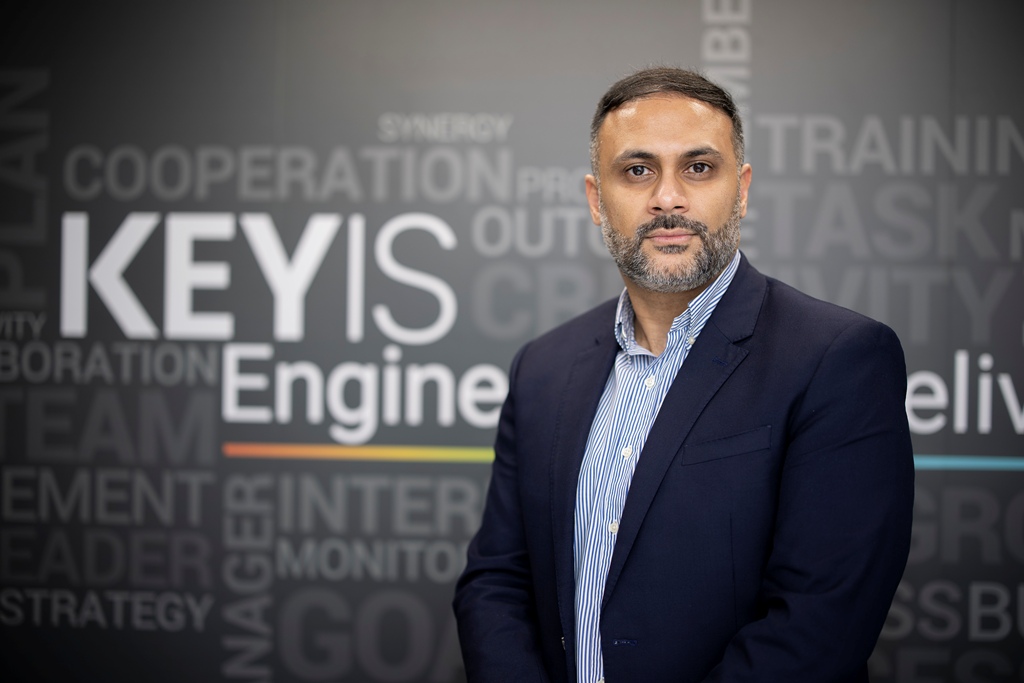
Cheshire-based mechanical and electrical contractor Key Integrated Services has appointed former Bouygues Energies & Services deputy managing director Adeel Aslam as chief operating officer. Aslam will expand the firm’s offer in advanced manufacturing, clean energy, food and beverage, and health and life sciences by adding process engineering and decarbonisation services, alongside new governance, people development and sustainability structures. He will retain advisory roles with the Advanced Manufacturing Forum North West, Bionow, the Greater Manchester Electrochemical Hydrogen Cluster and the Liverpool City Region Combined Authority’s Health & Life Sciences Cluster Board, signalling closer alignment with regional innovation networks.
Technical Brief
- Governance remit explicitly includes codifying “best-in-class systems and processes” across project delivery and support functions.
- Focus on process engineering suggests tighter integration of M&E design with production flows in advanced manufacturing facilities.
- Decarbonisation services are expected to target building services, process heat, and on-site clean energy interfaces.
- Food and beverage sector emphasis implies hygienic M&E design, CIP-compatible pipework, and strict temperature-control infrastructure.
- Health and life sciences work will likely require GMP-compliant services, cleanroom HVAC, and critical power resilience.
- For UK infrastructure clients, this points to M&E contractors moving upstream into process optimisation and whole-plant decarbonisation strategy.
Our Take
Within our 498 Infrastructure stories, the North West of the United Kingdom (including Greater Manchester and the Liverpool City Region) appears frequently in connection with low‑carbon industrial clusters, so Key Integrated Services’ leadership bench will likely be tested on hydrogen, life sciences and advanced manufacturing workstreams rather than traditional M&E alone.
The presence of groups such as the Greater Manchester Electrochemical Hydrogen Cluster and Bionow in the same ecosystem signals that M&E contractors in Cheshire and the wider North West are increasingly expected to understand process-intensive, regulated environments, which tends to favour firms that can integrate building services with specialist process, cleanroom and lab infrastructure.
Our database of sustainability‑tagged infrastructure pieces shows combined authorities like the Liverpool City Region Combined Authority often acting as convenors for funding and planning on energy and industrial decarbonisation, so alignment with their priorities can materially influence Key Integrated Services’ pipeline and prequalification prospects in the region.
Prepared by collating external sources, AI-assisted tools, and Geomechanics.io’s proprietary mining database, then reviewed for technical accuracy & edited by our geotechnical team.


