Geomechanics, Streamlined.
© 2026 Geomechanics.io. All rights reserved.
50 articles tagged with Sustainability
OceanaGold is weighing a 50% expansion of its Waihi plant to 1.2 Mt/y after Wharekirauponga drilling returned standout intercepts including 6.3 m at 97.2 g/t Au from 481.5 m in the East Graben vein and 8.5 m at 41.5 g/t from 399 m. The move would enable concurrent feed from Martha Underground and Wharekirauponga post‑2032, building on a 2024 plan outlining 1.6 Moz over 15 years and an initial 4.1 Mt reserve at 9.2 g/t. Underground development is advancing, with the Waihi North decline now 350 m, first vent shaft under construction, staged commissioning of a new water treatment plant, and early works on a new tailings storage facility due in Q4.
Two low‑carbon heat network schemes spanning seven London boroughs have secured a combined £53.1M in government funding to expand district-scale, pipe‑fed heating infrastructure. The awards back large‑diameter buried distribution mains, central energy centres and building‑level heat interface units designed to displace individual gas boilers in dense urban housing and mixed‑use stock. For civil and geotechnical teams, the projects signal substantial trenching, utility coordination and shaft works in constrained streets, with long linear workfronts and tight programmes across multiple local authorities.
Rainbow Rare Earths has secured an offtake and processing memorandum with Neo Performance Materials covering 40% of Phalaborwa’s separated NdPr oxide and 65% of its mixed SEG+ heavy rare earth carbonate, enabling a prefeasibility study in Q4 and pushing the definitive feasibility study to the first half of 2027. Neo will supply solvent extraction design and technical support, with test work on phosphogypsum-derived feed under way in Estonia and an integrated pilot planned in Johannesburg, de-risking the complex separation of dysprosium, terbium and yttrium. The $326 million project would recover magnet rare earths from legacy fertiliser gypsum stacks, potentially feeding Neo’s Estonian separation and sintered magnet plant and offering a non-Chinese supply route linked to European capacity.
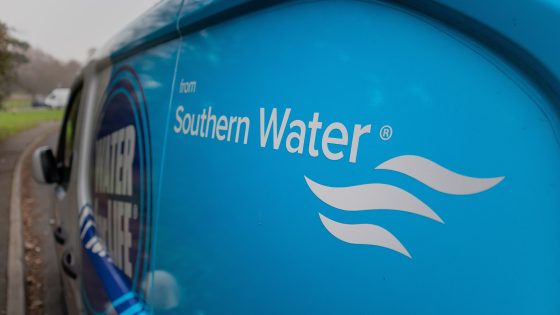
Southern Water is rolling out a distributed fibre‑optic leak‑detection system from UK firm Lightsonic on trunk mains across the south of England to cut losses as drought risk and network age increase. The technology uses continuous fibre along the pipeline to sense acoustic and temperature changes in real time, allowing operators to pinpoint leaks to within metres and respond before major bursts develop. For civil and water engineers, this signals growing deployment of long‑range, permanently installed monitoring rather than spot surveys on critical transmission assets.
Sandvik Australia has launched its 2026–2028 Innovate Reconciliation Action Plan, marking a decade of formal reconciliation work and setting a minimum target of 3.5% Aboriginal and Torres Strait Islander representation in its workforce. The two-year RAP also commits to increased First Nations supplier participation in Sandvik’s mining equipment and services supply chain and to structured cultural capability training across its Australian operations. For mine owners and contractors, the plan signals growing expectations for Indigenous employment and procurement benchmarks in OEM tendering and project partnerships.
Voltempo has installed a six-bay, 1MW HyperCharger hub at Welch’s Transport’s Duxford HQ, adding to a similar six-bay, 1MW depot in Bedford under the Innovate UK-backed eFreight 2030 programme, with spare capacity opened to third-party fleets via the DepotCharge model. Welch’s now operates 19-tonne and 42-tonne Renault Trucks E-Tech electric HGVs plus a DAF electric tractor, with three 28-tonne E-Techs on order and a target for 12% of its fleet to be electric by January 2027. The eFreight 2030 consortium will deploy 88 electric HGVs and 36 charging sites, including 25 megawatt-scale hubs, as part of the UK Government’s ZEHID real-world trial.
Delivering a 505km high-voltage “electricity superhighway” between Scotland and England is exposing complex consenting, land access and interface issues across multiple local authorities and environmentally sensitive corridors. Engineers are having to integrate new high-capacity transmission circuits with existing substations and overhead line routes while maintaining system security, often relying on long HDD river crossings, constrained construction compounds and tight outage windows. The project is setting practical benchmarks for routing, stakeholder management and constructability on future UK grid reinforcements needed for large-scale offshore wind and other renewables.
SuperCritical Materials Corp. has partnered with the University of Michigan to mechanically validate its uranium‑from‑seawater adsorbent for industrial‑scale offshore deployment, using hydrodynamic testing in the Aaron Friedman Marine Hydrodynamics Laboratory’s wave and current tanks. The programme will characterise the adsorbent under packing, deployment, ocean exposure and retrieval stresses, optimise packing configurations, and build and test prototypes for repeated deployment–recovery cycles. Findings will feed into a future feasibility study and nearshore pilot designs, targeting integration of seawater‑derived uranium into the US nuclear‑fuel supply chain.
Wolfram Bergbau und Hütten AG marks 50 years of operation as Europe’s only fully integrated tungsten producer, running mining, refining and recycling from a single chain centred on its Austrian Alps deposit. The company’s model couples primary ore extraction with secondary raw materials, using in-house recycling of hardmetal scrap and tungsten-containing residues to buffer supply risk. For mine planners and metallurgists, Wolfram’s history illustrates how regional processing capacity and closed-loop scrap flows can stabilise a critical metal traditionally dominated by Chinese concentrate and APT exports.
Improved public–private collaboration, “smarter” financial risk sharing and better asset data are being urged by a new Lloyds Banking Group report to upgrade the UK’s ageing, climate-exposed infrastructure. The report calls for clearer allocation of construction, demand and climate risks between government, institutional investors and asset owners, moving beyond traditional PFI-style models. For engineers, this points to stronger requirements for whole-life performance data, climate stress testing of assets and more transparent condition information to unlock private capital for renewals and resilience upgrades.
Tonly Heavy Industries has delivered a fleet of 75 t-class TLE120 battery electric wide-body dump trucks to the Baiyan open-pit mining area of Wengfu Phosphate Mine in Guizhou Province, China. The trucks will operate on short-haul, high-frequency phosphate ore routes at the boundary of Weng’an County and Fuquan City, where haul profiles and predictable duty cycles favour battery swapping and regenerative braking. For mine planners and haulage engineers, the deployment signals growing Chinese adoption of large battery-electric trucks in high-volume open-pit phosphate operations.
BHP and Amazon have launched an “industry-first” pilot to trade credits linked to lower greenhouse gas emissions from copper concentrate and cathodes produced at Escondida, the world’s largest copper mine in Chile. Escondida already sources 100% of its electricity from renewable power contracts and uses desalinated water for processing, reducing Scope 2 emissions intensity relative to conventional operations. The pilot will test traceable, emissions-differentiated copper units in Amazon’s supply chain, signalling potential future premiums and contract structures for low‑carbon copper in OEM and data centre procurement.
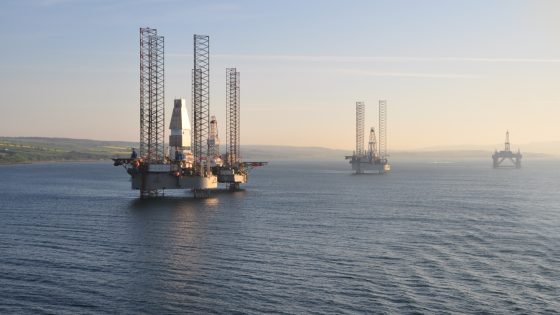
The North Sea Transition Taskforce now says the “window of opportunity” for an orderly energy transition in the UK Continental Shelf has “narrowed”, a year after first warning it was closing. The group is focused on coordinating offshore platform electrification, large-scale carbon capture and storage in depleted gas fields, and integration of new offshore wind capacity with existing oil and gas infrastructure. For civil and geotechnical engineers, this signals tighter timelines for repurposing ageing jackets, subsea pipelines and onshore terminals while maintaining structural integrity and regulatory compliance.
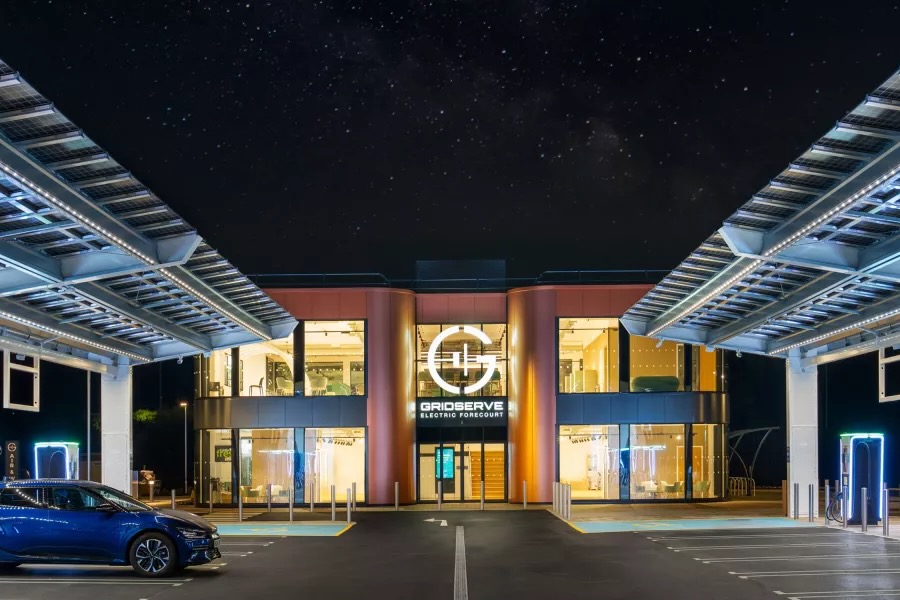
Algeco UK, part of Modulaire Group, has secured an EcoVadis Platinum rating, placing its modular building operations in the top 1% of companies assessed globally for sustainability performance. The business has introduced a Supply Chain Sustainability Handbook, SBTi-validated carbon reduction targets aligned with a net-zero pathway, and a UN Global Compact training programme to embed requirements across its supplier base. Recent projects include a permanent modular building for Gridserve’s A1 Stevenage EV charging station, signalling growing use of offsite solutions on high-traffic infrastructure sites.
Environmental charity the Environmental Law Foundation has warned it may launch a judicial review against the government’s new biodiversity net gain (BNG) regime, arguing that the statutory 10% uplift risks being treated as a de facto cap rather than a minimum. The challenge would focus on how planning authorities apply the Environment Act 2021 BNG provisions and Natural England’s statutory metric in development consents. For civil and geotechnical schemes, this could affect habitat creation areas, earthworks footprints and off-site BNG land agreements already being negotiated.
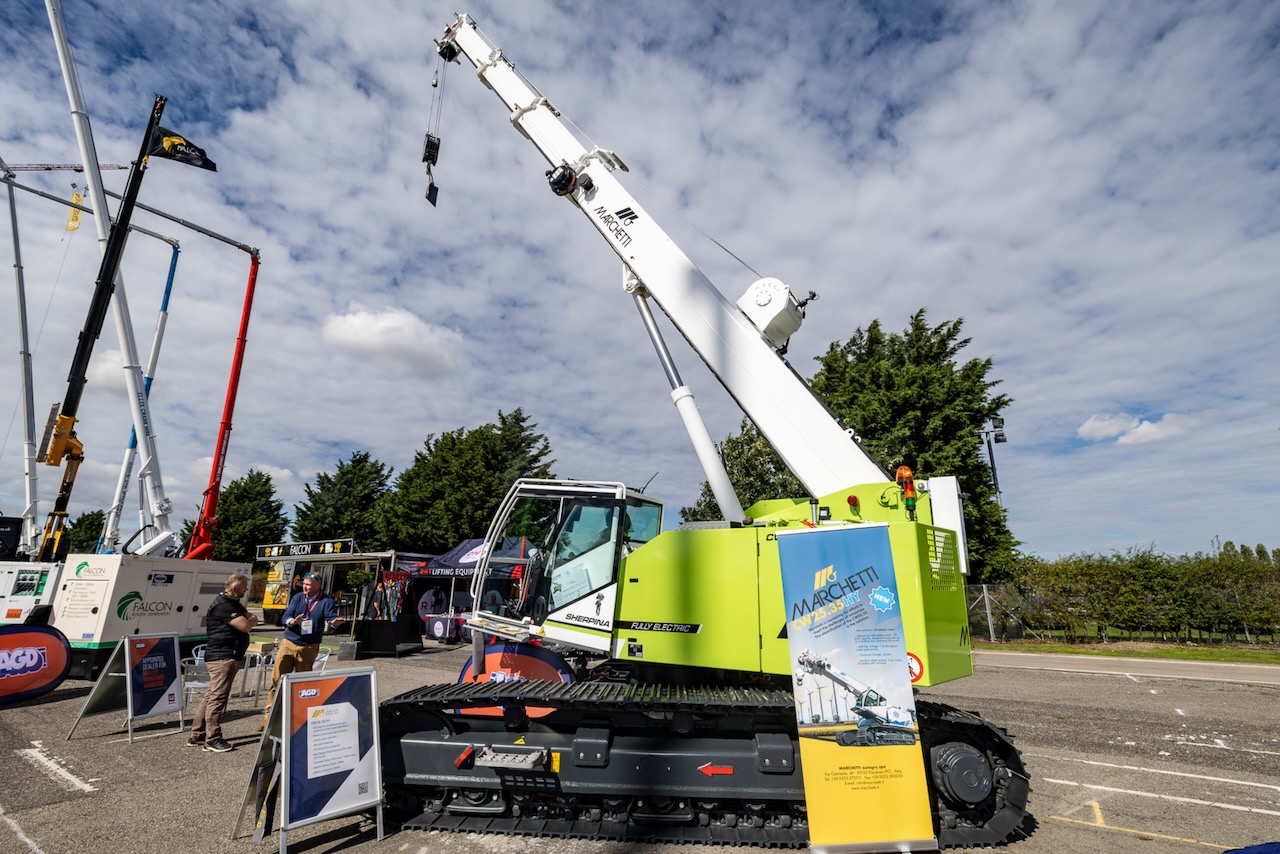
AGD Equipment has introduced the fully electric Marchetti CW23.35 HY compact crawler crane to the UK hire market, offering a 25‑tonne lifting capacity and up to 35m reach with fly‑jib. The machine operates pick‑and‑carry loads up to 17 tonnes, powered by a 210Ah battery and 110kW electric motor, and was first shown at Vertikal Days. With a transport width of 2.5m, it targets constrained urban or industrial sites where emissions limits, access restrictions and tight lifting radii drive crane selection.
Reuse of existing piled and raft foundations is accelerating on commercial property schemes as clients accept higher investigation spend in exchange for major embodied carbon and programme savings. Engineers are combining detailed pile integrity testing, targeted coring and advanced geotechnical back‑analysis with updated Eurocode‑based reliability methods to justify reusing legacy foundations originally designed for very different load cases. Planning and funding bodies are now more willing to accept partial reuse strategies, shifting project briefs away from default demolition and full replacement towards selective strengthening, load‑sharing and local pile augmentation.
BHP and Amazon have launched a first-of-its-kind pilot linking copper from BHP’s Escondida mine in Chile to Amazon’s data centre and infrastructure demand via Environmental Attribute Certificates (EACs) tied to specific copper concentrate and cathode production. The trial will track and trade EACs that quantify lower greenhouse gas emissions across defined segments of Escondida’s supply chain, rather than relying solely on mine-level averages. For miners and downstream buyers, this tests a mechanism to monetise low-carbon copper at batch level and could influence contract structures, certification, and reporting requirements.
Brisbane will host the new Critical Metals for Critical Industries Cooperative Research Centre (CRC), based at the University of Queensland’s Brisbane City campus and initially targeting vanadium technologies. The CRC will link miners, processors, equipment suppliers, researchers and governments to fast‑track commercialisation of extraction, processing and downstream manufacturing technologies for critical metals supply chains. For geotechnical and mining engineers, this signals upcoming pilot‑scale projects, testwork and funding opportunities around vanadium deposits, tailings reprocessing and battery‑grade product specifications in Australia.
The National Transport Research Organisation is expanding technical partnerships across Pacific nations to embed best-practice design, asset management and materials research into local road and bridge networks. Programmes include joint pavement investigations, climate-resilience assessments for coastal and low-lying corridors, and training on performance-based specifications for asphalt and sprayed seals under cyclone, flooding and high-salinity conditions. For geotechnical and civil teams, this means greater access to shared datasets, design tools and failure case histories tailored to volcanic soils, steep terrain and remote island logistics.
Carbon-focused procurement is emerging as a practical lever for low-carbon infrastructure, with clients increasingly writing embodied and whole-life carbon limits directly into tender documents alongside cost and programme. Contracting authorities are starting to require Environmental Product Declarations, PAS 2080-aligned carbon management plans and optioneering that compares low-clinker cements, recycled steel and alternative pavement designs on a carbon-per-functional-unit basis. For engineers and contractors, this shifts bid strategy towards quantifiable carbon performance, verifiable data and early supplier engagement rather than purely lowest capital cost.
Trustee’s view on “Growing together” stresses that civil engineers and technicians must adapt their skills and professional standards to deliver resilient infrastructure under climate stress, ageing assets and tighter carbon targets. The piece focuses on supporting sustainable communities through better whole-life asset management, more collaborative project delivery and stronger links between design offices, site teams and local authorities. For practitioners, it signals continued emphasis on competence, ethics and ongoing training as core to managing risk and performance on complex infrastructure networks.
Blue Sky Building has been appointed construction manager for the Barbican Renewal Programme, a major upgrade of the Grade II-listed arts complex and residential estate in the City of London. The works will focus on restoring the original architectural vision while supporting the City’s environmental targets, all delivered in a fully operational setting with residents, performance venues and public circulation remaining in use. Blue Sky’s selection leans on its track record managing complex refurbishments in live environments at the National Gallery, British Museum, Selfridges and United Kingdom House.
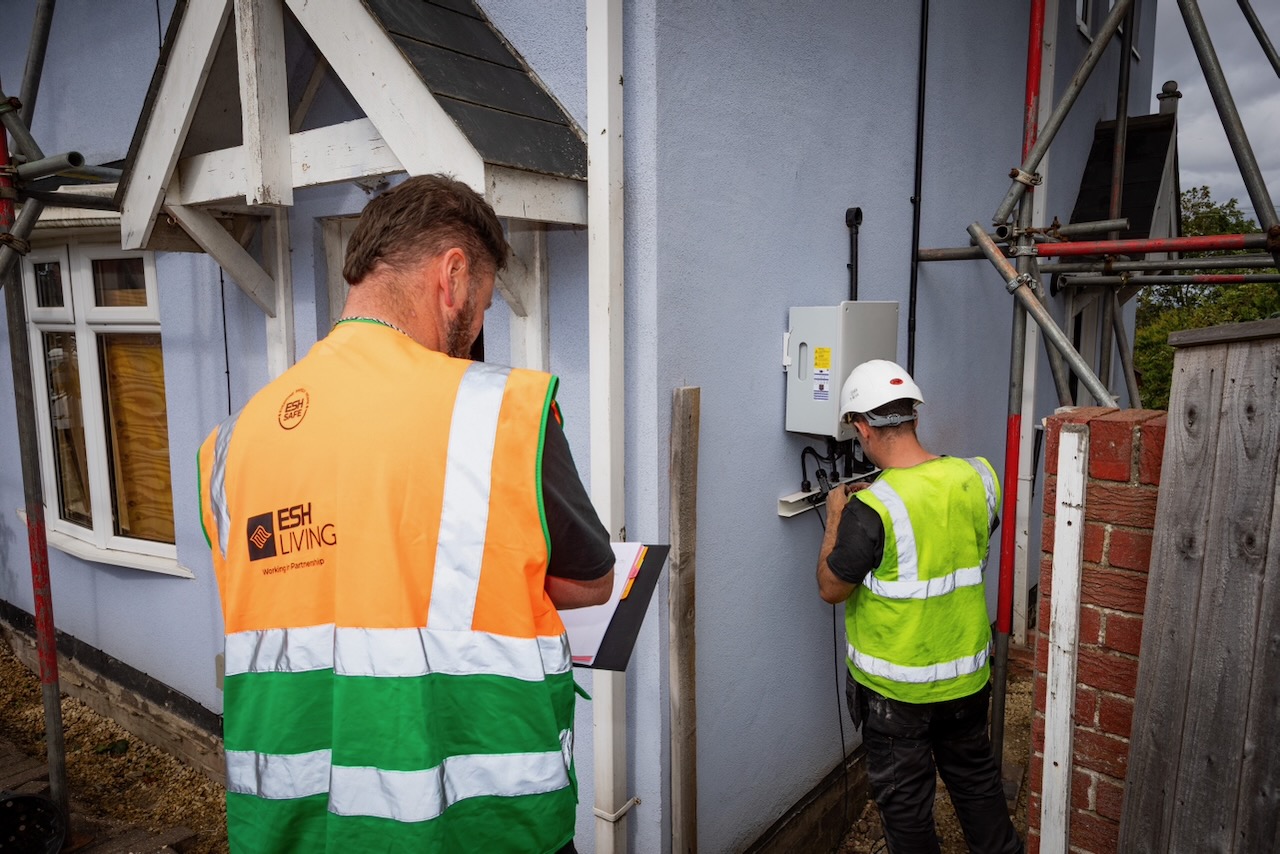
Esh Construction has secured a £2.5m Gateshead Council contract under the Warm Homes: Social Housing Fund Wave 3 to upgrade the energy performance of 82 homes over six months. Works include installing photovoltaic panels and ventilation measures to 70 bungalows and insulated flat roof upgrades to 12 flats, with retrofit designs informed by pre-construction technical surveys and updated EPC ratings. Storm Tempest has been appointed to deliver retrofit assessment, design and coordination in line with PAS retrofit standards, signalling structured, standards-led delivery for future social housing schemes.
BHP and China Baowu Steel have extended their steel decarbonisation partnership for five years, focusing on trials of Pilbara iron ore in modified blast furnaces and piloting emerging steelmaking technologies. The renewed memorandum of understanding, building on a 2020 agreement, targets lower emissions from Baowu’s large-scale blast furnace fleet rather than a wholesale switch to scrap-based electric arc furnaces. For miners and steelmakers, the work will test how Pilbara ores perform under higher injection of alternative reductants and other furnace modifications without sacrificing throughput.
Rio Tinto is staging its 21st annual Colours of our Country exhibition in Perth, displaying more than 120 artworks from 29 Pilbara Aboriginal artists that explore connections between people, Country and culture in one of Australia’s key iron ore mining regions. Running until 2 October, the programme is backed by Rio Tinto’s long-term partnerships with Kariyarra, Yindjibarndi and other Traditional Owners. For miners operating in the Pilbara, the exhibition signals ongoing expectations around cultural heritage engagement alongside large-scale resource development.
This summer’s extreme weather is presented as a clear warning that UK infrastructure is still being designed and operated for historic, not future, climate loads. The piece calls for engineers to treat climate resilience as a primary design parameter, integrating updated rainfall intensity–duration–frequency curves, higher peak river flows and compound flooding into asset standards, not just emergency plans. For geotechnical and civil practitioners, that means revisiting drainage capacities, freeboard allowances, slope stability factors and redundancy in power, transport and water networks before the next shock.
Government has been accused of having no contingency plan for large-scale data centres if an AI investment bubble bursts and facilities become stranded assets, a gap campaigners call “alarming”. With new hyperscale campuses typically demanding tens of megawatts of grid capacity, deep foundations, extensive cooling infrastructure and multi-decade planning consents, critics warn that unplanned obsolescence could leave local authorities managing redundant, highly serviced shells. Engineers are urged to consider future-proofing, adaptive reuse of high-spec M&E systems, and decommissioning strategies at the planning and design stage.
Gallows Corner flyover and roundabout in east London have fully reopened after a £67.4M programme of strengthening and refurbishment works to the elevated structure. The scheme focused on extending the life of the flyover through concrete repair, steelwork strengthening and replacement of key deck components, along with new waterproofing and surfacing. For designers and asset managers, the project signals continued investment in life-extension of 1970s-era elevated junctions rather than full replacement, with implications for inspection regimes and phased strengthening strategies on similar structures.
New modular single living accommodation at Trenchard Lines, Upavon has completed its first phase, with Reds10 and Arcadis handing over two SLA blocks providing 82 en-suite bedspaces for junior ranks as part of a 200-person scheme. A further 21 officer bedspaces will come from refurbishment of Lord House, a heritage building beside the Officers’ Mess, integrating modern services into an existing structure. The SLA blocks include drying rooms, shared kitchens and furnished communal areas, plus rooftop solar panels and energy management systems to cut operational energy demand and bolster resilience.
Approval has been granted for McLaren Living’s Fish Island co-living scheme in Hackney Wick, completing the Neptune Wharf masterplan with 280 co-living studios and 44 affordable homes in two HTA Design blocks of ten and seven storeys. The fully car-free, cycle-first scheme incorporates rain gardens, bioswales and permeable paving for sustainable drainage, plus a central landscaped courtyard linking into the surrounding public realm and retaining mature boundary trees. Roof-mounted PV panels and an energy strategy targeting BREEAM Excellent signal a strong operational performance focus for dense urban residential design.
M Group has recycled more than 200,000 mixed-material water meters for Yorkshire Water and Netmore, tackling encapsulated lithium batteries and complex assemblies as part of an AMP8 programme that could replace over four million meters in five years. After a year-long review of more than 40 organisations, Yorkshire-based Areera was selected to recover plastics, ferrous and non-ferrous metals, and small quantities of precious materials from printed circuit boards. The process is now being scaled, with automation, robotics and AI under evaluation to increase throughput and improve data capture from returned assets.
Proof-of-concept tests have been completed on the UKRI-supported Manufacturer’s Information Hub (MIH), a not-for-profit platform to share structured construction product data across Europe via a standard API. Phase one defined how to connect manufacturer databases, created requirements for a standard data dictionary to validate and present attributes, and set rules to cut complexity and compliance risk around safety and environmental performance. Subject to funding, a small-scale working prototype linking a handful of manufacturers and users is targeted for spring 2027, with full-scale testing through 2027 and initial platform functionality from 2028.
Completion of the £24m Eastern Transfer Station in Ware delivers a 1.4-hectare waste facility for Hertfordshire County Council, built by Balfour Beatty with Pick Everard as project manager, quantity surveyor, NEC supervisor and CDM principal designer under the SCAPE BECS framework. The site includes a main transfer building, a secondary building, new office space, a weighbridge and gatehouse, plus odour and dust suppression, fire water retention tanks and a dedicated pumping station feeding sprinklers and water cannons. The layout is designed to cut waste haul distances across the county and associated carbon emissions.
Yorkshire Water’s £7.9M storm overflow improvement scheme in Pudsey, West Yorkshire will be delivered by Kier Infrastructure with design by Sweco, targeting reduced spill frequency and improved network resilience during intense rainfall. The project will focus on upgrading existing combined sewer and overflow assets rather than full replacement, aiming to increase storage and conveyance capacity within the constrained urban catchment. For civil and geotechnical teams, key issues will include working around live sewers, limited access in built-up areas, and strict environmental compliance on discharge quality.
Calls to add ground condition metrics to public weather forecasts argue that engineers, utilities and transport operators now need near real-time data on soil moisture, pore pressure and desiccation risk, not just rainfall totals and wind speeds. Proponents point to recent UK failures on clay cuttings, embankment slips and buried pipe bursts after prolonged drought–storm cycles, where Met Office rainfall data alone gave little warning of loss of shear strength or shrink–swell movement. Integrating sensor networks, satellite soil-moisture indices and probabilistic geotechnical models into daily forecasts could materially change inspection, access planning and temporary works decisions.
Pressure on UK water resources is intensifying as Ofwat’s major projects senior director outlines a combined gated process for large strategic schemes, integrating regulatory approval with project delivery milestones. The approach is aimed at multi‑billion‑pound assets such as new reservoirs, regional transfer pipelines and advanced treatment works, where long construction lead times and climate‑driven demand uncertainty have previously deterred private finance. By tying funding decisions to clearly defined technical gates, Ofwat is seeking to give investors greater certainty on cost recovery while maintaining scrutiny of environmental impacts on rivers and aquifers.
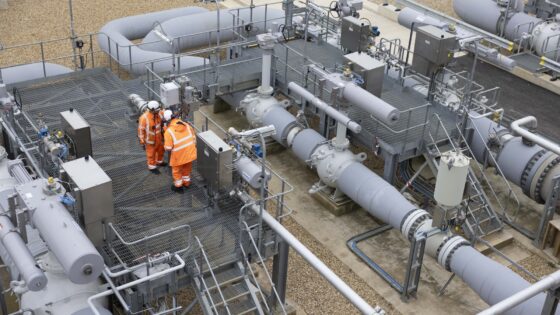
National Gas has advanced the proposed St Fergus–Teesside hydrogen pipeline, part of its 2,414km Project Union network, into the engineering design phase, moving beyond initial feasibility. The section will repurpose existing high-pressure natural gas transmission corridors where possible, with new buried steel pipe only where capacity or routing gaps exist. Designers must address hydrogen embrittlement, fracture control and compressor station modifications, signalling upcoming demand for materials testing, integrity assessment and geotechnical route optimisation along legacy pipeline alignments.
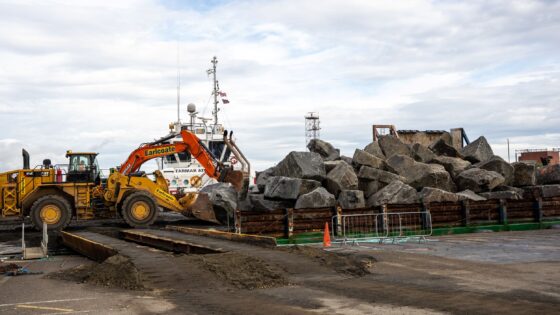
Around 55,000t of rock armour is being placed by PD Ports along the South Gare breakwater at Redcar to reinforce coastal protection for the River Tees against increasingly severe North Sea storm conditions. The works focus on strengthening the existing rubble-mound structure, which has experienced accelerated damage and overtopping, with rock sizes and gradings selected to resist higher wave energy and storm surges. For coastal and geotechnical engineers, the scheme signals a need to reassess armour stability and design return periods on older breakwaters under changing wave climates.
Allied Gold Corporation has connected its Kurmuk gold mine in Ethiopia to the national power grid and run first ore through the primary crushing circuit, key steps in final commissioning. Grid connection removes reliance on temporary diesel generation and enables full energisation of processing, dewatering and mine services infrastructure. Kurmuk is expected to become one of Allied Gold’s premier assets, with ramp-up now focused on stabilising the crushing–grinding line, validating ore throughput assumptions and finalising operating procedures ahead of commercial production.
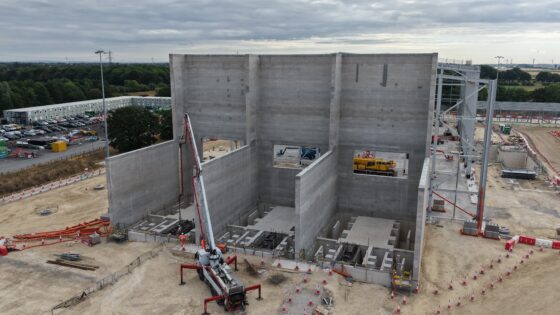
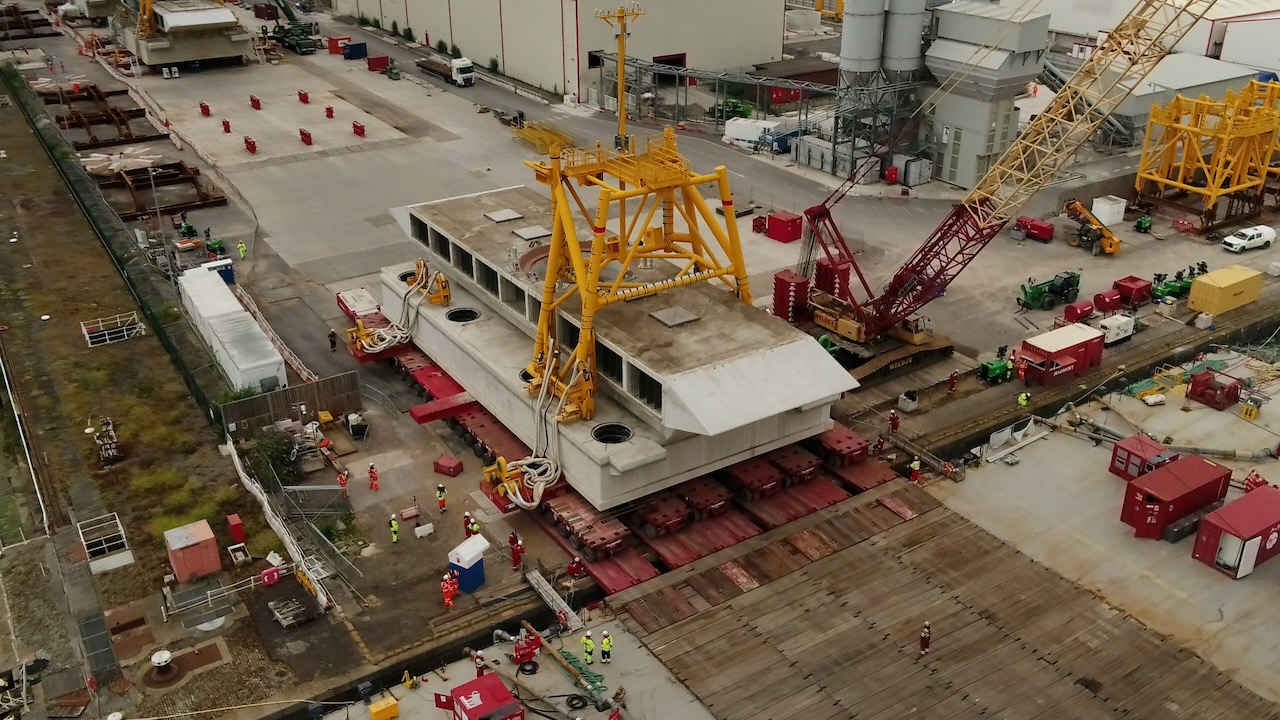
Sizewell C has secured planning approval to manufacture pre-cast concrete tunnel segments and tunnel heads at the former Hinkley Point C facility in Avonmouth, 10 km from Bristol city centre, for installation in marine tunnels at the Suffolk nuclear plant. Components will be shipped by sea to support the project’s commitment to move 80% of materials by rail and sea, reducing heavy vehicle movements around the site. Early works are underway, with 55 CWA staff and 86 supply chain workers on site, and full production targeted for 2028, leveraging existing Hinkley Point C infrastructure and teams.
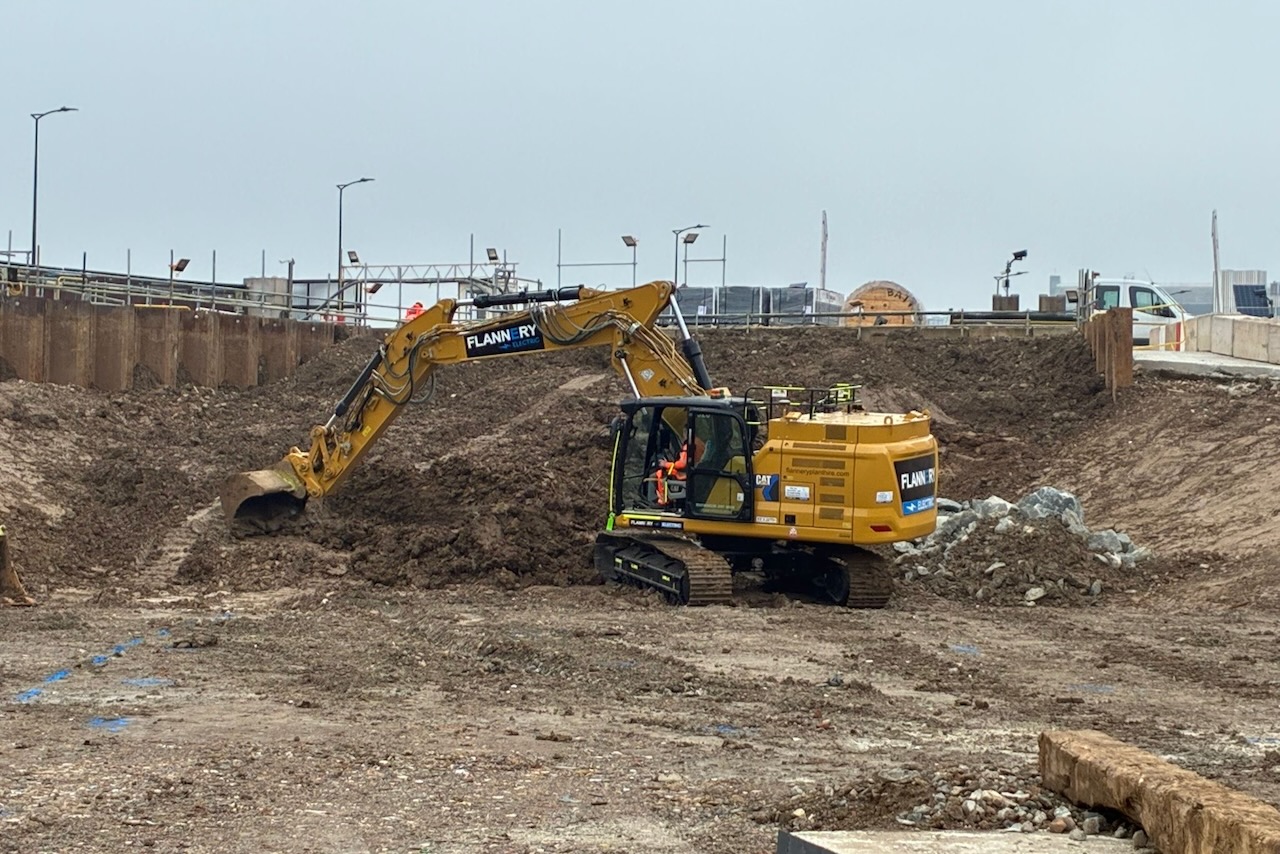
Flannery Plant Hire has put a battery-electric Cat 320 medium excavator, supplied by Finning UK & Ireland, to work on a UK site, with operators reporting like-for-like digging and hydraulic performance compared with diesel units but with lower noise and vibration. Finning ran detailed commissioning support, including electric safety protocols, VisionLink telematics training, and walkaround inspections focused on daily maintenance checkpoints. On-site trials concentrated on charging infrastructure and connection procedures, with operator logbooks and structured feedback used to assess real-world integration and inform Flannery’s wider decarbonisation strategy.
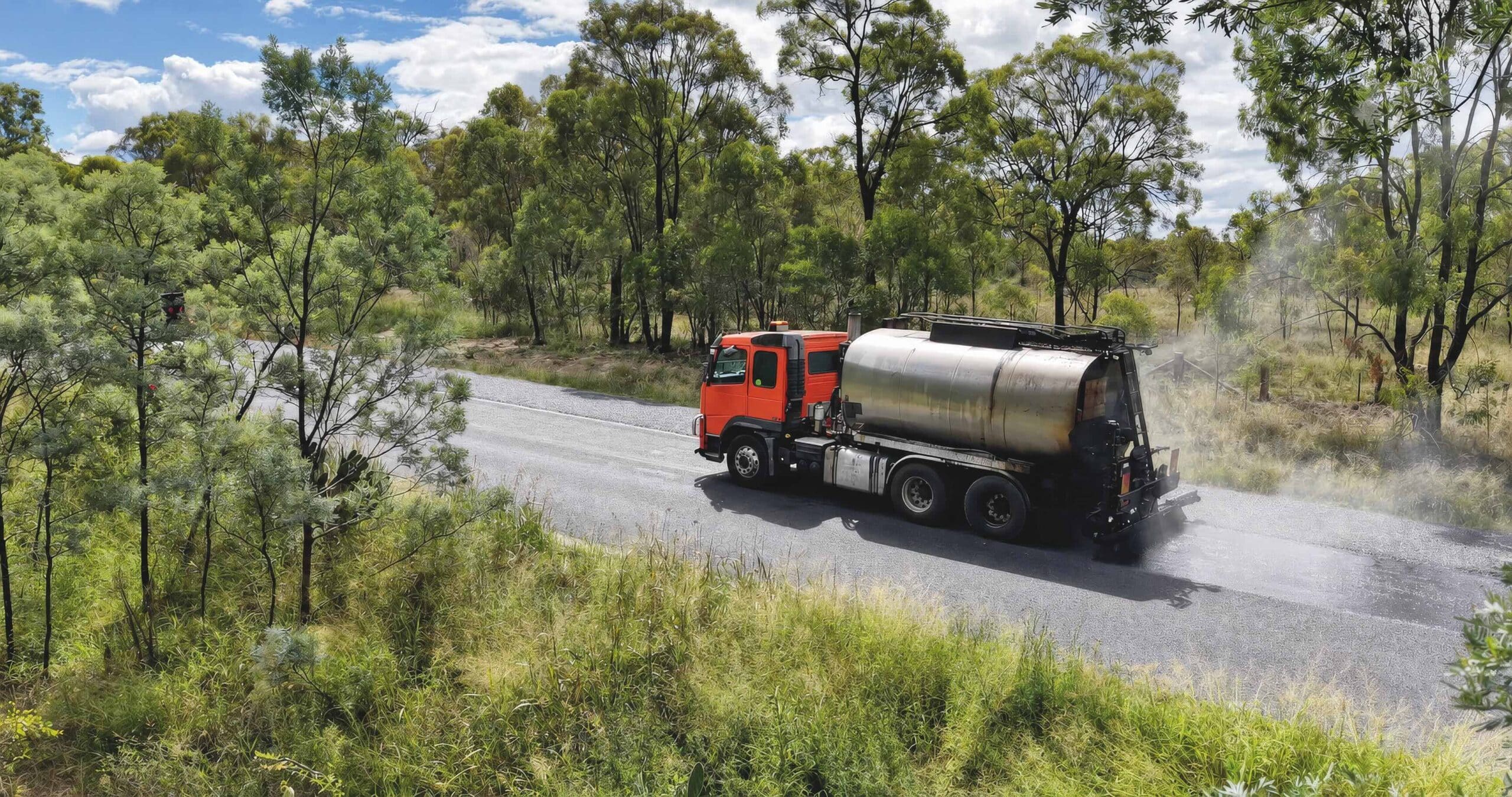
An Australian-first spray seal project delivered by Colas, SAMI Bitumen Technologies and Hutchinson Quarry uses SAMI’s polymer-modified binders and locally sourced aggregates to meet national sustainable procurement guidelines without reducing performance. The seal incorporates higher recycled content and lower embodied carbon materials while maintaining conventional heavy vehicle loading and texture depth requirements for rural arterial roads. For asset owners and contractors, the work shows that guideline-compliant low‑carbon seals can be specified within existing Austroads design frameworks and standard spray equipment.
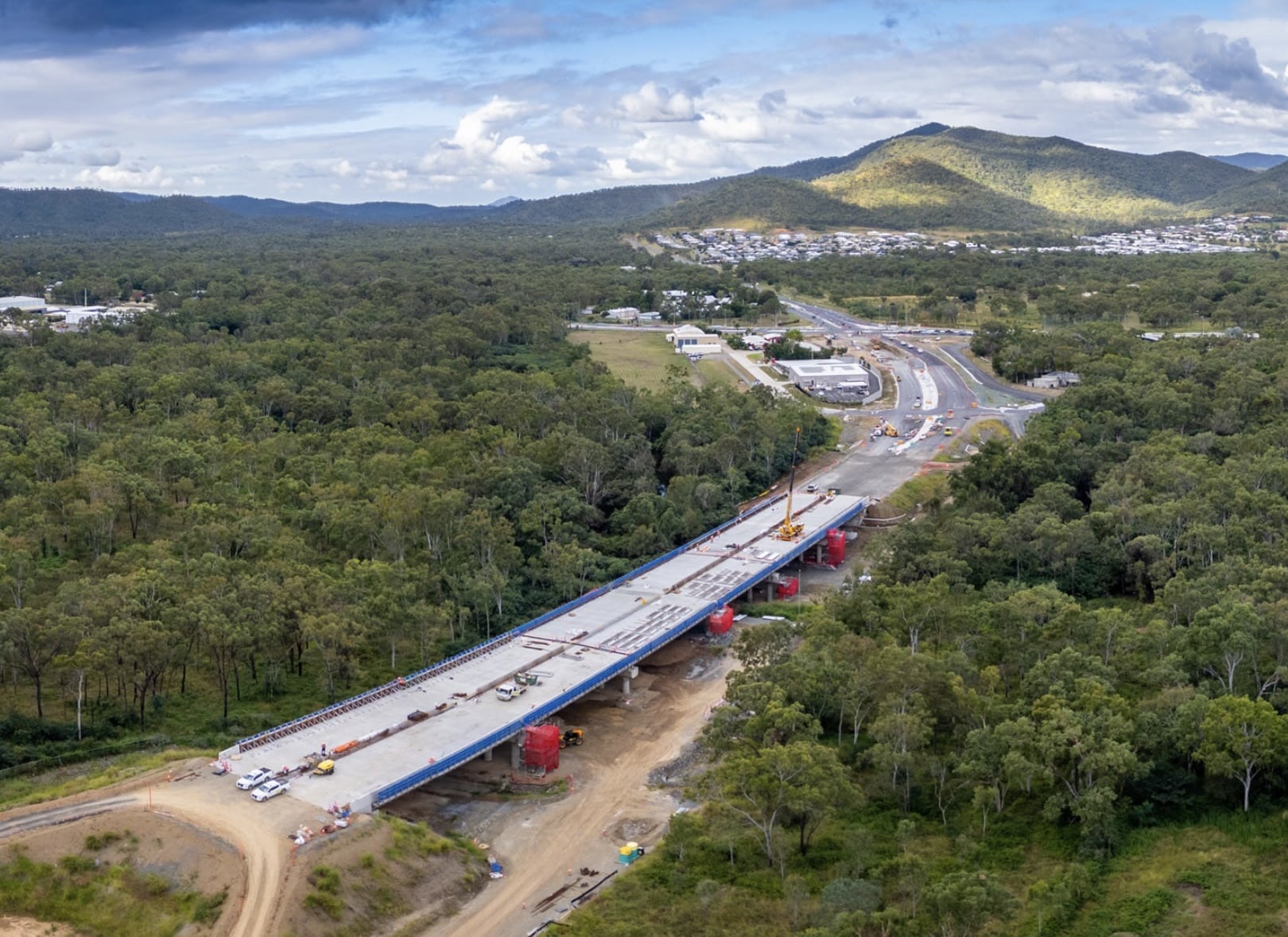
Works on the Lion Creek Bridge are now complete, the first of 18 old timber bridge replacements under the $1.98 billion Rockhampton Ring Road project, which will improve flood resiliency and all-weather access in Central Queensland. The scheme will deliver a 14.7-kilometre western link of the Bruce Highway around Rockhampton, designed to divert heavy freight and through-traffic from urban sections. Progress at the Fitzroy River crossing and other structures signals a shift towards higher, more flood-tolerant bridge levels and more reliable freight travel times on this key north–south corridor.
Belfast Harbour’s £90M D3 project is converting reclaimed land into a deep-water quay designed to berth large cruise vessels and support offshore wind installation vessels, within tight tidal windows in a heavily trafficked channel. Engineers are contending with variable fill and soft alluvial deposits, requiring ground improvement and careful quay wall design to control settlement and lateral movement under high berthing and crane loads. Construction methods are being adapted to strict environmental constraints in Belfast Lough, including turbidity limits and noise controls for marine habitats.
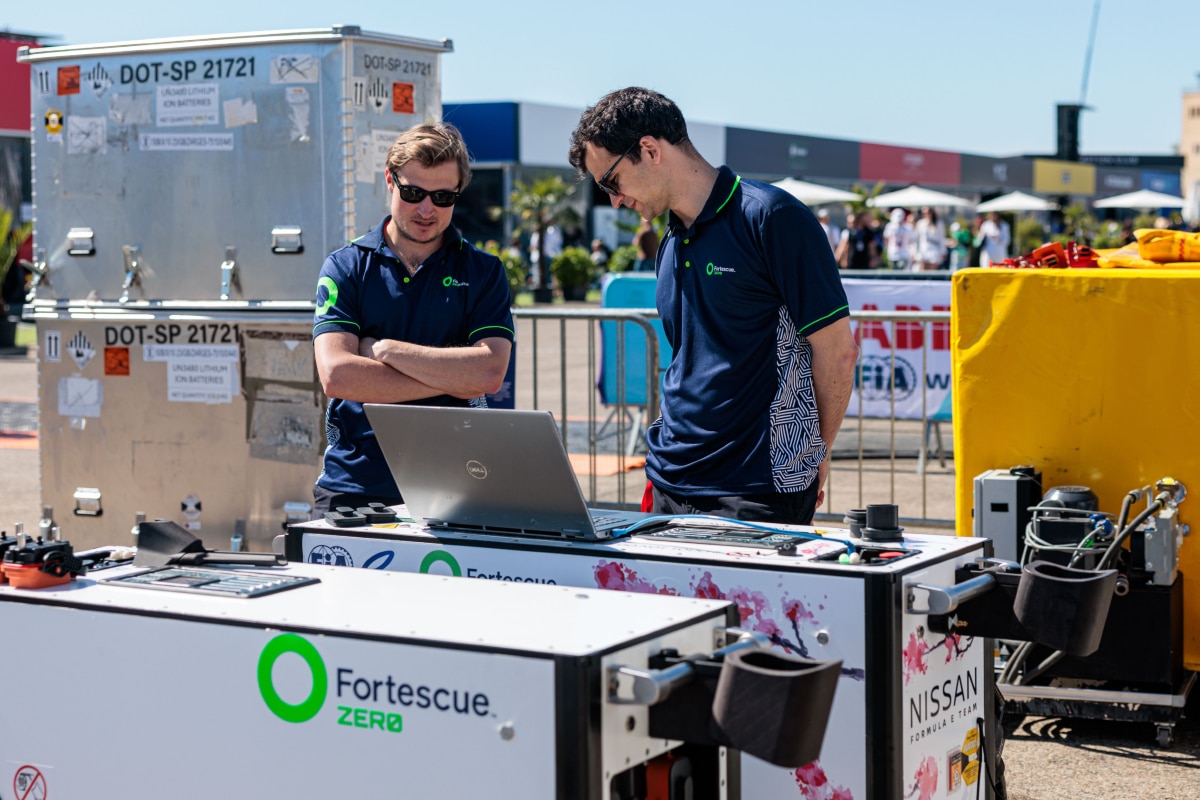
Fortescue Zero has acquired the Penske Formula E operation and launched an electric racing and innovation team aiming to enter the ABB FIA Formula E World Championship from Season 13 (2026–27) as the first Australian-owned outfit. The programme will use Formula E as a development platform for high‑performance battery systems, power electronics and electric drivetrains, with direct relevance to Fortescue’s mining haul trucks, rail and stationary power assets. Engineers should watch for technology transfer in fast‑charge capability, thermal management and energy recovery strategies under race-duty load cycles.
Canada could add up to C$98 billion a year to GDP by 2035 if it shifts from exporting raw critical minerals to more complex products, Export Development Canada says, citing rare earths, graphite, lithium, copper and uranium as priority value chains. The report points to moving beyond ore into nuclear fuel and reactor components for uranium, and into specialty conductors, transformer components and AI‑grade power grid equipment for copper, building on assets such as Glencore’s Horne copper smelter. Key constraints are long-term risk capital, skilled labour, commercialisation capacity and trade infrastructure still geared to bulk exports.
Almonty Industries has signed a long-term take-or-pay deal to supply Sandvik’s Wolfram Bergbau und Hütten AG with tungsten concentrate recovered from tailings at the shuttered Los Santos mine in Spain, offering delivery lead times shorter than developing a new mine. Almonty will deploy proprietary tailings-processing technology to treat low-grade waste made economic by post-2025 price rises following China’s tighter export controls, which affect roughly 80% of global tungsten output. The agreement adds a European tungsten source alongside Almonty’s Panasqueira (Portugal) and restarted Sangdong (South Korea) operations, aligning with the EU’s Critical Raw Materials Act push for regional extraction and recycling.
BHP is running battery-electric haul truck trials at the Jimblebar iron ore mine in the Pilbara using two Caterpillar 793 XE Early Learner units, in a joint programme with Caterpillar and Rio Tinto. The focus is on quantifying productivity impacts of static charging, including effects on haul cycle times, truck availability and fleet scheduling compared with diesel 793s. Outcomes will directly inform future pit design, charging bay layout and power infrastructure planning for large-scale BEV deployment on similar ultra-class truck fleets.
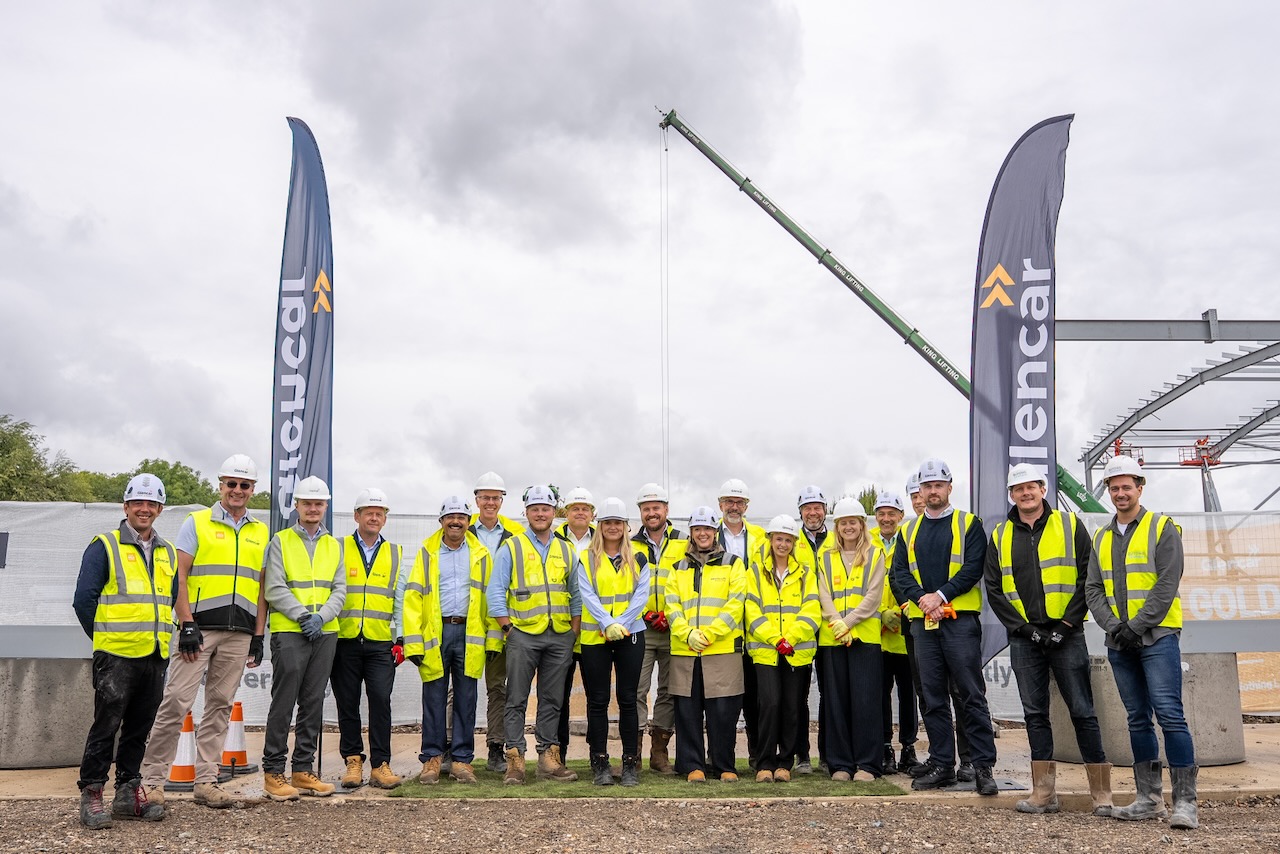
Steel erection is advancing at Link, Aylesbury, where Glencar is constructing a 192,000 sq ft industrial and logistics scheme of five Grade A units at Gatehouse Close for Newlands Developments. Steelwork began on Units 1 and 2 in July, moved to Unit 3 in August, and will extend to Units 4 and 5 later this month as the main construction programme accelerates towards an April 2027 completion. The site targets BREEAM Excellent and EPC A, with EV charging infrastructure and energy‑efficient design, and sits about 0.5 miles from Aylesbury town centre with direct A41/A418 access.