Geomechanics, Streamlined.
© 2026 Geomechanics.io. All rights reserved.
50 articles tagged with Safety
Federal funding for New York’s US$16bn Hudson Tunnel Project has been frozen, forcing the Gateway Development Commission to suspend works from 6 February after spending over US$1bn and employing about 1,000 site workers. A Manhattan federal judge has issued a temporary restraining order, giving the administration until 5 p.m. on 12 February to restore reimbursements or appeal, while contractors warn that demobilisation, resequencing and remobilisation will add cost and delay. Sites are now in “safe-pause” mode, with dewatering, ground support and environmental monitoring maintained, and assembly of two Herrenknecht TBMs in New Jersey likely to slip beyond the planned spring 2026 launch without funding certainty.
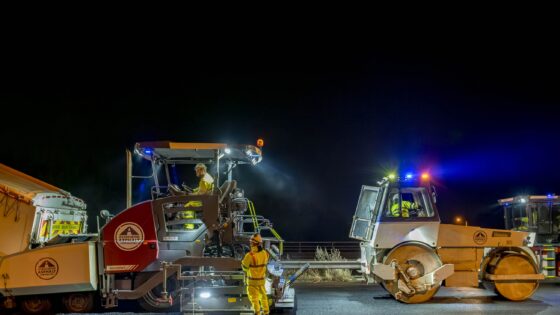
Associated Asphalt has completed a major maintenance programme on the M40, resurfacing and repairing approximately 75km of carriageway on one of the UK’s key north–south motorway links. Works are understood to have focused on high-stress sections, including lane 1 heavy goods vehicle tracks and junction merge/diverge areas, using modern asphalt surfacing systems to improve skid resistance and durability. For geotechnical and pavement engineers, the scale of intervention on a live motorway highlights ongoing asset management demands on ageing flexible pavements under rising traffic and axle loads.
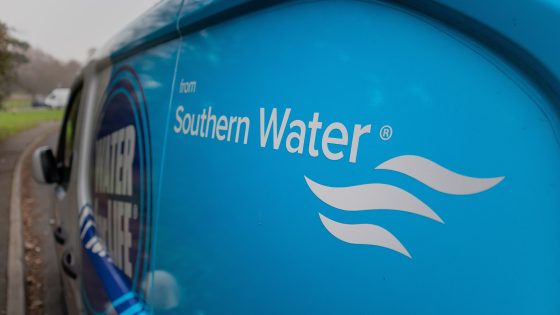
Southern Water is rolling out a distributed fibre‑optic leak‑detection system from UK firm Lightsonic on trunk mains across the south of England to cut losses as drought risk and network age increase. The technology uses continuous fibre along the pipeline to sense acoustic and temperature changes in real time, allowing operators to pinpoint leaks to within metres and respond before major bursts develop. For civil and water engineers, this signals growing deployment of long‑range, permanently installed monitoring rather than spot surveys on critical transmission assets.
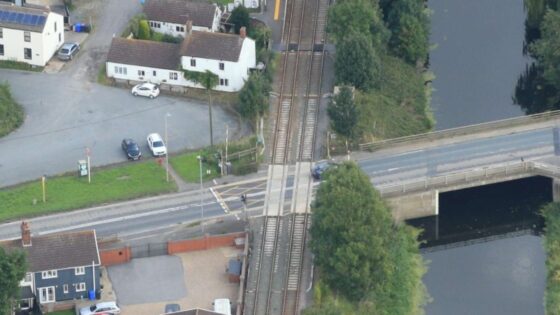
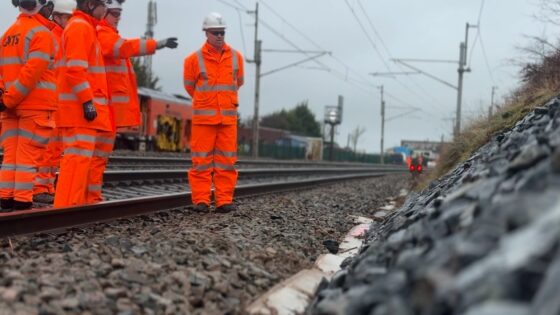
Network Rail will invest £1.4M to renew over 730m of track between Hubbert’s Bridge and Swineshead on the Boston–Sleaford line in Lincolnshire, targeting a known maintenance pinch point. Works will involve lifting and replacing rail, sleepers and ballast on this rural two-track section, where drainage and formation condition have previously constrained line speed and imposed temporary speed restrictions. Contractors will need to manage possessions on a mixed-traffic route carrying passenger services and agricultural freight, with careful staging to minimise disruption during the renewal.
WindowMaster and Fieger have agreed a façade partnership that combines EN 12101-2 tested smoke extraction and natural/hybrid ventilation into a single, integrated louvre-window system planned from the first design meeting. The deal gives WindowMaster exclusive sales rights for Fieger louvre solutions in the UK, Ireland, Nordics, Baltic states and North America, with non-exclusive rights in Germany, Switzerland and France, targeting major façade markets. For high-rises, multi-storey stairwells, atriums and public buildings, one façade opening now provides both everyday comfort ventilation and automatic smoke and heat exhaust linked to detectors and fire panels.
BHP has suspended all operational activities at the Escondida copper mine in Chile’s Antofagasta region after a worker was killed during maintenance involving a front-end loader, with Chile’s Sernageomin deploying a regional investigation team to site. The fatality comes as BHP, which holds a 57.5% stake in Escondida alongside Rio Tinto’s 30%, is in contract negotiations with mine workers, with a vote due by the end of September. Any prolonged shutdown or subsequent strike could materially disrupt output at the world’s largest copper mine.
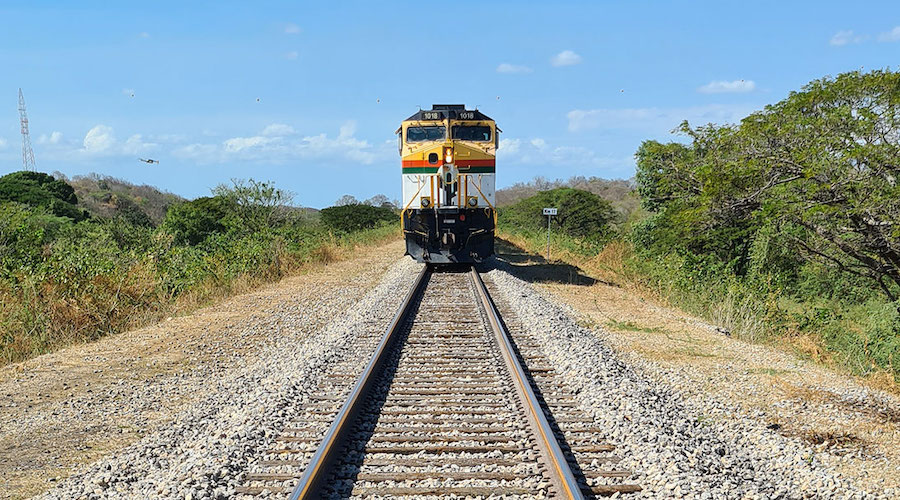
Glencore has halted rail operations at its Cerrejón coal mine in Colombia after explosives hit its 150 km railway near Uribia, La Guajira, damaging a train in the sixth attack on the corridor this year. The mine itself, one of the world’s largest open pits with 2025 output of 16.8 million tonnes, continues operating while the National Army secures the line and engineers await access for damage assessment. Prolonged repairs could again choke inbound supplies and coal exports via Puerto Bolívar, exposing the operation’s heavy reliance on a single transport corridor.
Jevons Robotics has launched the ARTEV1000 Pre-Split System, a battery-electric robotic platform that automates loading of packaged pre-split explosives on highwalls. The system shifts all explosive loading and deployment equipment handling to remote operation, removing personnel from the highwall face and eliminating manual lifting of explosive packages. For drill-and-blast engineers, this points to tighter control of pre-split geometry and reduced exposure during highwall conditioning, especially on benches where ground conditions or scale make conventional manual loading high risk.
A major gas leak in the Ladygrove area of Didcot, Oxfordshire forced suspension of GWR rail services between Reading and Swindon and long-distance trains routed through the corridor, as SGN engineers worked overnight to locate and make safe the affected main. Rail operations were halted while gas levels were monitored and exclusion zones maintained around the railway and nearby properties, with emergency access coordinated along the Didcot–Swindon line. The incident underlines the operational vulnerability of busy electrified main lines to third-party utility failures and the need for tightly managed rail–utility interfaces.
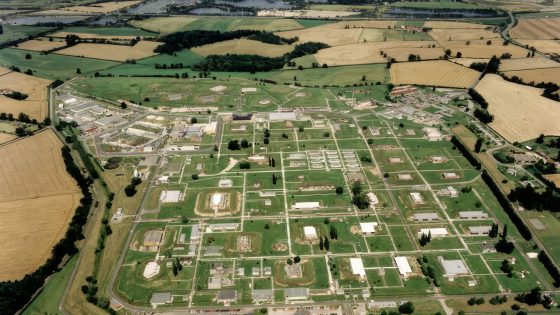
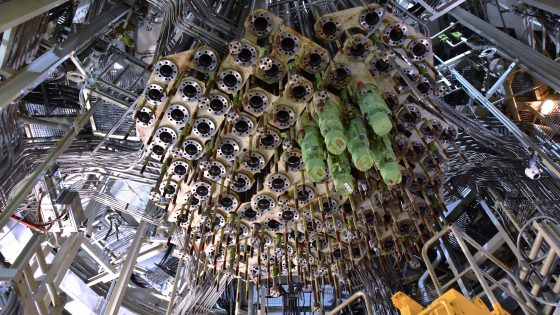
Further details on the Atomic Weapons Establishment’s Future Materials Campus confirm it as a core facility within a multi-year, multi‑billion‑pound infrastructure upgrade to support UK nuclear warhead research and lifecycle management. The FMC will concentrate advanced materials characterisation, high‑integrity manufacturing development and long‑term performance testing on a single secure site, reducing reliance on ageing dispersed laboratories. For civil and structural engineers, the scheme signals demand for heavily serviced, high‑specification laboratories and containment structures with stringent security, vibration control and resilience requirements.
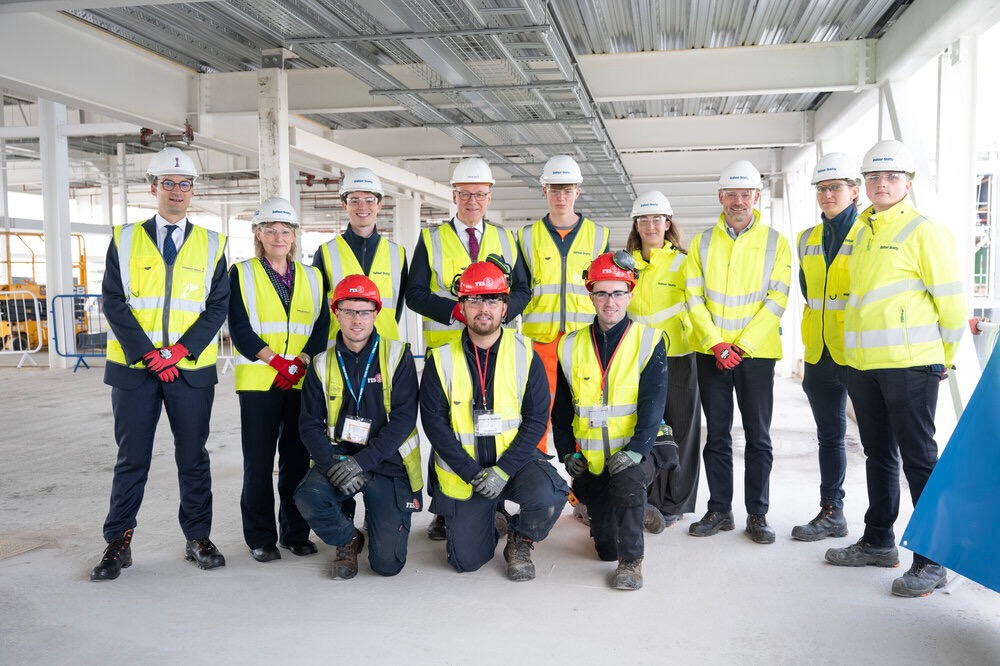
Balfour Beatty is delivering a £65m two-storey terminal expansion at Edinburgh Airport, adding eight new departure gates as the first phase of a £500m, five-year capital programme to increase passenger capacity. Recent works include installing eight link bridges in a live, fully operational airside environment, building on earlier upgrades such as the £8m Security Futures Project with new CT security screening, a baggage hall expansion and modernised fire station facilities. The scheme demands tight phasing, airside safety controls and minimal disruption to Scotland’s busiest airport.
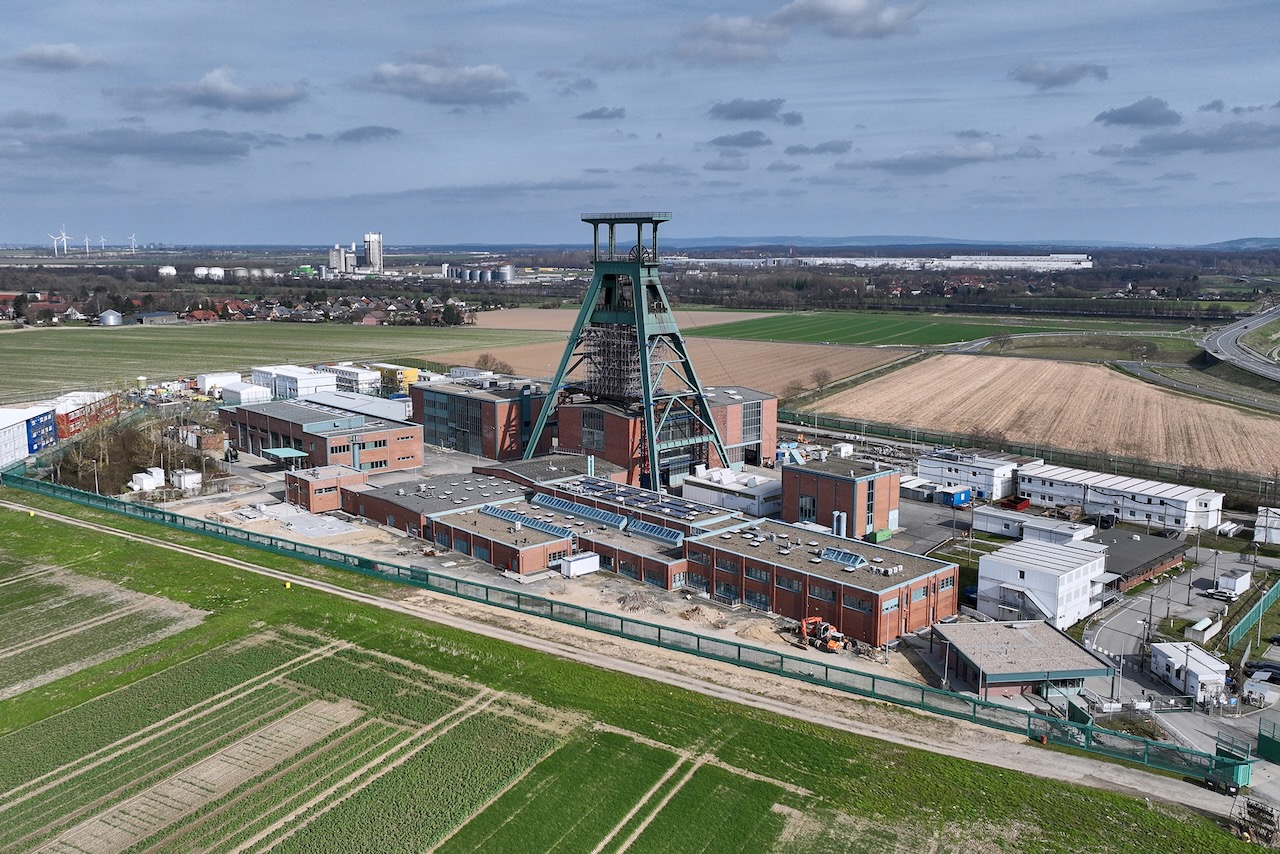
Jacobs has been appointed by Germany’s Bundesgesellschaft für Endlagerung (BGE) to provide project support for the Konrad Repository in Salzgitter, a low- and intermediate-level radioactive waste facility being developed within existing underground mining structures. The contract covers assessment of construction progress, validation of planning assumptions, schedule and cost plan reviews, and implementation of efficiency improvements under combined mining, nuclear and seismic regulatory constraints. Jacobs will align construction activities, timelines and cost structures with on-site conditions, drawing on experience from Sellafield and Belgian radioactive waste treatment and storage projects.
Sandvik Australia, New Zealand and Papua New Guinea sales area vice president Craig Johnston says Australia’s highly competitive mining market is driving demand for proven underground loaders and drills backed by strong aftermarket support and expanding digital and automation platforms. Johnston points to mine-wide automation architectures, data-driven fleet optimisation and remote monitoring as priorities, with Sandvik integrating these across existing equipment fleets rather than only new capital projects. For geotechnical and operations teams, the message is tighter linkage between equipment health data, production KPIs and long-term asset planning.
The upgraded Granite Creek Rest Area between Gin Gin and Benaraby on Queensland’s Bruce Highway has reopened, adding dedicated heavy vehicle parking and improved amenities for long-distance freight and light vehicle traffic. Works include reconfigured parking bays to separate trucks from cars, upgraded lighting and sightlines, and safer entry/exit tapers designed for highway speeds. For road designers and asset managers, the project signals continued incremental safety upgrades along this high‑volume freight corridor rather than major capacity expansion.
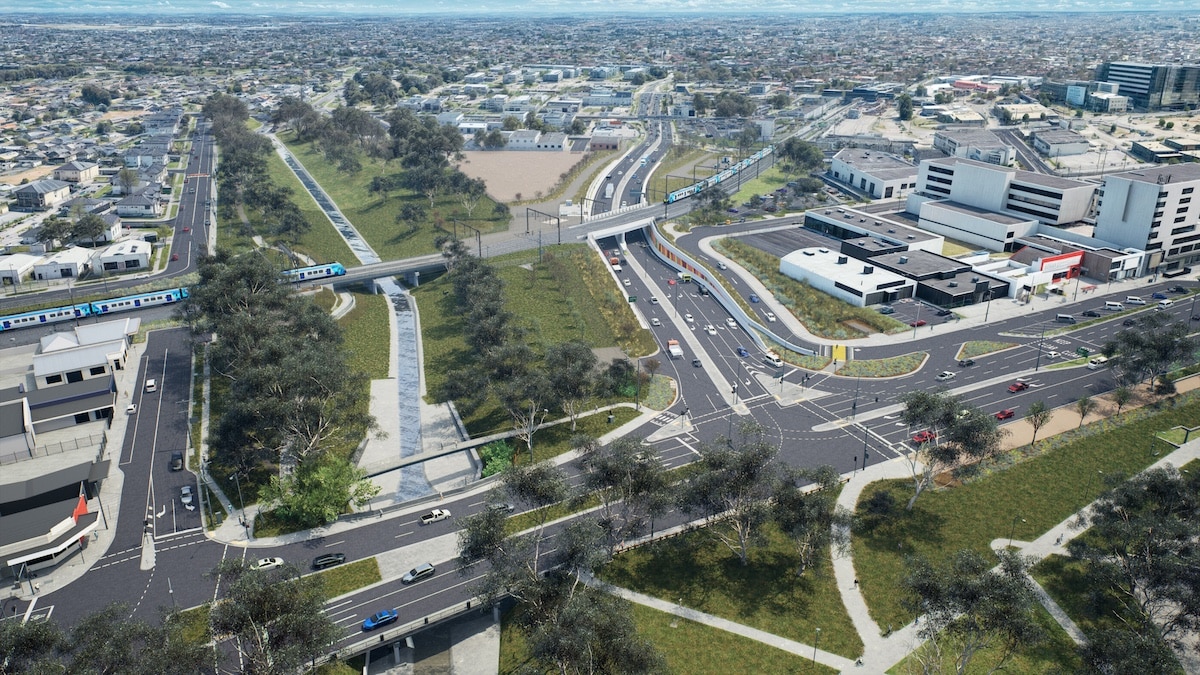
Removal of the Webster Street level crossing in Dandenong marks Victoria’s 96th level crossing removal under the State Government’s 10‑year programme to improve rail–road interfaces across greater Melbourne. The project delivers a 450‑metre road underpass extending Cheltenham Road beneath the rail corridor, eliminating at‑grade conflict and allowing Webster Street to be closed at the former crossing. For designers and contractors, the scheme adds another cut‑and‑cover underpass to Melbourne’s portfolio, with ongoing implications for groundwater control, retaining structures and long‑term settlement performance along the corridor.
Mining companies in Burkina Faso and Mali have built “mini armies” and effectively turned mine sites into “mini states” as central governments and local militaries lose control of territory, says George McLeod of Critical Risk Team. Operations are being maintained by focusing narrowly on secure logistics corridors for inbound supplies and outbound concentrate, allowing projects to function in what he calls a “complete and total power vacuum”. McLeod also expects China’s dominance in rare earths refining to erode within about three years as Australia, the US and Brazil commission new processing capacity and substitution technologies reduce demand.
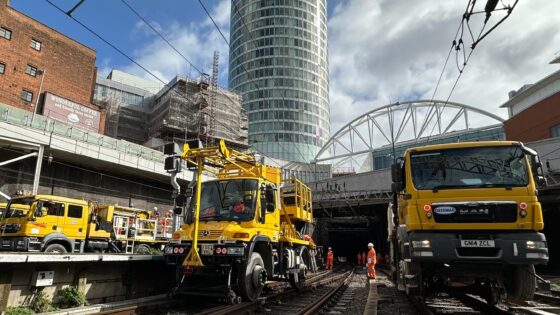
Network Rail will invest £13M over Christmas to replace 1960s overhead line equipment at Birmingham New Street station, targeting ageing gantries, contact wires and insulators that have become a major cause of unplanned power failures. Works will be concentrated in a tight blockade to minimise disruption on the West Coast Main Line, with staged isolations and temporary speed restrictions required as spans are rewired and new structures installed. For designers and contractors, the scheme signals continued priority for OLE resilience upgrades on intensively used, multi-track urban throats.
Ok Tedi Mining has commissioned two ArcSAR Neo slope stability monitoring radar systems from IDS GeoRadar at its Papua New Guinea copper-gold operation, becoming the first mine globally to deploy the new platform. The ArcSAR Neo units provide continuous, high-resolution displacement monitoring of pit walls, using arc-scanning radar and advanced processing to detect millimetre-scale movements in real time. For geotechnical teams, the dual-system deployment increases spatial coverage and redundancy for critical slope risk management in a high-rainfall, structurally complex open pit.
Hundreds of new apprentices have been recruited into UK infrastructure by firms including Thames Water, Amey and Spencer Group, signalling a push to rebuild site-based and technical capability. Intakes are focused on civil engineering, utilities and rail maintenance roles, feeding skills into long-term asset programmes such as water network upgrades and major highways frameworks. Contractors are likely to use the expanded apprentice cohorts to address ageing workforces and shortages in groundworks, structures and asset inspection competencies.
BME, an Omnia Holdings company, has developed a Portable Training Unit to give underground blasting and explosives operators realistic, hands-on training rather than relying solely on classroom instruction. The mobile platform is designed to simulate field procedures and equipment handling so mines can build operator competency, reduce misfires and handling errors, and better protect production assets. For geotechnical and production engineers, this points to closer integration of explosives training with ground control plans and asset integrity management.
Trustee’s view on “Growing together” stresses that civil engineers and technicians must adapt their skills and professional standards to deliver resilient infrastructure under climate stress, ageing assets and tighter carbon targets. The piece focuses on supporting sustainable communities through better whole-life asset management, more collaborative project delivery and stronger links between design offices, site teams and local authorities. For practitioners, it signals continued emphasis on competence, ethics and ongoing training as core to managing risk and performance on complex infrastructure networks.
Industry geotechnical specialists at the John Mitchell lecture warned that UK foundation design on chalk is still misjudging key behaviours such as solution features, variable weathering profiles and the risk of brittle collapse under cyclic loading. Speakers pointed to recent pile and shallow foundation projects where inadequate chalk characterisation, limited core recovery and over-reliance on generic SPT correlations led to unexpected settlements and construction delays. Attendees were urged to adopt more rigorous chalk-specific investigation, including targeted boreholes, high-quality sampling and site-specific load testing, before finalising foundation schemes.
Mental health in construction is being reframed as a shared duty across project teams, with particular concern for site-based staff working long shifts, irregular nights and high-pressure possession windows. Industry bodies such as the Institution of Civil Engineers and major contractors are expanding mental health first aider schemes, toolbox talks and confidential helplines alongside traditional safety briefings. For engineers, this means factoring psychological risk into CDM planning, site supervision and contract programming, not just physical hazards and productivity targets.
Strike action by uranium enrichment workers at Urenco’s Capenhurst nuclear site in Cheshire has been called off after management tabled an improved pay offer. The Capenhurst facility, which handles enrichment and deconversion operations for nuclear fuel supply, had faced potential disruption that could have affected maintenance schedules on critical process plant and associated civil infrastructure. Resolution of the dispute stabilises workforce availability for ongoing asset integrity work, including inspection, containment upgrades and long-term decommissioning planning.
Network Rail is delivering £41M of earthworks across key North West rail corridors to improve cuttings and embankments against winter rainfall, freeze–thaw and slope instability. Works are expected to include regrading and strengthening of existing earthwork assets, improved drainage systems and renewed trackside access to reduce washouts, slips and emergency speed restrictions. Geotechnical teams will need to manage construction around live traffic, legacy Victorian earth structures and variable ground conditions typical of the region’s glacial tills and weathered rock.
Michael Caltabiano, Chief Executive Officer of the National Transport Research Organisation, outlines future priorities for Australian transport research, focusing on road safety, emerging vehicle and sensor technologies, and community expectations around network performance. He discusses how NTRO’s work on pavement materials, asset management and data-driven planning is feeding into long-term infrastructure strategies across state and local road networks. For engineers, the conversation signals growing emphasis on evidence-based design, whole-of-life asset performance and integrating new vehicle technologies into existing corridors.
A construction tender has opened to upgrade the Stuart Highway–Schwarz Crescent intersection in Alice Springs, targeting safer pedestrian movements between the eastern suburbs and the town centre and improving access to nearby schools and businesses. Works will realign Schwarz Crescent and reconfigure the intersection geometry to reduce conflict points between vehicles and crossing pedestrians. Civil contractors can expect typical urban arterial treatments, likely including new kerb alignments, signal and crossing upgrades, and drainage adjustments within a constrained existing corridor.
This summer’s extreme weather is presented as a clear warning that UK infrastructure is still being designed and operated for historic, not future, climate loads. The piece calls for engineers to treat climate resilience as a primary design parameter, integrating updated rainfall intensity–duration–frequency curves, higher peak river flows and compound flooding into asset standards, not just emergency plans. For geotechnical and civil practitioners, that means revisiting drainage capacities, freeboard allowances, slope stability factors and redundancy in power, transport and water networks before the next shock.
Deployment of on-board overhead line (OHL) and track defect monitoring systems across GBR Anglia routes is being used to capture live condition data directly from in-service trains, rather than relying solely on periodic inspection trains. Instrumented rolling stock is recording contact wire geometry, stagger and uplift, as well as railhead condition and track geometry, allowing faults to be geo‑referenced to specific masts, spans and sleepers. The joined‑up approach is intended to tighten maintenance intervals, prioritise high‑risk locations and reduce disruptive manual access to the four‑foot and cess.
Government has been accused of having no contingency plan for large-scale data centres if an AI investment bubble bursts and facilities become stranded assets, a gap campaigners call “alarming”. With new hyperscale campuses typically demanding tens of megawatts of grid capacity, deep foundations, extensive cooling infrastructure and multi-decade planning consents, critics warn that unplanned obsolescence could leave local authorities managing redundant, highly serviced shells. Engineers are urged to consider future-proofing, adaptive reuse of high-spec M&E systems, and decommissioning strategies at the planning and design stage.
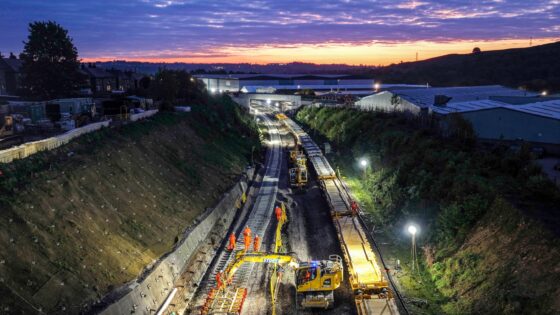
Engineers have begun a major 24/7 blockade on the Transpennine Route Upgrade in Huddersfield, targeting one of the scheme’s most constrained four-track sections between Manchester and Leeds. Works are expected to focus on track realignment, new overhead line equipment and resignalling to increase line speed and capacity through the Huddersfield station throat and adjacent junctions. Continuous working will compress disruptive possessions but will demand tight control of temporary works, track geometry tolerances and interface management with existing Victorian structures.
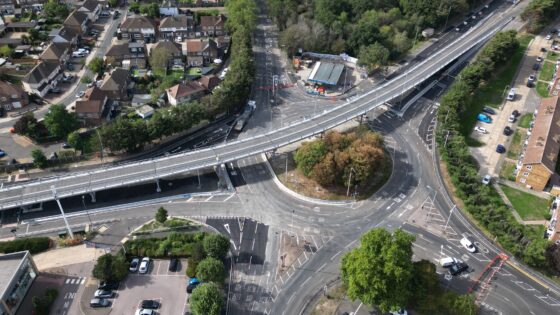
Gallows Corner flyover and roundabout in east London have fully reopened after a £67.4M programme of strengthening and refurbishment works to the elevated structure. The scheme focused on extending the life of the flyover through concrete repair, steelwork strengthening and replacement of key deck components, along with new waterproofing and surfacing. For designers and asset managers, the project signals continued investment in life-extension of 1970s-era elevated junctions rather than full replacement, with implications for inspection regimes and phased strengthening strategies on similar structures.
Omniflex is installing a new wireless telemetry system across the Nkomati nickel plant in South Africa to restore mine-wide monitoring of water and pumping infrastructure as the operation restarts after a R753 million ($46 million) investment. The system replaces legacy Omniflex equipment supplied under previous ownerships and is expected to give centralised visibility of dam levels, boreholes and pump stations over the entire site. For engineers, the upgrade signals renewed focus on remote supervision of dewatering and process water balance ahead of ramp-up.
Liebherr-Australia has opened a new mining training centre in Perth, Western Australia, built around an administrative hub with three dedicated training rooms housing three machine simulators, including a T 264 haul truck unit. The facility is designed for advanced, technology-enabled training for mine operators, maintenance personnel and Liebherr support teams from sites across Australia. For mines running large Liebherr truck and excavator fleets, the centre enables off-site operator upskilling, scenario-based training and reduced in-pit onboarding time.
Proof-of-concept tests have been completed on the UKRI-supported Manufacturer’s Information Hub (MIH), a not-for-profit platform to share structured construction product data across Europe via a standard API. Phase one defined how to connect manufacturer databases, created requirements for a standard data dictionary to validate and present attributes, and set rules to cut complexity and compliance risk around safety and environmental performance. Subject to funding, a small-scale working prototype linking a handful of manufacturers and users is targeted for spring 2027, with full-scale testing through 2027 and initial platform functionality from 2028.
Railway renewals between Cardiff and Bridgend via Pontyclun will be delivered by Network Rail over three weekend possessions in September and October, closing sections of the South Wales Main Line to passenger services. Works are expected to focus on track renewals and associated ballast and drainage improvements on this intensively used four-track corridor, which carries both Great Western Main Line intercity traffic and heavy freight. Contractors will need tightly sequenced access, high-output plant and robust temporary works to manage interfaces with existing signalling, overhead line equipment and adjacent live lines.
Calls to add ground condition metrics to public weather forecasts argue that engineers, utilities and transport operators now need near real-time data on soil moisture, pore pressure and desiccation risk, not just rainfall totals and wind speeds. Proponents point to recent UK failures on clay cuttings, embankment slips and buried pipe bursts after prolonged drought–storm cycles, where Met Office rainfall data alone gave little warning of loss of shear strength or shrink–swell movement. Integrating sensor networks, satellite soil-moisture indices and probabilistic geotechnical models into daily forecasts could materially change inspection, access planning and temporary works decisions.
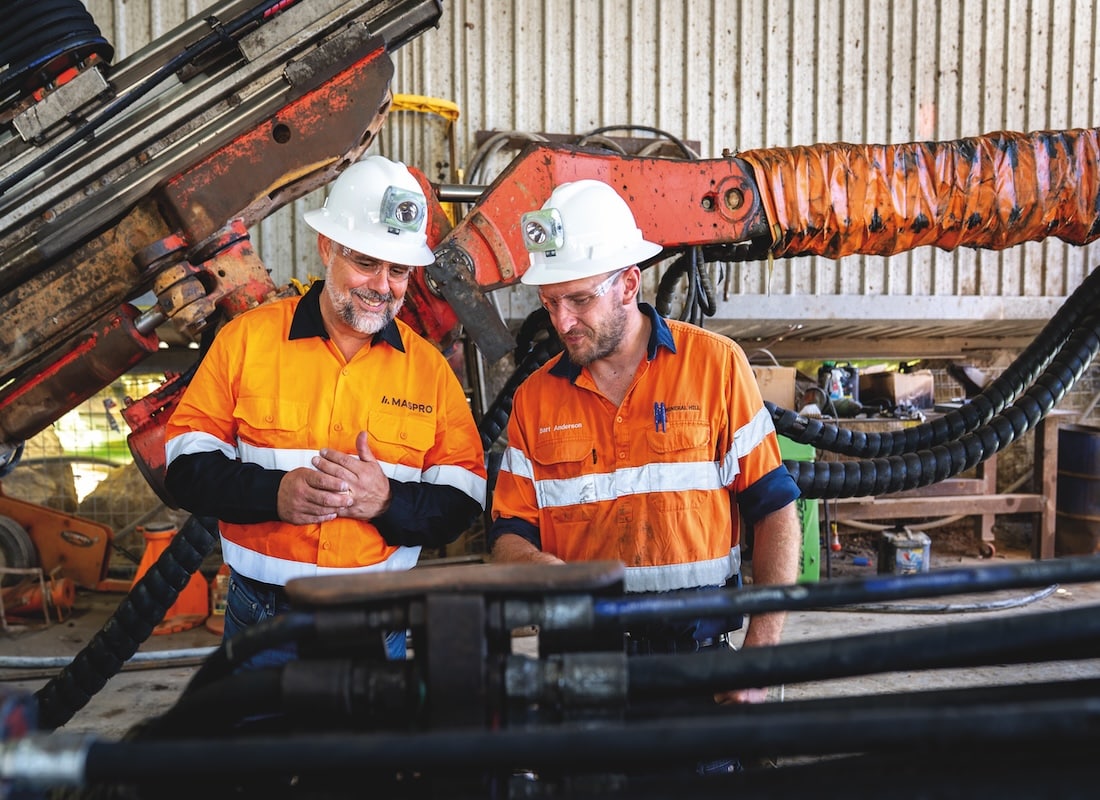
MASPRO is working with underground mines to extend hydraulic cylinder and wear-component life by forensically analysing premature failures that often occur within days in high-load, high-contamination environments. Using teardown inspections, metallurgical assessment and seal and surface finish analysis, the company traces root causes such as side-loading, misalignment, poor lubrication and abrasive ingress rather than accepting short service intervals as “normal”. The approach is feeding back into redesigns of rod eyes, bearing areas and sealing systems, giving maintenance teams data to adjust operating practices and stocking strategies.
Active risk management in Australian mining is shifting towards real-time, technology-driven controls that separate people from heavy plant in shared work zones. New systems from suppliers such as Aptella integrate collision avoidance, proximity detection and geofencing around haul trucks, loaders and autonomous fleets, using on-board sensors and wearable tags to trigger alarms or automatic slow-downs. For geotechnical and operations teams, this means redesigning traffic flows, exclusion zones and training to match digital risk maps, with the aim of making “zero harm” credible rather than aspirational.
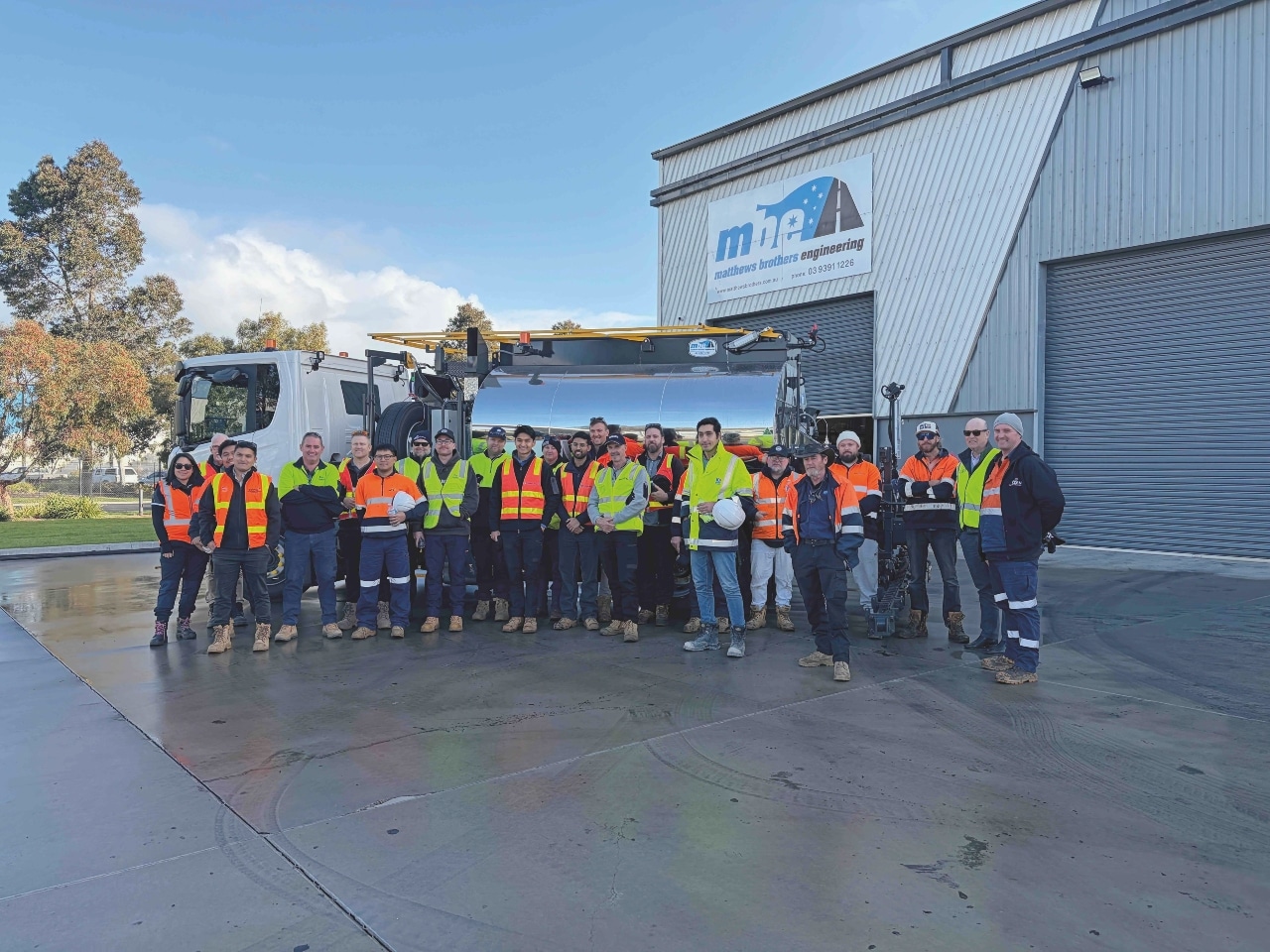
A ‘spray seal essentials’ workshop has positioned Matthews Brothers Engineering (MBE) as a technical partner in upskilling road maintenance crews on binder selection, aggregate grading and application rates for chip seals. MBE used its own spray sealing equipment and calibration procedures to demonstrate correct nozzle configuration, bar height and transverse distribution checks, directly linking plant settings to Austroads-compliant surface texture and waterproofing performance. The initiative signals growing reliance on OEMs to transfer practical know‑how on seal design, construction tolerances and troubleshooting bleeding, stripping and early-life failures.
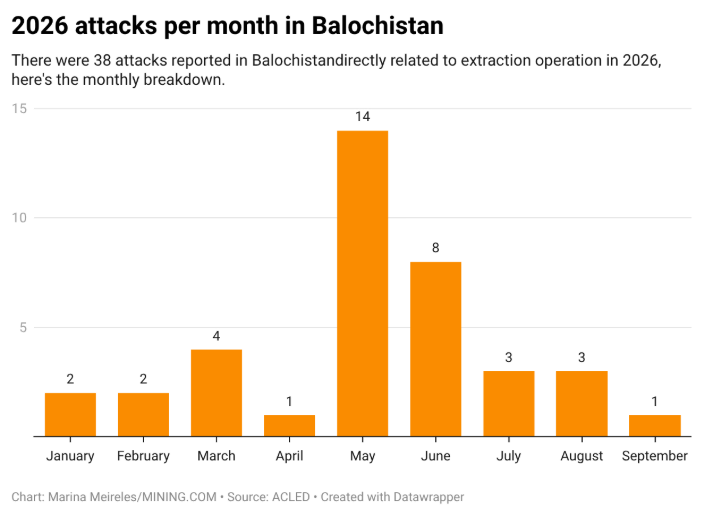
More than 30 mining operations in Pakistan’s Balochistan province have been attacked in 2026, with ACLED recording 38 incidents linked to extractive activity between January and September and over 130 in the past three years. Nearly 90% of separatist attacks on mineral projects occur on haul and access roads, typically disabling coal and copper-gold trucks by shooting tyres and burning vehicles, while heavily guarded sites such as Reko Diq and Saindak see fewer direct assaults. The pattern exposes critical vulnerabilities in transport corridors and raises security, reputational and community‑relations risks for foreign-backed projects.
Thirty-seven detainees arrested in a Nigeria Security and Civil Defence Corps sweep on suspected illegal mining sites near Minna, Niger State, were found dead in custody, prompting a state-wide mining suspension and 24-hour curfew. Niger State, which reported 880 registered mining companies and cooperatives in 2024 but only 261 profiled, sits over 578 mineral titles including 369 for gold, with widespread unlicensed activity. Federal Mining Marshals, expanded to 2,570 officers, have flagged 374 suspected illegal sites since March 2024, yet prosecutions have yielded only five convictions from 165 cases involving 430 defendants.
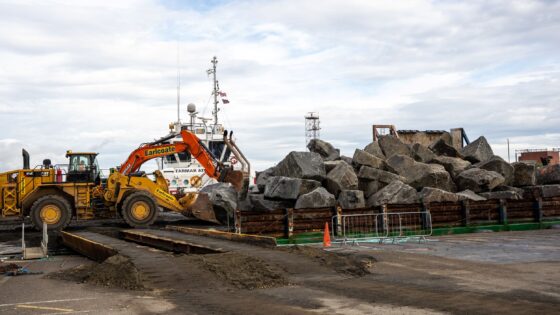
Around 55,000t of rock armour is being placed by PD Ports along the South Gare breakwater at Redcar to reinforce coastal protection for the River Tees against increasingly severe North Sea storm conditions. The works focus on strengthening the existing rubble-mound structure, which has experienced accelerated damage and overtopping, with rock sizes and gradings selected to resist higher wave energy and storm surges. For coastal and geotechnical engineers, the scheme signals a need to reassess armour stability and design return periods on older breakwaters under changing wave climates.
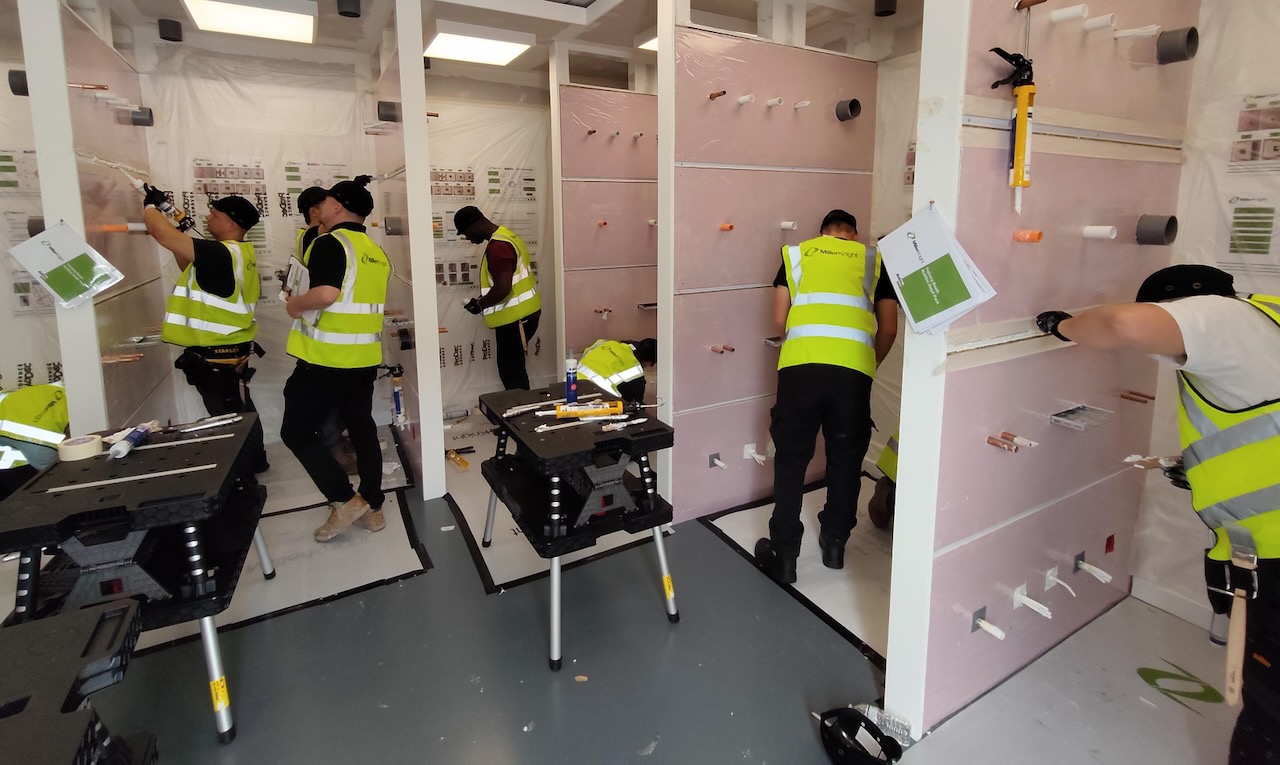
Miller Knight has expanded its Mansfield-based apprentice training academy to run four to six intensive courses a year, taking 12 apprentices per intake and targeting 27 programme completions annually, focused on passive fire protection installations. Each training week combines two days of theory with three days of practical work, followed by six site-based modules over roughly six months, covering tasks such as installing basic fire-stopping seals to tested detail drawings within a set timeframe. The structure gives the contractor a controlled route to build in-house competence in fire-stopping standards and installation quality.
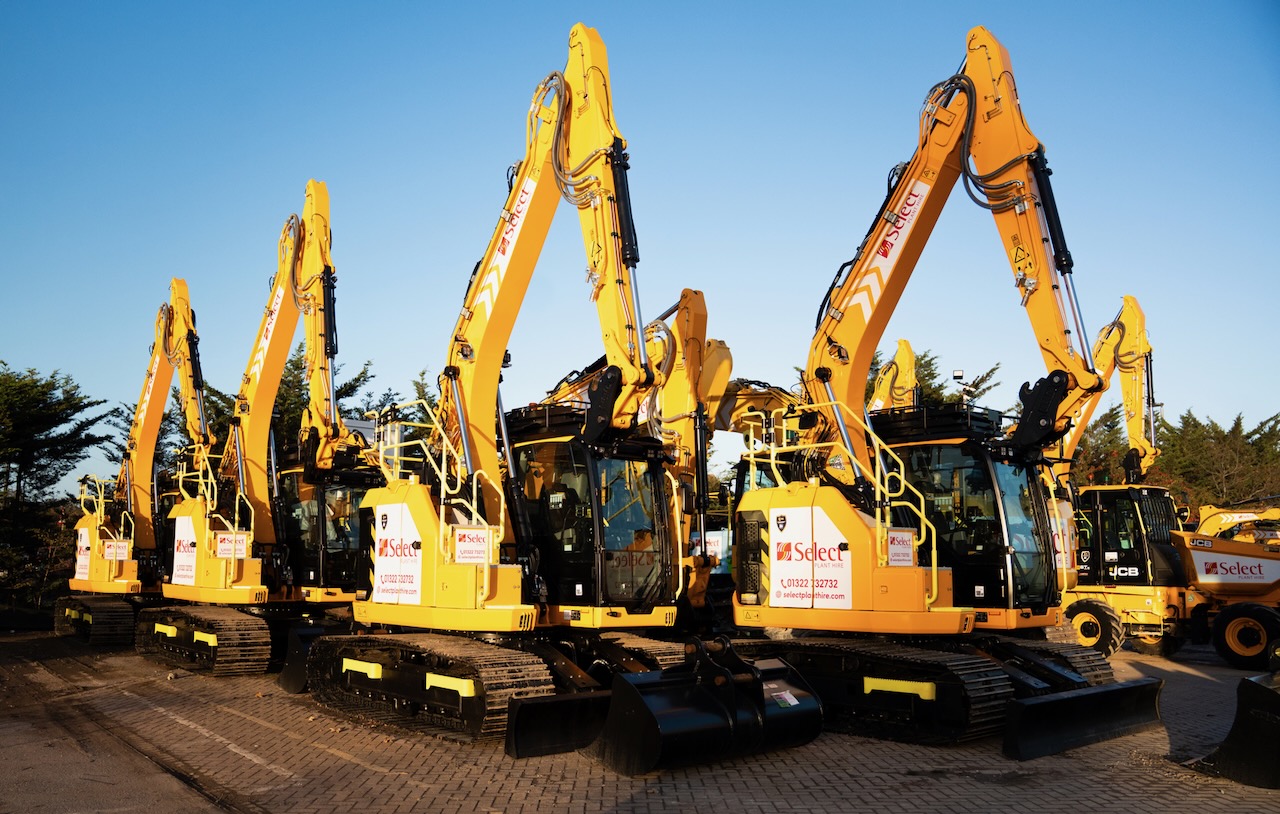
Select Plant Hire is fitting Xwatch XW5 MK2 safety systems to around 30 new JCB machines from its £5m fleet expansion, covering 370X tracked excavators, 245XR and 145XR reduced tailswing excavators, 9‑tonne dual‑drive site dumpers and Loadall telehandlers. The systems provide configurable height and slew limits plus rated capacity indication, allowing rapid adjustment for overhead services, exclusion zones and lifting duties as machines move between very different sites. Xwatch, now part of Hexagon, is also rolling out its XW‑Insite telematics with Select to track location, hours, fuel use, CO2 data, geofencing, faults and safety settings across the mixed fleet.
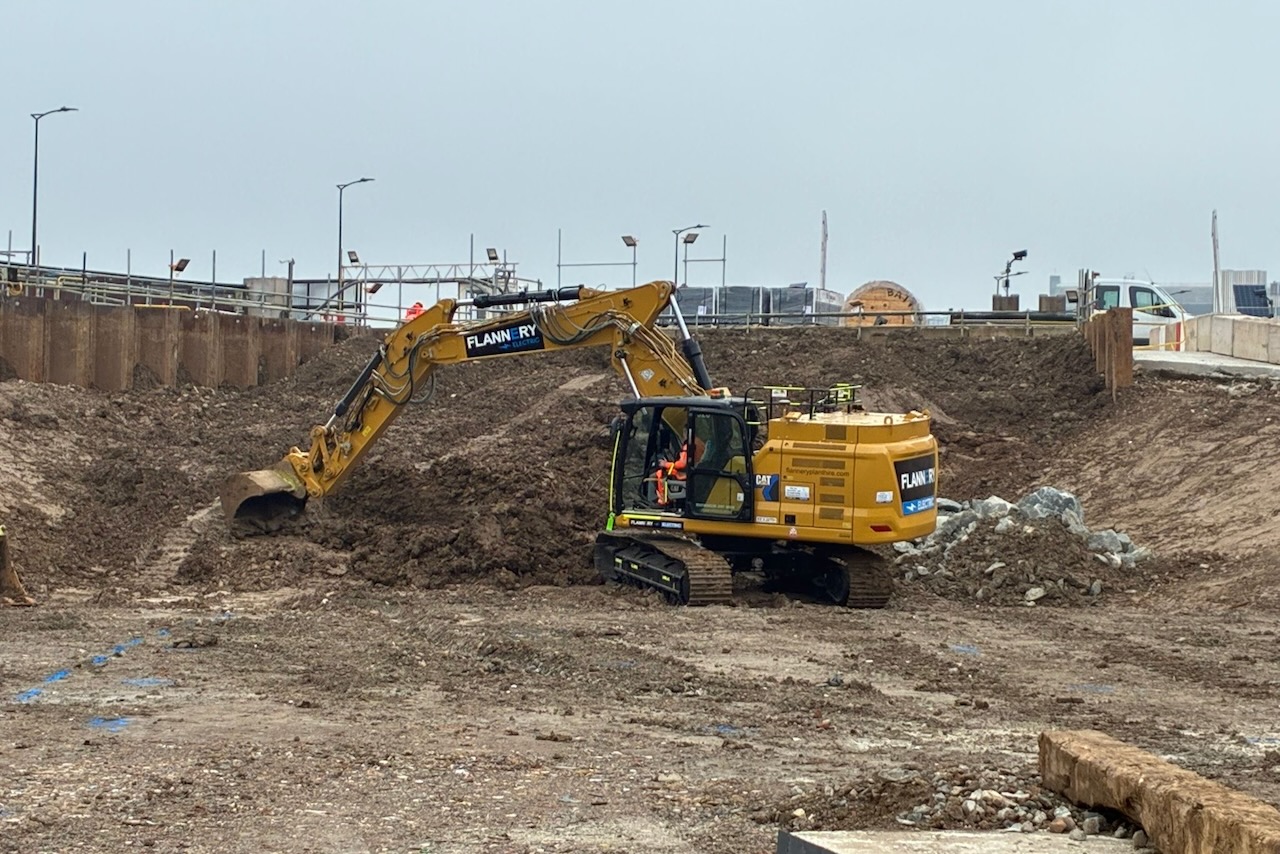
Flannery Plant Hire has put a battery-electric Cat 320 medium excavator, supplied by Finning UK & Ireland, to work on a UK site, with operators reporting like-for-like digging and hydraulic performance compared with diesel units but with lower noise and vibration. Finning ran detailed commissioning support, including electric safety protocols, VisionLink telematics training, and walkaround inspections focused on daily maintenance checkpoints. On-site trials concentrated on charging infrastructure and connection procedures, with operator logbooks and structured feedback used to assess real-world integration and inform Flannery’s wider decarbonisation strategy.
A £153M upgrade of the Thickthorn junction on the A47/A11 south of Norwich is advancing this week with a purpose-built bridge being craned into position to reconfigure one of the region’s busiest strategic road interchanges. The new structure is a key element in separating A11–A47 through traffic from local movements, reducing weaving and short merge lengths that currently constrain capacity and raise collision risk. For designers and contractors, the lift marks the critical transition from earthworks and foundations to full structural integration and subsequent tie-in works under live-traffic conditions.
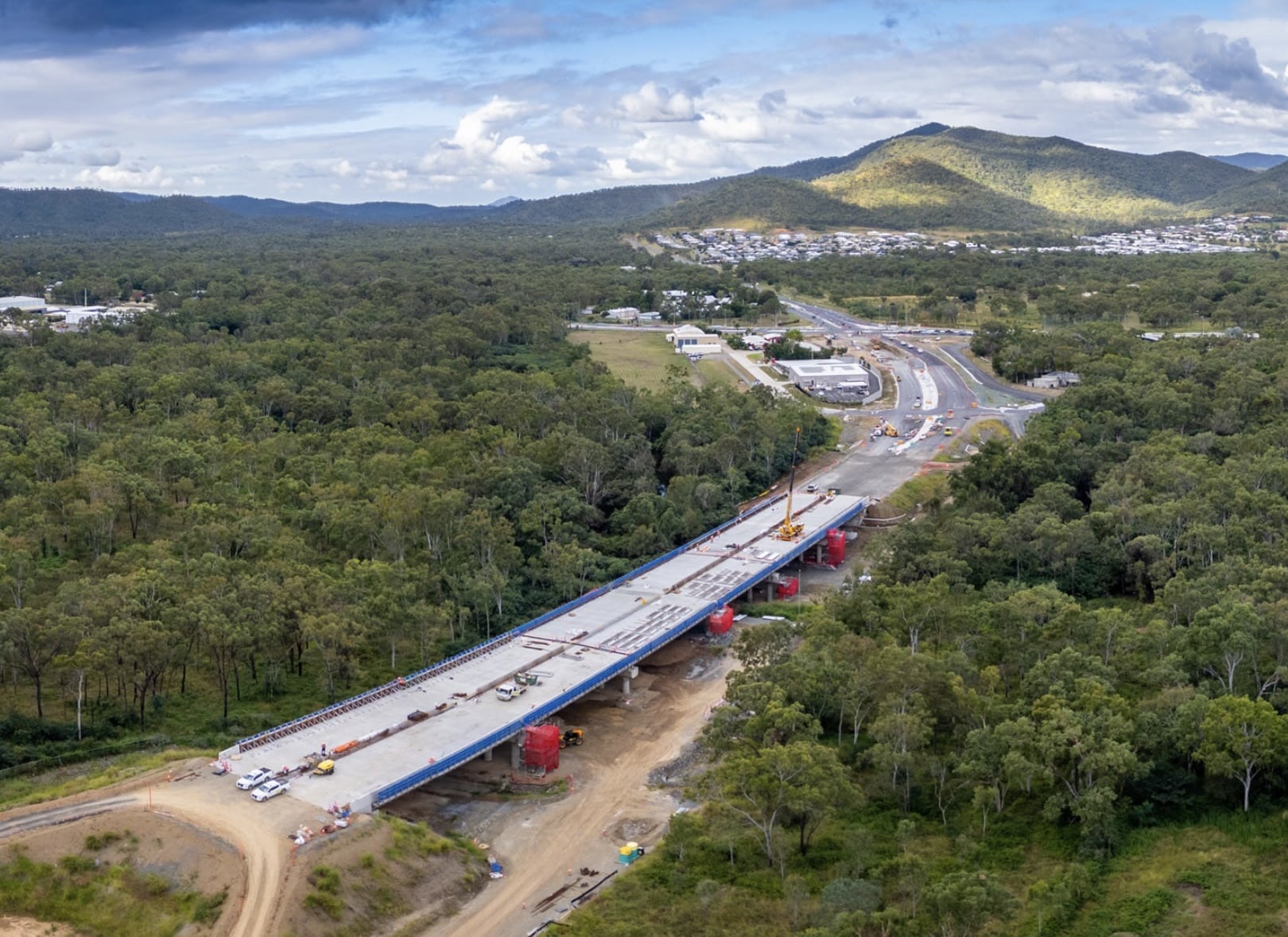
Works on the Lion Creek Bridge are now complete, the first of 18 old timber bridge replacements under the $1.98 billion Rockhampton Ring Road project, which will improve flood resiliency and all-weather access in Central Queensland. The scheme will deliver a 14.7-kilometre western link of the Bruce Highway around Rockhampton, designed to divert heavy freight and through-traffic from urban sections. Progress at the Fitzroy River crossing and other structures signals a shift towards higher, more flood-tolerant bridge levels and more reliable freight travel times on this key north–south corridor.
FM Global is urging Australian mines to tackle “invisible” operational risks by using detailed loss-prevention engineering to identify exposures before they trigger multimillion-dollar disruptions to production and cash flow. The insurer works directly on sites to trace root causes of unplanned shutdowns – such as conveyor fires, crusher failures or power-system faults – and then specifies targeted controls, from upgraded fire protection and redundancy in critical drives to improved maintenance regimes. For geotechnical and processing teams, the message is to integrate insurer-grade risk audits into design, expansion and brownfield upgrade decisions, not just post-incident reviews.
Queensland has passed the Criminal Code (Dangerous Driving) and Other Legislation Amendment Act 2026, overhauling dangerous driving offences and substantially increasing penalties to prioritise victims’ rights. The package targets high‑risk behaviours such as excessive speed, drink and drug driving, and repeat offending, with tougher custodial terms and expanded circumstances where dangerous operation of a vehicle can be charged. For road and infrastructure planners, the shift signals stronger legal backing for engineering measures that manage speed, separate vulnerable users, and support enforcement technology on state-controlled roads.