UK unmanned nuclear waste GDF: design and safety notes for tunnel engineers
Reviewed by Joe Ashwell
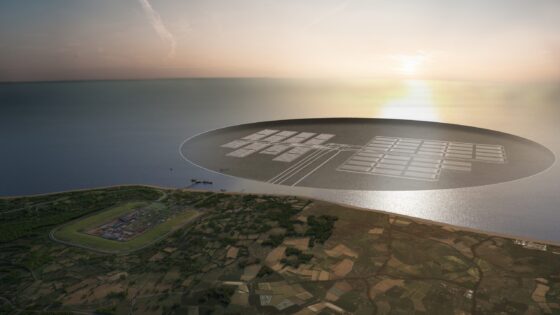
First reported on New Civil Engineer
30 Second Briefing
Nuclear Waste Services is exploring an unmanned, highly automated design for the UK’s planned deep Geological Disposal Facility (GDF) for higher-activity radioactive waste, potentially removing routine human presence from underground vaults and access tunnels. Concepts under review include remote-operated emplacement systems, autonomous guided vehicles for waste packages, and fully automated ventilation, monitoring and backfilling operations. For geotechnical and civil designers, this points to layouts, shaft and drift geometries, and ground support that must accommodate robotic handling, long-term remote inspection and minimal maintenance access over many decades.
Technical Brief
- Safety case development must show passive protection of workers and public without relying on underground intervention.
- Remote systems must remain operable and fail-safe over repository timescales measured in many decades.
- Design teams must treat underground areas as permanently inaccessible, influencing fire, egress and rescue strategies.
- Monitoring systems will need redundancy and diversity to detect anomalies without physical inspection access.
- Automation reduces occupational exposure underground but transfers risk to control software, cyber security and interfaces.
- Lessons from this GDF concept could inform automation and exclusion strategies in other high-hazard underground works.
Our Take
Within the 12 Hazards stories in our database, the United Kingdom features more often in relation to regulatory and design debates than actual construction incidents, so any move by Nuclear Waste Services towards an ‘unmanned’ deep facility will likely be scrutinised mainly through a safety-case and governance lens rather than recent accident history.
Across the 533 tag-matched pieces on Projects, Safety and Sustainability, long-lived underground facilities (mines, caverns, repositories) increasingly rely on remote monitoring and reduced manning, suggesting NWS can draw on maturing practices from deep mining and hydrocarbon storage when justifying remote or autonomous operation concepts.
For a UK repository, an unmanned operational concept would shift a large part of the safety argument from occupational risk management to long-term system reliability and maintainability, meaning geotechnical design, passive barrier performance and remote inspection regimes will carry more weight than conventional underground workforce safety measures.
Prepared by collating external sources, AI-assisted tools, and Geomechanics.io’s proprietary mining database, then reviewed for technical accuracy & edited by our geotechnical team.
Related Articles

Related Industries & Products
Mining
Geotechnical software solutions for mining operations including CMRR analysis, hydrogeological testing, and data management.
Construction
Quality control software for construction companies with material testing, batch tracking, and compliance management.
CMRR-io
Streamline coal mine roof stability assessments with our cloud-based CMRR software featuring automated calculations, multi-scenario analysis, and collaborative workflows.
HYDROGEO-io
Comprehensive hydrogeological testing platform for managing, analysing, and reporting on packer tests, lugeon values, and hydraulic conductivity assessments.
GEODB-io
Centralised geotechnical data management solution for storing, accessing, and analysing all your site investigation and material testing data.