Geomechanics.io

  • Free Tools
Sign UpLog In

Geomechanics.io

Geomechanics, Streamlined.

© 2026 Geomechanics.io. All rights reserved.

Geomechanics.io

CMRR-ioGEODB-ioHYDROGEO-ioQCDB-ioFree Tools & CalculatorsBlogLatest Industry News

Industries

MiningConstructionTunnelling

Company

Terms of UsePrivacy PolicyLinkedIn
    AllGeotechnicalMiningInfrastructureMaterialsHazardsEnvironmentalSoftwarePolicy
    Sustainability
    Safety
    Projects

    Silt pollution in UK construction: practical control measures for project teams

    April 15, 2026|

    Reviewed by Tom Sullivan

    Silt pollution in UK construction: practical control measures for project teams

    First reported on New Civil Engineer

    30 Second Briefing

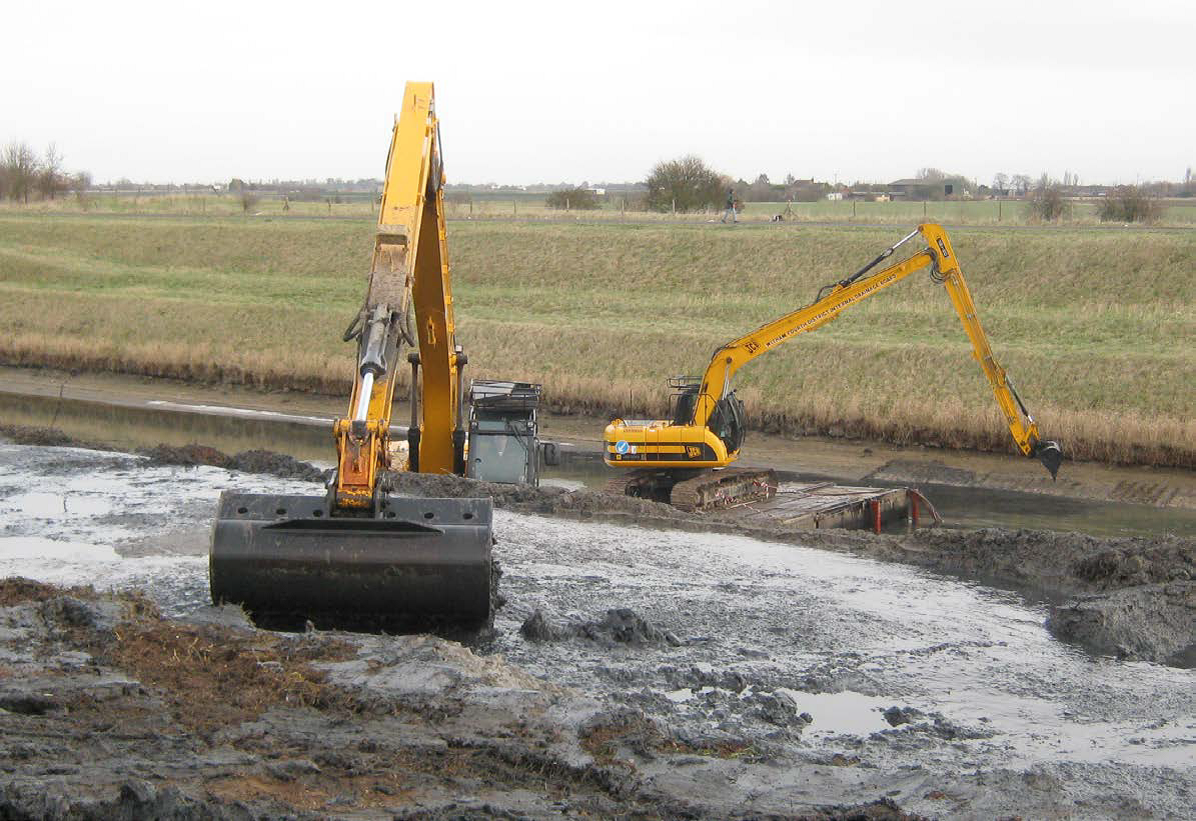
    Construction’s role in more than one-third of UK carbon emissions is widely acknowledged, but its contribution to acute silt pollution from earthworks, dewatering and runoff from haul roads and stockpiles is still largely overlooked. Fine sediment washed from sites into watercourses can smother spawning gravels, clog culverts and foul SuDS assets, often breaching Environment Agency permits and triggering costly stop-work notices. The piece calls for more rigorous use of silt fences, settlement lagoons and lamella clarifiers, plus better phasing of bulk earthworks to keep disturbed areas and exposed cohesive soils to a minimum.

    Technical Brief

    • Environment Agency permits typically set suspended solids limits in mg/L, enforced via spot and composite sampling.
    • Stop-work notices for silt breaches can halt bulk earthworks, piling and dewatering across entire compounds.
    • Fine silts mobilised from cohesive cut faces are often worst during rapid weather swings and unprotected winter working.
    • Haul road gradients, cambers and cross-falls strongly influence runoff concentration and silt load to site outfalls.
    • Poorly detailed stockpile toe drains and lack of perimeter bunding frequently short-circuit SuDS and lagoons.
    • Silt fences only work when keyed-in, tensioned and maintained; overtopping and undercutting are common failure modes.
    • Lamella clarifiers demand tight control of flow rate and sludge removal to maintain plate efficiency and avoid bypassing.
    • Stronger linkage of silt management plans to CDM risk assessments would formalise monitoring, trigger levels and emergency response.

    Our Take

    New Civil Engineer’s role in initiatives like the TechFest Awards 2025 and the British Construction & Infrastructure Awards means that practical approaches to silt and runoff control on UK sites could quickly become award criteria or case‑study benchmarks, putting peer pressure on contractors to tighten site practices.

    Because this is a UK‑focused Environmental incident theme, it sits alongside several regulatory and best‑practice discussions in our coverage, signalling that contractors who do not treat silt management as a design‑stage risk (rather than a site‑stage housekeeping task) are likely to face tougher scrutiny from both regulators and clients.

    Geotechnical Software for Modern Teams

    Centralise site data, logs, and lab results with GEODB-io, CMRR-io, and HYDROGEO-io.

    No credit card required.

    • Save and export unlimited calculations
    • Advanced data visualisation
    • Generate professional PDF reports
    • Cloud storage for all your projects

    Prepared by collating external sources, AI-assisted tools, and Geomechanics.io’s proprietary mining database, then reviewed for technical accuracy & edited by our geotechnical team.

    Related Articles

    Jacobs’ Oldbury environmental baselining: implications for nuclear site design
    Environmental
    3 days ago

    Jacobs’ Oldbury environmental baselining: implications for nuclear site design

    Jacobs has been appointed by Great British Energy – Nuclear to deliver environmental consultancy and baselining at the Oldbury site in Gloucestershire, earmarked as a potential location for a new nuclear power station. The work will characterise existing ground, groundwater, ecological and radiological conditions to support future nuclear site licensing, environmental permits and design optioneering. Early baselining data will be critical for later geotechnical investigations, foundation design, flood and coastal risk assessments, and long-term monitoring strategies if the project proceeds.

    UK Government NbS catchment study: hydrological design notes for engineers
    Environmental
    14 days ago

    UK Government NbS catchment study: hydrological design notes for engineers

    A UK Government research paper concludes that Nature-based Solutions such as floodplain reconnection, riparian woodland and leaky barriers are most effective when planned and modelled across whole catchments rather than as isolated site schemes. The study stresses integrating NbS with existing hard defences, using hydrological and hydraulic modelling to quantify peak flow attenuation and downstream level reductions under design storm events. For civil and drainage engineers, this points to earlier basin-scale option appraisal, multi-landowner agreements and long-term monitoring of storage volumes, infiltration rates and sediment behaviour.

    Dalton Quarry biodiversity bank: BNG design and land-take notes for project teams
    Environmental
    17 days ago

    Dalton Quarry biodiversity bank: BNG design and land-take notes for project teams

    A former Ibstock extraction site, Dalton Quarry, is being converted by Green Earth Developments Group into a biodiversity “bank” of engineered habitats to generate tradable biodiversity net gain (BNG) units for UK infrastructure schemes. The project will create a mosaic of habitat types on previously worked quarry land, allowing developers to purchase pre-accredited BNG units rather than delivering all ecological uplift within constrained project footprints. For civil and geotechnical teams, this model could influence land-take, earthworks design and long-term aftercare obligations on major road, rail and housing projects.

    Related Industries & Products

    Construction

    Quality control software for construction companies with material testing, batch tracking, and compliance management.

    Mining

    Geotechnical software solutions for mining operations including CMRR analysis, hydrogeological testing, and data management.

    QCDB-io

    Comprehensive quality control database for manufacturing, tunnelling, and civil construction with UCS testing, PSD analysis, and grout mix design management.