Quaise superhot geothermal plant: design and subsurface risks for engineers
Reviewed by Joe Ashwell
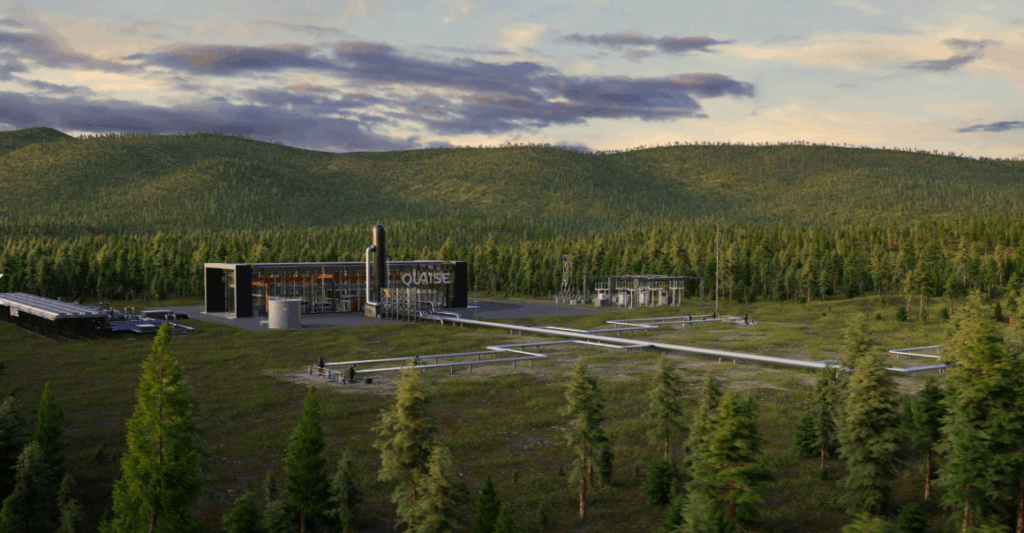
First reported on MINING.com
30 Second Briefing
Quaise Energy is advancing Project Obsidian in Oregon, aiming to build the first superhot geothermal plant by drilling into rock above 300°C and delivering a baseload 50 MW from only a handful of wells by 2030. A modelling analysis presented at the 2026 Stanford Geothermal Workshop by senior mechanical engineer Daniel W. Dichter indicates higher subsurface temperatures could ultimately support 250 MW in phase two, with a regional goal of 1 GW. The confirmation well is due online later this year, with lab work at Oregon State University recreating extreme downhole geochemical conditions.
Technical Brief
- Superhot geothermal target is rock exceeding 300°C, demanding tools and completions tolerant of >572°F environments.
- Modelling work focuses on unknown geochemistry at unprecedented depths/temperatures, including fluid–rock reactions affecting permeability and casing.
- Dichter’s paper benchmarks projected well power output against exceptionally productive oil and gas wells for equivalence.
- Confirmation well scheduled this year will provide first in situ data on temperature gradients and geochemical regime.
- Operationally, each well is intended to deliver continuous baseload output, shifting geothermal design towards high-enthalpy, low-well-count fields.
- Scope remains constrained by first-of-a-kind uncertainties: rock chemistry, long-term material durability and model extrapolation beyond existing geothermal datasets.
Our Take
With a 1 GW build-out goal for superhot geothermal energy in the USA, Project Obsidian would sit at the upper end of power scales normally seen in our geotechnical project coverage, more in line with large gas or coal units than typical geothermal plants, which has implications for grid integration and transmission planning.
The explicit comparison to oil and gas in the article facts signals that Quaise Energy is targeting depths and temperatures more familiar to hydrocarbon drillers, which could open a new service market for existing US drilling contractors rather than relying solely on traditional geothermal specialists.
The mention of a 0.5% rise in copper stocks on Comex alongside a 1 GW geothermal ambition underlines a tension already visible in our database: large-scale renewable projects in the USA and Peru are emerging just as copper-market signals remain finely balanced, which may influence long-lead procurement for cabling, transformers and heat-exchange equipment.
Prepared by collating external sources, AI-assisted tools, and Geomechanics.io’s proprietary mining database, then reviewed for technical accuracy & edited by our geotechnical team.
Related Articles

Related Industries & Products
Mining
Geotechnical software solutions for mining operations including CMRR analysis, hydrogeological testing, and data management.
CMRR-io
Streamline coal mine roof stability assessments with our cloud-based CMRR software featuring automated calculations, multi-scenario analysis, and collaborative workflows.
HYDROGEO-io
Comprehensive hydrogeological testing platform for managing, analysing, and reporting on packer tests, lugeon values, and hydraulic conductivity assessments.
GEODB-io
Centralised geotechnical data management solution for storing, accessing, and analysing all your site investigation and material testing data.