Geomechanics.io

  • Free Tools
Sign UpLog In
    AllGeotechnicalMiningInfrastructureMaterialsHazardsEnvironmentalSoftwarePolicy

    Geomechanics.io

    Geomechanics, Streamlined.

    © 2026 Geomechanics.io. All rights reserved.

    Geomechanics.io

    CMRR-ioGEODB-ioHYDROGEO-ioQCDB-ioFree Tools & CalculatorsBlogLatest Industry News

    Industries

    MiningConstructionTunnelling

    Company

    Terms of UsePrivacy PolicyLinkedIn
    Failure
    Safety

    Warrenpoint Harbour £80k fine: loading shovel fatality lessons for engineers

    November 24, 2025|

    Reviewed by Joe Ashwell

    Warrenpoint Harbour £80k fine: loading shovel fatality lessons for engineers

    First reported on The Construction Index

    30 Second Briefing

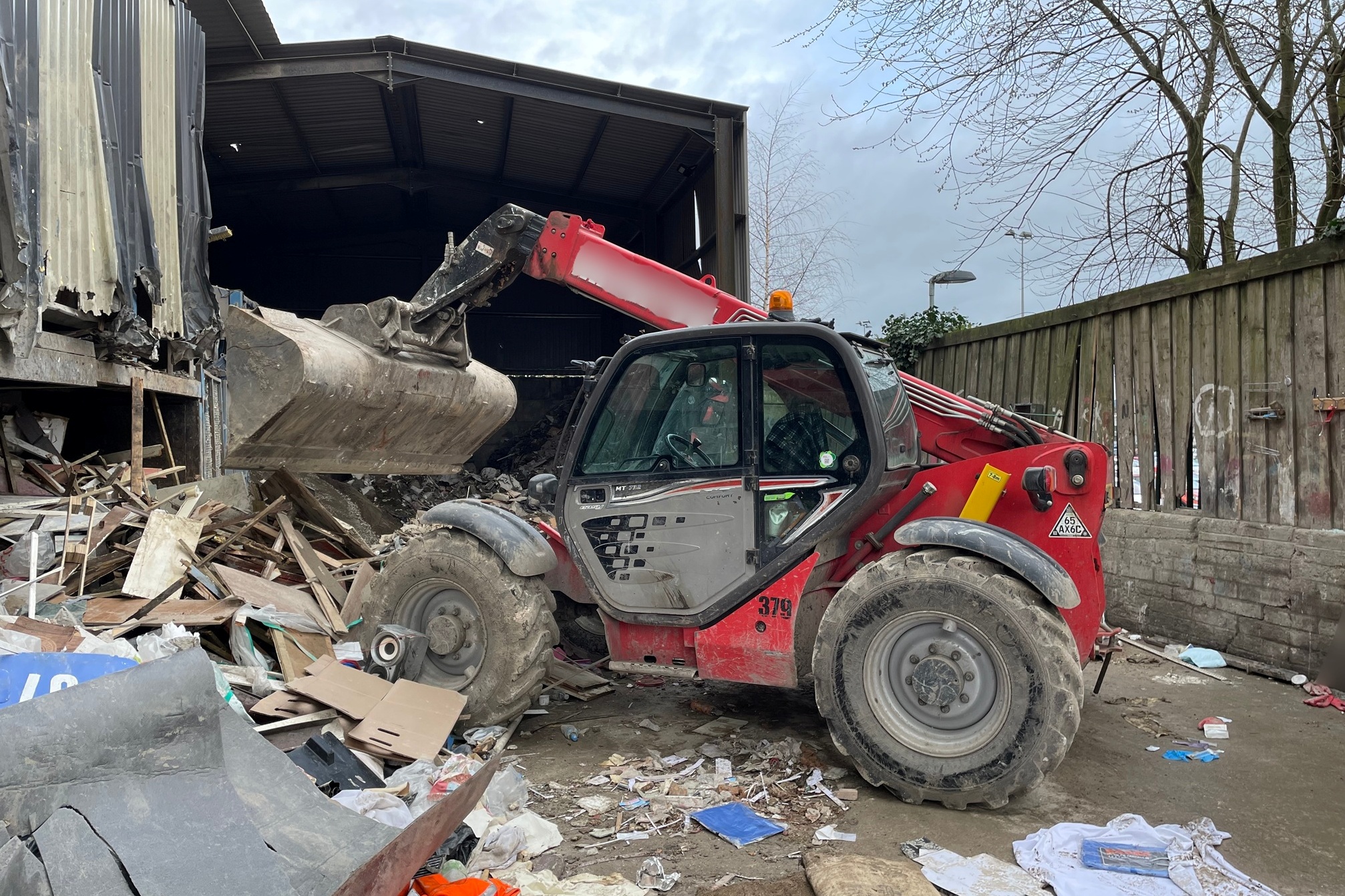
    Warrenpoint Harbour Authority has been fined £80,000 at Newry Crown Court after 58-year-old employee Kevin McGeough was fatally struck and run over by a 20-tonne Volvo loading shovel at Berth 1 in July 2019. McGeough had been power washing in the dockyard close to the travel route of two large loading shovels transferring wood chip 150 metres across the berth, with one machine carrying about 2 tonnes in a 1.69-metre-high bucket at the time. Investigators found no clearly identified, segregated or physically protected pedestrian routes, exposing workers to uncontrolled vehicle movements.

    Technical Brief

    • Failure mechanism centred on uncontrolled interaction between 20‑tonne Volvo shovel and unsegregated pedestrian work area.
    • Joint HSENI and PSNI investigation treated the incident as both a workplace transport failure and potential criminal matter.
    • Investigators specifically cited absence of clearly marked, physically protected pedestrian walkways within Berth 1 operations zone.
    • Workplace transport risk assessment was deemed inadequate, with no effective system to separate vehicles and pedestrians.
    • HSENI inspector stressed that effective vehicle–pedestrian controls can be simple, relying on barriers, markings and signage.
    • Court outcome followed Warrenpoint Harbour Authority pleading guilty to two distinct health and safety offences.

    Our Take

    Within our Hazards coverage, Northern Ireland appears infrequently, so the Warrenpoint Harbour case will likely be treated by local operators as a reference point for HSENI’s expectations on mobile plant risk assessment and segregation in ports and bulk terminals.

    The combination of a 20‑tonne loader and relatively light wood chip highlights a recurring pattern in our safety-tagged items: low-density bulk materials can encourage higher travel speeds and more frequent cycles, which tends to increase exposure time for pedestrians and spotters unless traffic management is very tightly controlled.

    With 27 Failure/Safety-tagged pieces in our database, this is one of several where the enforcement action comes years after the incident, signalling to UK operators that documentation and training records for mobile equipment and loading operations may need to be retained and auditable over much longer periods than day‑to‑day practice assumes.

    Geotechnical Software for Modern Teams

    Centralise site data, logs, and lab results with GEODB-io, CMRR-io, and HYDROGEO-io.

    No credit card required.

    • Save and export unlimited calculations
    • Advanced data visualisation
    • Generate professional PDF reports
    • Cloud storage for all your projects

    Prepared by collating external sources, AI-assisted tools, and Geomechanics.io’s proprietary mining database, then reviewed for technical accuracy & edited by our geotechnical team.

    Related Articles

    Melbourne sinkhole investigations: geotechnical lessons for tunnel project teams
    Hazards
    in 5 months

    Melbourne sinkhole investigations: geotechnical lessons for tunnel project teams

    A sinkhole roughly 8–10 m wide and several metres deep has opened on the AJ Burkitt Reserve sporting oval in Heidelberg, directly adjacent to the North East Link tunnel alignment in Melbourne’s northeast. Victorian Infrastructure Delivery Authority has confirmed the “surface hole” is in the vicinity of active tunnelling operations, leading to a work pause while engineers and emergency crews carry out geotechnical investigations and monitoring. No injuries or structural damage have been reported, but the area remains fully cordoned off pending cause determination and stability assessment.

    Spain retaining wall collapse derailment: failure lessons for rail engineers
    Hazards
    2 days ago

    Spain retaining wall collapse derailment: failure lessons for rail engineers

    A commuter train derailed in Gelida, near Barcelona, on 20 January after striking a collapsed retaining wall that had fallen onto the track, killing the driver and injuring 37 passengers. The incident, Spain’s second fatal rail accident in a week, occurred on a section of line with trackside earth-retaining structures, raising immediate questions over wall design, drainage, inspection frequency and slope stability under recent weather conditions. For civil and geotechnical engineers, failure mode identification and rapid condition assessment of similar retaining systems on active corridors will be a priority.

    Thailand crane collapse on passenger train: engineering lessons for rail projects
    Hazards
    10 days ago

    Thailand crane collapse on passenger train: engineering lessons for rail projects

    A construction crane collapsed onto a moving passenger train in northeastern Thailand on Wednesday morning, killing at least 32 people and injuring more than 60. The crane, operating on an adjacent construction site, failed and toppled across active railway tracks, striking multiple carriages at speed and causing extensive structural damage and derailment. Investigators are expected to focus on crane foundation design, ground conditions near the rail corridor, lift planning, exclusion zones and compliance with Thai standards for plant operating beside live transport infrastructure.

    Related Industries & Products

    Mining

    Geotechnical software solutions for mining operations including CMRR analysis, hydrogeological testing, and data management.

    CMRR-io

    Streamline coal mine roof stability assessments with our cloud-based CMRR software featuring automated calculations, multi-scenario analysis, and collaborative workflows.

    HYDROGEO-io

    Comprehensive hydrogeological testing platform for managing, analysing, and reporting on packer tests, lugeon values, and hydraulic conductivity assessments.

    GEODB-io

    Centralised geotechnical data management solution for storing, accessing, and analysing all your site investigation and material testing data.