US DOE–DOL AI mining MoU: safety, data and design takeaways for engineers
Reviewed by Tom Sullivan
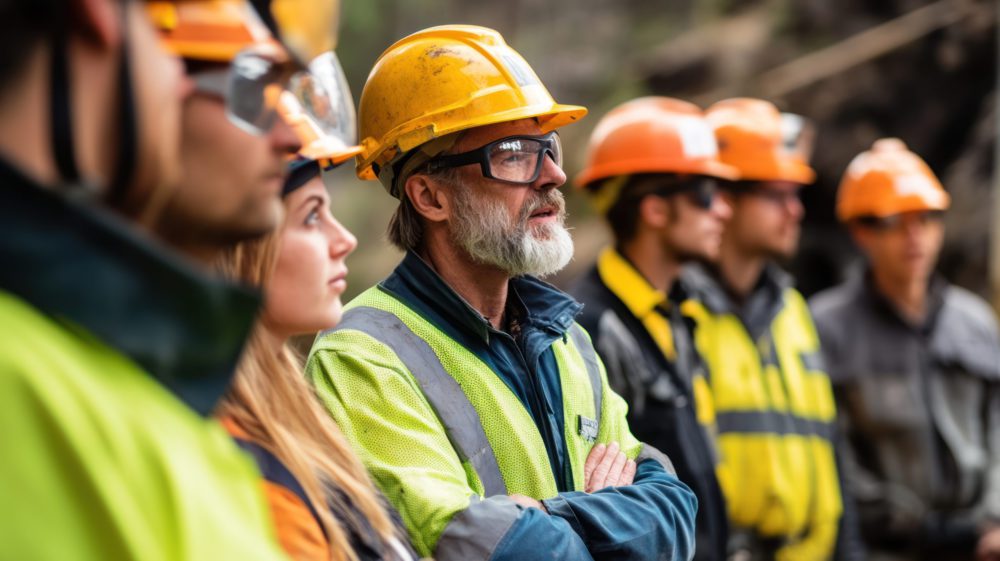
First reported on MINING.com
30 Second Briefing
US Departments of Energy and Labor have signed a five-year MoU to accelerate deployment of AI, automation and advanced sensors across US mining, linking DOE’s Hydrocarbons and Geothermal Energy Office and Office of Critical Minerals and Energy Innovation with DOL’s Mine Safety and Health Administration. The partnership will run joint research, testing and demonstration projects with the National Energy Technology Laboratory Coal Center of Excellence, focusing on next‑generation mining systems and hazard detection. Workstreams include digitising legacy mining data, improving public mineral resource datasets on federally managed lands, and expanding technology-focused training for miners.
Technical Brief
- MoU duration is five years, providing a defined window for technology piloting and scaling.
- DOE’s Hydrocarbons and Geothermal Energy Office and Critical Minerals and Energy Innovation office are the technical leads.
- DOL’s Mine Safety and Health Administration supplies regulatory, inspection and safety-domain expertise into all workstreams.
- Non‑proprietary operational and safety data will be shared across agencies as primary inputs for AI model development.
- Joint research, testing and demonstration projects will be run with the National Energy Technology Laboratory Coal Center of Excellence.
- Advanced sensors and AI are explicitly targeted at hazard detection, accident reduction, and emergency preparedness and response.
- Scope is limited to non‑proprietary datasets and federally managed lands for public mineral resource characterisation.
- Training and education programmes will focus on skills for technology‑driven mine operations, including AI‑enabled safety systems.
Our Take
The same DOE offices named here (CMEI and NETL’s coal-focused work) are already backing at least five US pilot plants for critical minerals and rare earth recovery from coal and industrial wastes, so AI tools developed under this MoU are likely to be trialled first in those controlled pilot environments rather than at greenfield mines.
In our database of 1235 Mining stories, DOE-linked critical minerals and rare earths items increasingly pair extraction with processing and recycling players such as ElementUSA and Cyclic Materials, suggesting that any AI safety and productivity frameworks emerging from this MoU will need to span both primary mines and downstream separation/recycling plants.
The inclusion of Lynas Rare Earths and ERI alongside US agencies in a safety- and AI-focused context indicates that US regulators are looking beyond domestic operators, which could nudge foreign rare earth suppliers into aligning with MSHA-influenced data, reporting and automation standards if they want to stay competitive in the US market.
Prepared by collating external sources, AI-assisted tools, and Geomechanics.io’s proprietary mining database, then reviewed for technical accuracy & edited by our geotechnical team.
Related Articles



Related Industries & Products
Mining
Geotechnical software solutions for mining operations including CMRR analysis, hydrogeological testing, and data management.
CMRR-io
Streamline coal mine roof stability assessments with our cloud-based CMRR software featuring automated calculations, multi-scenario analysis, and collaborative workflows.
HYDROGEO-io
Comprehensive hydrogeological testing platform for managing, analysing, and reporting on packer tests, lugeon values, and hydraulic conductivity assessments.
GEODB-io
Centralised geotechnical data management solution for storing, accessing, and analysing all your site investigation and material testing data.