Geomechanics.io

  • Free Tools
Sign UpLog In

Geomechanics.io

Geomechanics, Streamlined.

© 2026 Geomechanics.io. All rights reserved.

Geomechanics.io

CMRR-ioGEODB-ioHYDROGEO-ioQCDB-ioFree Tools & CalculatorsBlogLatest Industry News

Industries

MiningConstructionTunnelling

Company

Terms of UsePrivacy PolicyLinkedIn
    AllGeotechnicalMiningInfrastructureMaterialsHazardsEnvironmentalSoftwarePolicy
    Research
    Projects
    Product

    Sika paste backfill admixtures: cost and strength insights for mine engineers

    May 1, 2026|

    Reviewed by Tom Sullivan

    Sika paste backfill admixtures: cost and strength insights for mine engineers

    First reported on Australian Centre for Geomechanics – News

    30 Second Briefing

    Optimising cemented paste backfill with admixture technology, Teresa Bellver-Baca and Ignacio Aguilar-Sánchez of Sika report that water-reducing and viscosity-modifying agents can cut yield stress while increasing solids content, improving pumpability over long underground pipelines. Field trials in an underground gold mine showed fresh paste yield stress falling even as solids content rose from typical 67–80%, and uniaxial compressive strength gains at 3, 7 and 28 days for mixes with 12% cement and 0–3% admixture by cement weight. The approach targets lower binder consumption in CPB, which can account for up to three quarters of backfill cost.

    Technical Brief

    • CPB rheology is controlled within typical targets: 50–300 Pa yield stress, 0.1–1.0 Pa·s plastic viscosity.
    • Operational windows also specify 180–250 mm slump flow, 67–80% solids, <3% bleed water, 0.5–5 MPa UCS.
    • Field work used industrial-scale tests in an operating underground gold mine, not only laboratory mixes.
    • Uniaxial compressive strength was measured at 3, 7 and 28 days on mixes with 12% cement.
    • Admixture dosages in the strength programme were stepped at 0%, 2% and 3% of cement mass.
    • Rheological monitoring tracked yield stress changes against incremental solids content increases during live plant operation.
    • Geological setting and ore-forming environment are linked to tailings mineralogy and chemistry, constraining admixture selection and dosage.

    Our Take

    With cementitious binder accounting for up to three-quarters of backfill expenses and CPB representing 10–20% of mine operating costs, Sika’s paste optimisation work is likely to be most attractive to high-cost underground gold operations such as Alamos Gold’s Island Gold Mine, where incremental OPEX reductions materially affect cut-off grades.

    In our database of 1228 mining stories, only a subset of gold-tagged items focus on backfill and binder chemistry, so this Sika piece sits in a relatively specialised niche compared with more common coverage of Australian gold exploration and corporate moves such as the Barrick Mining restructuring or Lion One Metals’ financing issues.

    Geotechnical Software for Modern Teams

    Centralise site data, logs, and lab results with GEODB-io, CMRR-io, and HYDROGEO-io.

    No credit card required.

    • Save and export unlimited calculations
    • Advanced data visualisation
    • Generate professional PDF reports
    • Cloud storage for all your projects

    Prepared by collating external sources, AI-assisted tools, and Geomechanics.io’s proprietary mining database, then reviewed for technical accuracy & edited by our geotechnical team.

    Related Articles
    Mining
    about 8 hours ago

    Glencore’s US$250m Cat order for Alumbrera: fleet renewal lens for mine planners

    Glencore has placed a US$250 million order with Finning’s South America business to supply more than 20 large Caterpillar mining trucks, ancillary equipment and technology support for the planned 2026 restart of the Alumbrera copper mine in Argentina. The package, disclosed in Finning’s Q1 2026 results, centres on fleet renewal and digital support rather than life-extension of legacy units. For mine planners and maintenance teams, the scale and timing signal a shift towards a modernised, OEM-supported truck fleet ahead of full production ramp-up.

    MAX Power’s Lawson hydrogen project expansion: scale and infrastructure lens for engineers
    Mining
    1 day ago

    MAX Power’s Lawson hydrogen project expansion: scale and infrastructure lens for engineers

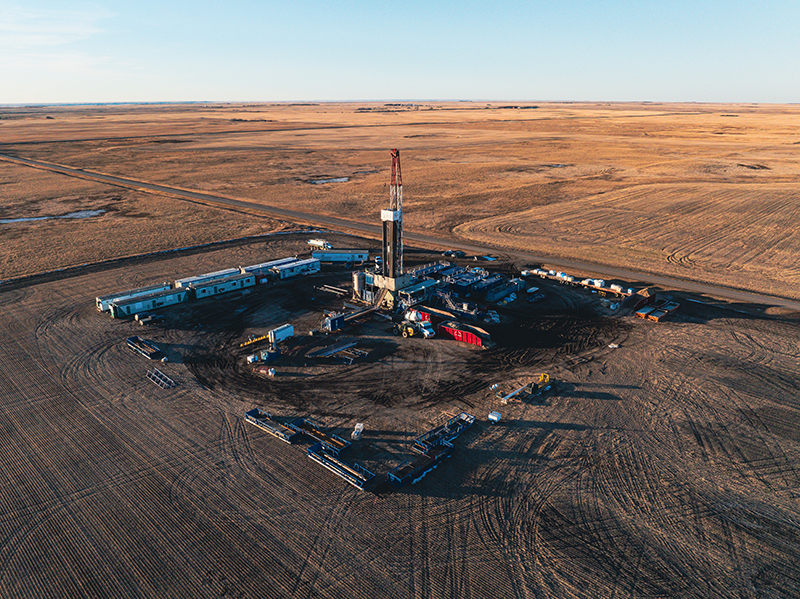
    MAX Power Mining has secured an additional 155,125 acres (628 sq. km) of permits contiguous with its 1,224 sq. km Lawson natural hydrogen project in south-central Saskatchewan, creating the newly named Aurora project on a basement-controlled structural play along the Paleoproterozoic–Archean contact of the Sask Craton. The company has now accumulated 660,263 acres (2,672 sq. km) of provincial permits across the Genesis Trend while running a multi-well commercial validation drill programme at Lawson targeting large-scale natural hydrogen. An MOU with the City of Moose Jaw links potential hydrogen development to a nearby heavy industrial and major data centre corridor, signalling early focus on local offtake and infrastructure integration.

    American Mineral Resources’ diversified portfolio: capex and jurisdiction risk lens
    Mining
    1 day ago

    American Mineral Resources’ diversified portfolio: capex and jurisdiction risk lens

    American Mineral Resources is assembling a seven-jurisdiction portfolio across Quebec, British Columbia, Yukon, Chile, New Zealand, Western Australia and Tanzania, with its Piscau North polymetallic project in Quebec earmarked for a separate Canadian Securities Exchange listing, as it targets a Nasdaq uplist within 12 months via the OTCQB. CEO Ryan Cunningham is prioritising projects with existing permits or modest capex and argues that jurisdictional risk now rivals grade, citing Quebec’s Gaspé oil drilling ban as a warning. He also points to Canada’s flow-through share regime as a key financing advantage over US markets still fixated on AI and tech.

    Related Industries & Products

    Mining

    Geotechnical software solutions for mining operations including CMRR analysis, hydrogeological testing, and data management.

    Tunnelling

    Specialised solutions for tunnelling projects including grout mix design, hydrogeological analysis, and quality control.

    CMRR-io

    Streamline coal mine roof stability assessments with our cloud-based CMRR software featuring automated calculations, multi-scenario analysis, and collaborative workflows.

    HYDROGEO-io

    Comprehensive hydrogeological testing platform for managing, analysing, and reporting on packer tests, lugeon values, and hydraulic conductivity assessments.

    GEODB-io

    Centralised geotechnical data management solution for storing, accessing, and analysing all your site investigation and material testing data.