Geomechanics.io

  • Free Tools
Sign UpLog In

Geomechanics.io

Geomechanics, Streamlined.

© 2026 Geomechanics.io. All rights reserved.

Geomechanics.io

CMRR-ioGEODB-ioHYDROGEO-ioQCDB-ioFree Tools & CalculatorsBlogLatest Industry News

Industries

MiningConstructionTunnelling

Company

Terms of UsePrivacy PolicyLinkedIn
    AllGeotechnicalMiningInfrastructureMaterialsHazardsEnvironmentalSoftwarePolicy
    Safety
    Sustainability
    Projects

    PFAS ‘forever chemicals’: design and risk implications for civil engineers

    March 24, 2026|

    Reviewed by Joe Ashwell

    PFAS ‘forever chemicals’: design and risk implications for civil engineers

    First reported on New Civil Engineer

    30 Second Briefing

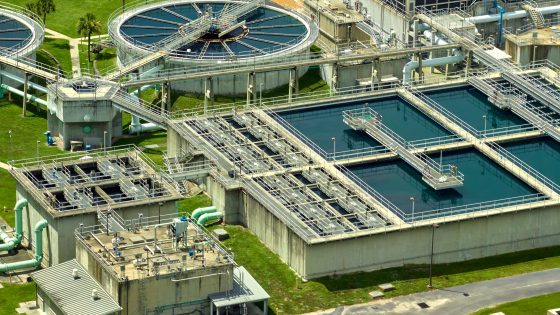
    Per- and polyfluoroalkyl substances (PFAS) are shifting from a niche contamination issue to a core design constraint for water, wastewater and brownfield infrastructure, as regulators tighten limits on “forever chemicals” in soil and groundwater. Civil engineers are being pushed to integrate PFAS-specific measures such as high-pressure membrane treatment, granular activated carbon and specialised landfill liners into drainage, flood defence and remediation schemes. The trend signals more complex risk assessments, higher lifecycle costs and potential redesign of legacy assets where PFAS-impacted leachate or run-off was not previously considered.

    Technical Brief

    • PFAS design responses now include specifying sorptive media, advanced membranes and segregated drainage for contaminated flows.
    • Brownfield enabling works must now budget for PFAS-specific site investigation, with extra boreholes and targeted groundwater sampling.
    • Landfill and earthworks specifications are shifting towards low-permeability liners and leachate collection explicitly rated for PFAS breakthrough.
    • Safety management systems on water and wastewater projects are being updated to include PFAS exposure pathways for workers.
    • Contract documents increasingly allocate PFAS discovery risk, with provisional sums and change mechanisms for unforeseen treatment requirements.
    • A key implication for future schemes is the need to integrate PFAS hazard assessment into standard geotechnical and drainage risk registers.

    Geotechnical Software for Modern Teams

    Centralise site data, logs, and lab results with GEODB-io, CMRR-io, and HYDROGEO-io.

    No credit card required.

    • Save and export unlimited calculations
    • Advanced data visualisation
    • Generate professional PDF reports
    • Cloud storage for all your projects

    Prepared by collating external sources, AI-assisted tools, and Geomechanics.io’s proprietary mining database, then reviewed for technical accuracy & edited by our geotechnical team.

    Related Articles
    Jacobs’ Oldbury environmental baselining: implications for nuclear site design
    Environmental
    3 days ago

    Jacobs’ Oldbury environmental baselining: implications for nuclear site design

    Jacobs has been appointed by Great British Energy – Nuclear to deliver environmental consultancy and baselining at the Oldbury site in Gloucestershire, earmarked as a potential location for a new nuclear power station. The work will characterise existing ground, groundwater, ecological and radiological conditions to support future nuclear site licensing, environmental permits and design optioneering. Early baselining data will be critical for later geotechnical investigations, foundation design, flood and coastal risk assessments, and long-term monitoring strategies if the project proceeds.

    UK Government NbS catchment study: hydrological design notes for engineers
    Environmental
    14 days ago

    UK Government NbS catchment study: hydrological design notes for engineers

    A UK Government research paper concludes that Nature-based Solutions such as floodplain reconnection, riparian woodland and leaky barriers are most effective when planned and modelled across whole catchments rather than as isolated site schemes. The study stresses integrating NbS with existing hard defences, using hydrological and hydraulic modelling to quantify peak flow attenuation and downstream level reductions under design storm events. For civil and drainage engineers, this points to earlier basin-scale option appraisal, multi-landowner agreements and long-term monitoring of storage volumes, infiltration rates and sediment behaviour.

    Dalton Quarry biodiversity bank: BNG design and land-take notes for project teams
    Environmental
    17 days ago

    Dalton Quarry biodiversity bank: BNG design and land-take notes for project teams

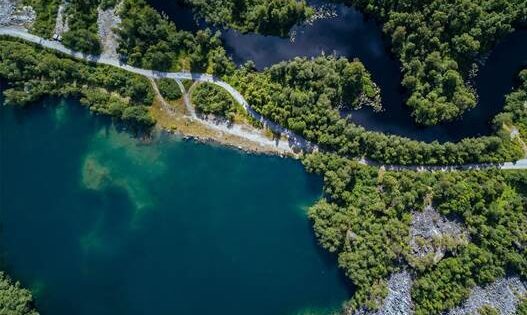
    A former Ibstock extraction site, Dalton Quarry, is being converted by Green Earth Developments Group into a biodiversity “bank” of engineered habitats to generate tradable biodiversity net gain (BNG) units for UK infrastructure schemes. The project will create a mosaic of habitat types on previously worked quarry land, allowing developers to purchase pre-accredited BNG units rather than delivering all ecological uplift within constrained project footprints. For civil and geotechnical teams, this model could influence land-take, earthworks design and long-term aftercare obligations on major road, rail and housing projects.

    Related Industries & Products

    Construction

    Quality control software for construction companies with material testing, batch tracking, and compliance management.

    Mining

    Geotechnical software solutions for mining operations including CMRR analysis, hydrogeological testing, and data management.

    HYDROGEO-io

    Comprehensive hydrogeological testing platform for managing, analysing, and reporting on packer tests, lugeon values, and hydraulic conductivity assessments.

    GEODB-io

    Centralised geotechnical data management solution for storing, accessing, and analysing all your site investigation and material testing data.