Geomechanics.io

  • Free Tools
Sign UpLog In

Geomechanics.io

Geomechanics, Streamlined.

© 2026 Geomechanics.io. All rights reserved.

Geomechanics.io

CMRR-ioGEODB-ioHYDROGEO-ioQCDB-ioFree Tools & CalculatorsBlogLatest Industry News

Industries

MiningConstructionTunnelling

Company

Terms of UsePrivacy PolicyLinkedIn
    AllGeotechnicalMiningInfrastructureMaterialsHazardsEnvironmentalSoftwarePolicy
    Projects
    Failure
    Safety

    Newmont’s Cadia mine halt: seismic risk and production impacts for engineers

    June 19, 2026|

    Reviewed by Joe Ashwell

    Newmont’s Cadia mine halt: seismic risk and production impacts for engineers

    First reported on MINING.com

    30 Second Briefing

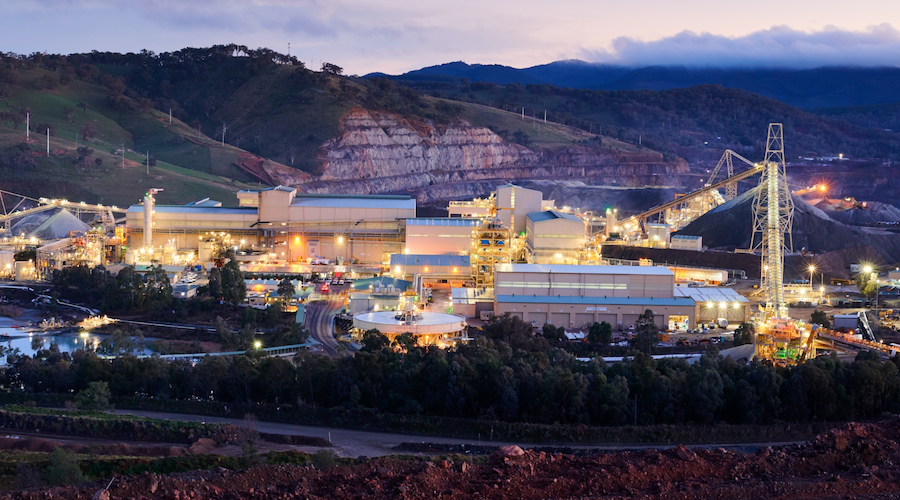
    Underground operations at Newmont’s Cadia mine in New South Wales have been halted for the second time in nine weeks after magnitude-3.2 and 3.4 earthquakes struck the site early Friday, with the latter event occurring about 1 km below surface. Cadia, a panel-cave operation producing roughly 385,000 oz of gold and 82,000 tonnes of copper annually and contributing about 11% of Newmont’s net asset value, had only recently undergone a five-week rehabilitation to restore output to 80% capacity after an April magnitude-4.5 tremor. RBC warns that recurring seismicity introduces material safety, production and regulatory uncertainty for the long-life operation, currently approved to 2031.

    Technical Brief

    • All underground workers were evacuated to surface with no injuries, indicating effective emergency egress protocols.
    • Underground inspections are underway, implying systematic ground support, infrastructure and services integrity checks post-event.
    • For similar deep caving operations, clustered local earthquakes of M3–4 range typically drive stricter seismic monitoring, re‑entry rules and regulator scrutiny.

    Our Take

    With Cadia contributing about 11% of Newmont’s net asset value, repeated seismic-related stoppages at this New South Wales gold–copper asset heighten portfolio concentration risk at a time when our database shows Newmont is also advancing other large underground caving projects like Red Chris in British Columbia.

    The suspension at Cadia adds to a run of Australian gold output disruptions recently flagged by Surbiton Associates, suggesting that weather- and geotechnical-related downtime is becoming a material planning factor for operators such as Newmont and Northern Star across the country.

    Given Cadia East has been in commercial production only since 2013 yet has resources modelled out to at least 2048, Newmont has a long remaining mine life to justify further seismic monitoring, ground support upgrades and potential redesign of high-stress panels rather than accepting recurring multi-week shutdowns.

    Geotechnical Software for Modern Teams

    Centralise site data, logs, and lab results with GEODB-io, CMRR-io, and HYDROGEO-io.

    No credit card required.

    • Save and export unlimited calculations
    • Advanced data visualisation
    • Generate professional PDF reports
    • Cloud storage for all your projects

    Prepared by collating external sources, AI-assisted tools, and Geomechanics.io’s proprietary mining database, then reviewed for technical accuracy & edited by our geotechnical team.

    Related Articles

    Gold price slides on strong dollar: planning implications for mine projects
    Mining
    about 16 hours ago

    Gold price slides on strong dollar: planning implications for mine projects

    Gold prices slipped to a one-week low as spot gold fell 0.4% to $4,271.16/oz in New York and December futures eased 0.3% to $4,306 amid a stronger US dollar and expectations of more hawkish US Federal Reserve rate moves. The dollar hit a two-month high and US 10-year Treasury yields hovered near a 20-year peak, sharply raising the opportunity cost of holding non-yielding bullion. Oil gained about 1% on stalled US–Iran talks over the war, while spot silver dropped 1.8% to $63.29/oz, platinum 0.2% to $1,746.44, and palladium rose 0.5% to $1,266.40.

    OceanaGold Waihi expansion: design, throughput and tailings notes for engineers
    Mining
    about 17 hours ago

    OceanaGold Waihi expansion: design, throughput and tailings notes for engineers

    OceanaGold is weighing a 50% expansion of its Waihi plant to 1.2 Mt/y after Wharekirauponga drilling returned standout intercepts including 6.3 m at 97.2 g/t Au from 481.5 m in the East Graben vein and 8.5 m at 41.5 g/t from 399 m. The move would enable concurrent feed from Martha Underground and Wharekirauponga post‑2032, building on a 2024 plan outlining 1.6 Moz over 15 years and an initial 4.1 Mt reserve at 9.2 g/t. Underground development is advancing, with the Waihi North decline now 350 m, first vent shaft under construction, staged commissioning of a new water treatment plant, and early works on a new tailings storage facility due in Q4.

    Kinross Gold output cut and higher AISC: operational drivers and FCF lens for mine teams
    Mining
    about 17 hours ago

    Kinross Gold output cut and higher AISC: operational drivers and FCF lens for mine teams

    Kinross Gold has cut its 2026–27 production outlook by about 8% to 1.84–1.86 million attributable gold-equivalent oz. a year and raised 2024 AISC guidance to $1,850–$1,900/oz after winter storms, copper-rich sulphide ore and poor recoveries at La Coipa in Chile, plus weaker mining rates, grades and recoveries at Round Mountain Phase S in Nevada. The company is stockpiling high-copper material, studying a new flotation circuit for deeper sulphide mineralisation that may overlie a copper porphyry system, and using a smaller shovel at Round Mountain to cut dilution. Despite the operational hit and a Q3 output cut to about 425,000 oz., Kinross has lifted its 2026 shareholder return target to 50% of free cash flow and has already returned about $800 million this year, mainly via $655 million in buybacks.

    Related Industries & Products

    Mining

    Geotechnical software solutions for mining operations including CMRR analysis, hydrogeological testing, and data management.

    Construction

    Quality control software for construction companies with material testing, batch tracking, and compliance management.

    CMRR-io

    Streamline coal mine roof stability assessments with our cloud-based CMRR software featuring automated calculations, multi-scenario analysis, and collaborative workflows.

    HYDROGEO-io

    Comprehensive hydrogeological testing platform for managing, analysing, and reporting on packer tests, lugeon values, and hydraulic conductivity assessments.

    GEODB-io

    Centralised geotechnical data management solution for storing, accessing, and analysing all your site investigation and material testing data.