Monash University Critical Minerals Initiative: midstream focus for mine planners
Reviewed by Tom Sullivan
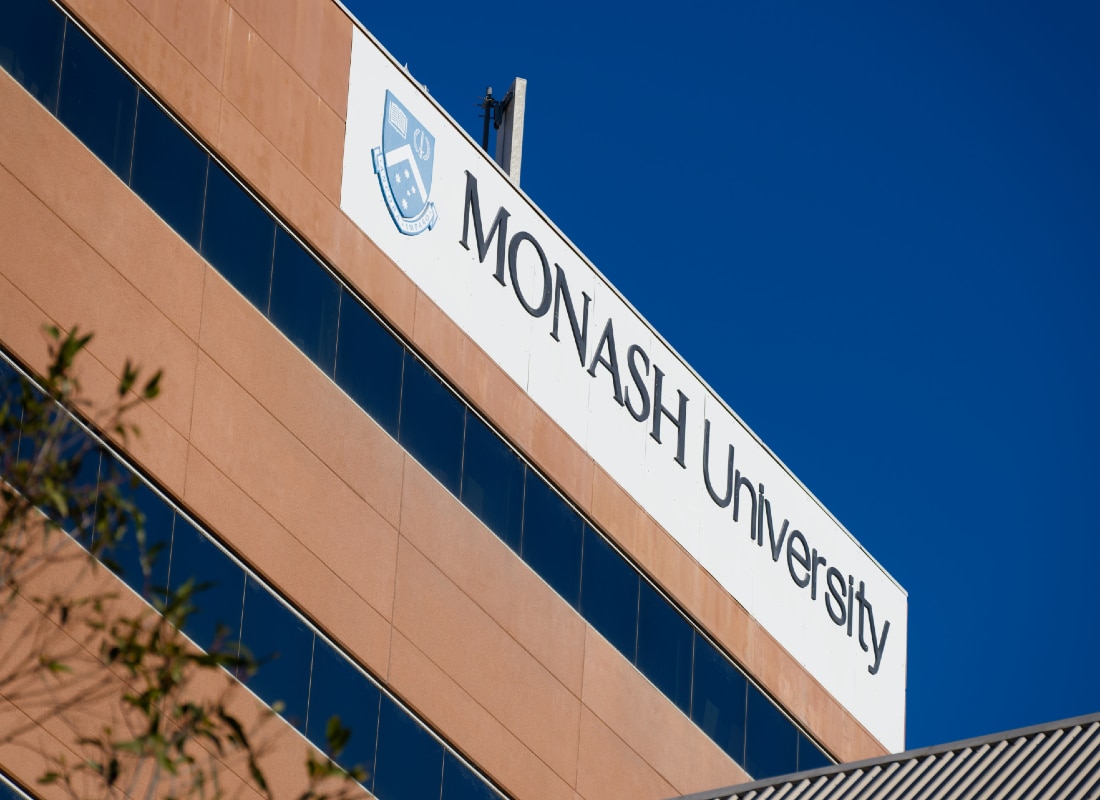
First reported on Australian Mining
30 Second Briefing
Monash University has launched its Critical Minerals Initiative (MCMI), pooling more than 40 researchers from its Business and Economics, Science, Engineering and Arts faculties to address Australia’s limited critical minerals processing capacity. The programme targets midstream processing and value-add rather than just extraction, responding to rapidly rising demand for battery and magnet materials such as lithium, rare earths and nickel. For miners and processors, the move signals more R&D support for flowsheet development, processing technology and policy settings aimed at onshore refining.
Technical Brief
- Initiative structure spans four Monash faculties, enabling integrated techno-economic, metallurgical and policy modelling of value chains.
- Research methods likely combine lab-scale beneficiation and hydrometallurgy tests with supply-chain and market simulation models.
- Focus on midstream steps such as concentration, separation and refining rather than mine planning or upstream extraction.
- Business and Economics input enables cost–benefit analysis of competing processing routes and investment risk scenarios.
- Engineering researchers can translate lab flowsheets into scalable plant concepts, equipment selection and process control strategies.
- Science faculty involvement supports mineralogy, thermodynamics and reaction-kinetics characterisation to optimise process conditions and recoveries.
- Outputs are intended to inform design of new Australian processing hubs, including siting, infrastructure and energy integration.
- Scope appears national and strategic rather than site-specific; no individual deposits, pilot plants or timelines are detailed.
Our Take
Monash University already features in our database for lab-scale recovery of critical metals from spent lithium‑ion batteries, so formalising the Critical Minerals Initiative (MCMI) gives industry partners a clearer single doorway into that recycling IP as well as new extraction and processing work.
Alongside Monash’s ARC Research Hub for Smart Process Design and Control on low‑emission steelmaking, this critical minerals push positions the university as a systems player across the Australian metals value chain, from iron ore and steel to battery‑grade materials.
With more than 40 researchers involved and Australia as the geographic focus, MCMI is likely to become a useful technical counterpart for emerging domestic projects such as heavy rare earth developments like Victory Metals’ North Stanmore, particularly on processing routes and sustainability metrics.
Prepared by collating external sources, AI-assisted tools, and Geomechanics.io’s proprietary mining database, then reviewed for technical accuracy & edited by our geotechnical team.
Related Articles



Related Industries & Products
Mining
Geotechnical software solutions for mining operations including CMRR analysis, hydrogeological testing, and data management.
Construction
Quality control software for construction companies with material testing, batch tracking, and compliance management.
CMRR-io
Streamline coal mine roof stability assessments with our cloud-based CMRR software featuring automated calculations, multi-scenario analysis, and collaborative workflows.
HYDROGEO-io
Comprehensive hydrogeological testing platform for managing, analysing, and reporting on packer tests, lugeon values, and hydraulic conductivity assessments.
GEODB-io
Centralised geotechnical data management solution for storing, accessing, and analysing all your site investigation and material testing data.