Geomechanics.io

  • Free Tools
Sign UpLog In

Geomechanics.io

Geomechanics, Streamlined.

© 2026 Geomechanics.io. All rights reserved.

Geomechanics.io

CMRR-ioGEODB-ioHYDROGEO-ioQCDB-ioFree Tools & CalculatorsBlogLatest Industry News

Industries

MiningConstructionTunnelling

Company

Terms of UsePrivacy PolicyLinkedIn
    AllGeotechnicalMiningInfrastructureMaterialsHazardsEnvironmentalSoftwarePolicy
    Projects
    Product

    Geoquest geosynthetics in Australian roads: design and risk notes for engineers

    June 9, 2026|

    Reviewed by Tom Sullivan

    Geoquest geosynthetics in Australian roads: design and risk notes for engineers

    First reported on Roads & Infrastructure (AU)

    30 Second Briefing

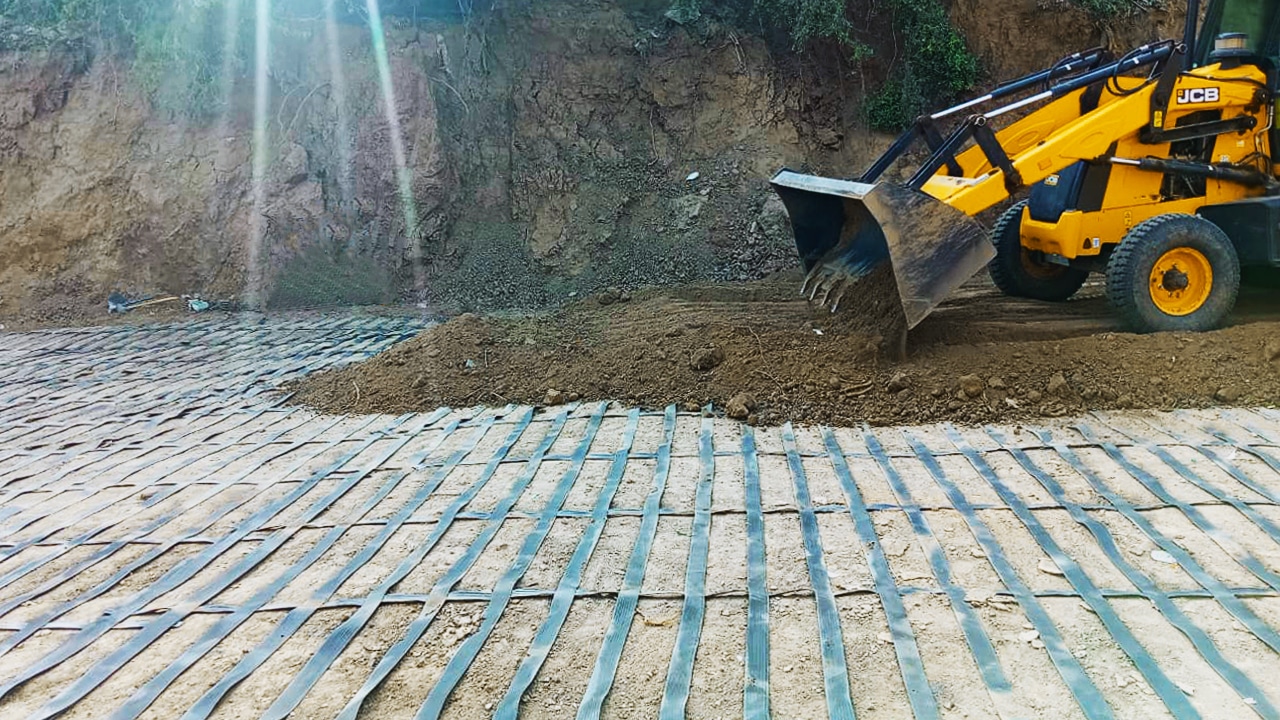
    Geosynthetics are moving from niche products to standard tools for Australian infrastructure delivery as Geoquest deploys geogrids, geotextiles and geocells to tackle increasingly poor ground and constrained project footprints. The company is customising reinforced soil structures, basal reinforcement and pavement subgrade improvement systems to reduce imported fill volumes, shorten construction programmes and enable construction over soft clays and variable alluvium that would previously require deep piling. For practitioners, the shift allows slimmer pavement designs, higher embankments on marginal soils and more predictable deformation behaviour under traffic loading.

    Technical Brief

    • Geoquest configures geogrid aperture size and stiffness to match aggregate grading and anticipated load paths.
    • Project teams are engaging Geoquest early in concept design to integrate reinforcement layouts with earthworks staging.
    • Custom solutions include combining geotextile separation layers with geogrid reinforcement to manage mixed fill and fines migration.
    • For constrained corridors, Geoquest is tailoring facing systems and reinforcement lengths to fit existing boundary conditions.
    • Design support extends to construction sequencing advice, ensuring geosynthetic layers are tensioned and confined as specified.
    • Geoquest’s role includes on-site installation guidance to avoid damage from trafficking, wrinkles and poor overlaps.
    • The company is increasingly involved in value-engineering reviews, substituting geosynthetics for thicker unreinforced granular layers.

    Our Take

    Geoquest Australia has been recurring in Roads & Infrastructure Magazine coverage alongside VicRoads’ approval of 60 per cent SCM concrete mixes, signalling that its geotechnical offering is being positioned within a low‑carbon materials ecosystem for transport projects in Victoria.

    In our database of 25 Geotechnical stories, Geoquest Australia is one of the few firms repeatedly linked to climate‑driven geo‑risk (sea level rise, higher rainfall intensity), which suggests its products are being framed as resilience tools rather than just investigation services in the Australian market.

    The appearance of Geoquest Australia in both transport infrastructure and niche structures like the Gurneys Cider underground cellar indicates its systems are being applied across a spectrum from road embankments to architecturally sensitive buried structures, which may appeal to designers seeking integrated ground–structure solutions.

    Geotechnical Software for Modern Teams

    Centralise site data, logs, and lab results with GEODB-io, CMRR-io, and HYDROGEO-io.

    No credit card required.

    • Save and export unlimited calculations
    • Advanced data visualisation
    • Generate professional PDF reports
    • Cloud storage for all your projects

    Prepared by collating external sources, AI-assisted tools, and Geomechanics.io’s proprietary mining database, then reviewed for technical accuracy & edited by our geotechnical team.

    Related Articles
    Coates’ new electric dewatering fleet: design implications for urban geotechnical works
    Geotechnical
    2 days ago

    Coates’ new electric dewatering fleet: design implications for urban geotechnical works

    Coates has expanded its engineered dewatering capability with a new fleet of electric BBA Pumps, including PT200 D265 (8″/200mm), PT150 D185 (6″/150mm) and PT100 D130 (4″/100mm) units for urban construction sites. The electric configuration targets groundwater control on projects from small residential excavations to complex basements, water assets and civil infrastructure in dense urban areas where diesel emissions, noise and access constraints are critical. For geotechnical and civil contractors, the range allows closer-to-face installation and longer runtimes on grid power, simplifying dewatering design and temporary works planning.

    The Observational Method: practical adoption barriers and value for ground engineers
    Geotechnical
    3 days ago

    The Observational Method: practical adoption barriers and value for ground engineers

    The Observational Method in ground engineering is regaining interest as major infrastructure schemes look to manage geotechnical uncertainty in real time rather than rely solely on conservative design factors. Engineers are revisiting staged construction with predefined trigger levels, instrumented slopes and retaining walls, and adaptive support measures, but uptake remains patchy due to contractual risk allocation, programme pressures, and limited monitoring budgets. Wider use could cut unnecessary pile lengths, excavation support thicknesses and contingency allowances, provided clients accept flexible design envelopes and robust monitoring–response plans.

    £2.7M Welsh landfill solar farm: design and settlement notes for engineers
    Geotechnical
    3 days ago

    £2.7M Welsh landfill solar farm: design and settlement notes for engineers

    Newport City Council has issued a £2.7M procurement for a solar farm and battery energy storage system at the capped Docks Way Landfill Site in Newport, South Wales, aiming to convert the former waste facility into a grid-connected renewable energy asset. The design-and-build contract will need to address foundation detailing on landfill cover, settlement behaviour and gas management, as well as integrating the BESS with local distribution network constraints. Civil and geotechnical bidders will be expected to manage construction over waste, including differential settlement and leachate control.

    Related Industries & Products

    Construction

    Quality control software for construction companies with material testing, batch tracking, and compliance management.

    Mining

    Geotechnical software solutions for mining operations including CMRR analysis, hydrogeological testing, and data management.

    QCDB-io

    Comprehensive quality control database for manufacturing, tunnelling, and civil construction with UCS testing, PSD analysis, and grout mix design management.