Geomechanics.io

  • Free Tools
Sign UpLog In

Geomechanics.io

Geomechanics, Streamlined.

© 2026 Geomechanics.io. All rights reserved.

Geomechanics.io

CMRR-ioGEODB-ioHYDROGEO-ioQCDB-ioFree Tools & CalculatorsBlogLatest Industry News

Industries

MiningConstructionTunnelling

Company

Terms of UsePrivacy PolicyLinkedIn
    AllGeotechnicalMiningInfrastructureMaterialsHazardsEnvironmentalSoftwarePolicy
    Projects
    Sustainability

    Drax bioenergy CCS permit: integration and civil design notes for engineers

    August 17, 2026|

    Reviewed by Tom Sullivan

    Drax bioenergy CCS permit: integration and civil design notes for engineers

    First reported on New Civil Engineer

    30 Second Briefing

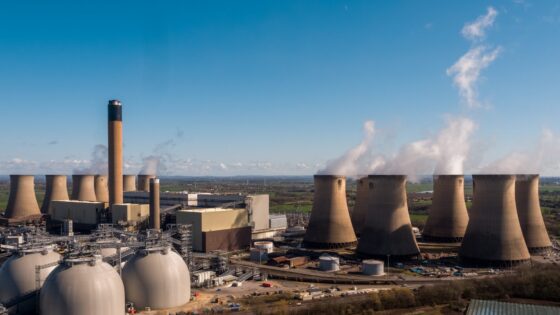
    The Environment Agency has approved a variation to Drax Power Limited’s environmental permit, allowing post-combustion carbon capture to be added to its biomass-fired generating units at the Selby bioenergy plant in North Yorkshire. The decision enables integration of large-scale carbon capture and storage (CCS) infrastructure with existing flue gas treatment systems, including new absorber columns, solvent regeneration equipment and CO₂ compression and export facilities. Civil and geotechnical works will need to accommodate additional foundations, pipe racks and tie-ins within a live, high-load power station site.

    Technical Brief

    • Permit variation is issued by the Environment Agency under existing industrial emissions regulatory framework.
    • Regulatory decision confirms CCS is treated as an amendment to an existing combustion permit, not a new plant.
    • Conditions will likely fix emission limit values at stack post-CCS, constraining outage and retrofit phasing.
    • Environmental permit will drive monitoring requirements for amine slip, degradation products and solvent handling.
    • Noise, visual and plume dispersion impacts from new CCS equipment fall under the updated consent envelope.
    • Ground and surface water protection clauses will govern any new below-ground pipework, drains and chemical storage.

    Our Take

    The Environment Agency appears frequently in our Environmental category, but most recent North Yorkshire coverage (e.g. the Skinningrove Flood Alleviation Scheme) has focused on flood risk rather than decarbonisation, signalling a broadening of its project portfolio in the region to include large stationary-source emissions control.

    Across our sustainability-tagged pieces, the Environment Agency is more often seen in water quality and flood management roles; its permitting role at the Drax bioenergy plant underscores that UK regulators are now treating carbon capture infrastructure as a mainstream environmental control measure rather than a niche pilot technology.

    For operators in Selby and wider North Yorkshire, the Drax carbon capture permit sits alongside Environment Agency-backed schemes like Preston and South Ribble flood defences, indicating that future major infrastructure proposals in the region will likely be assessed through a combined lens of climate mitigation and climate adaptation performance.

    Geotechnical Software for Modern Teams

    Centralise site data, logs, and lab results with GEODB-io, CMRR-io, and HYDROGEO-io.

    No credit card required.

    • Save and export unlimited calculations
    • Advanced data visualisation
    • Generate professional PDF reports
    • Cloud storage for all your projects

    Prepared by collating external sources, AI-assisted tools, and Geomechanics.io’s proprietary mining database, then reviewed for technical accuracy & edited by our geotechnical team.

    Related Articles

    Egis appoints Jamie Gleave EIA director: implications for UK infrastructure teams
    Environmental
    11 days ago

    Egis appoints Jamie Gleave EIA director: implications for UK infrastructure teams

    Egis has appointed Jamie Gleave as senior environmental impact assessment technical director for the UK, bringing more than 25 years’ experience across energy, transport and water infrastructure, including Wylfa Newydd nuclear power station and National Grid electricity transmission schemes. Gleave previously served as EIA technical director at AECOM, where he led its global EIA technical excellence practice and directed environmental work on the A428 Black Cat to Caxton Gibbet and M42 Junction 6 DCO schemes, acting as expert witness. He will work with UK–Ireland head of environment Afshan Rasheed to build Egis’s EIA, DCO and technical assurance capability.

    United Utilities £900k sewage fine: CSO and storm capacity lessons for engineers
    Environmental
    14 days ago

    United Utilities £900k sewage fine: CSO and storm capacity lessons for engineers

    United Utilities has been fined £900,000 after admitting five environmental permit breaches linked to a major raw sewage discharge on the Fylde coast in June 2023, following failures in its wastewater treatment and overflow control systems. The incident involved untreated effluent bypassing normal screening and settlement processes during storm conditions, leading to prolonged discharge through combined sewer overflows into coastal waters used for bathing. For civil and environmental engineers, the case reinforces regulatory scrutiny on stormwater storage capacity, real-time CSO monitoring, and resilience of ageing sewer networks under intense rainfall events.

    83% of Britain’s cities heat‑vulnerable: design implications for civil engineers
    Environmental
    17 days ago

    83% of Britain’s cities heat‑vulnerable: design implications for civil engineers

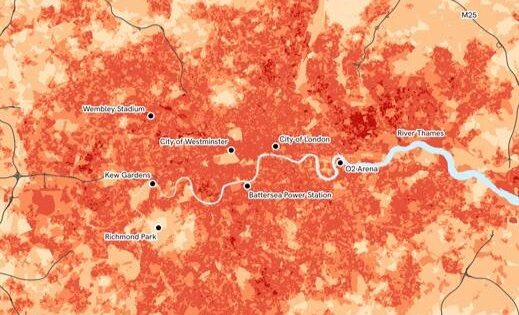
    Eighty-three per cent of Britain’s cities – 59 urban areas – are classed as highly vulnerable to urban heat in new spatial analysis by Ordnance Survey, the Met Office and 4 Earth Intelligence. The dataset combines OS building footprints, surface cover and green space with Met Office temperature projections to map local heat exposure at street-block scale. For civil and geotechnical engineers, this points to urgent retrofit of shading, permeable and high-albedo surfaces, and revised pavement and rail design to cope with more frequent extreme surface temperatures.

    Related Industries & Products

    Construction

    Quality control software for construction companies with material testing, batch tracking, and compliance management.

    Mining

    Geotechnical software solutions for mining operations including CMRR analysis, hydrogeological testing, and data management.

    CMRR-io

    Streamline coal mine roof stability assessments with our cloud-based CMRR software featuring automated calculations, multi-scenario analysis, and collaborative workflows.

    HYDROGEO-io

    Comprehensive hydrogeological testing platform for managing, analysing, and reporting on packer tests, lugeon values, and hydraulic conductivity assessments.

    GEODB-io

    Centralised geotechnical data management solution for storing, accessing, and analysing all your site investigation and material testing data.