DESNZ floating and geological gas storage: design and risk notes for engineers
Reviewed by Joe Ashwell
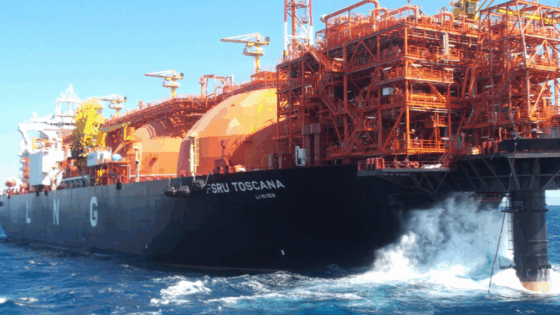
First reported on New Civil Engineer
30 Second Briefing
The Department for Energy Security and Net Zero is assessing options for a new floating storage and regasification unit (FSRU) and a strategic geological gas storage facility to bolster UK gas resilience. An FSRU would provide ship-based LNG storage and regasification at an import terminal, while geological storage would likely use depleted gas fields or salt caverns for high-volume, seasonal buffering. The work signals potential demand for large-diameter offshore pipelines, high-pressure injection wells and long-term integrity management of underground gas containment.
Technical Brief
- FSRU mooring concepts would likely include turret or spread moorings designed for metocean conditions.
- Offshore geotechnical campaigns would need CPTs, vibrocores and boreholes to characterise soft marine sediments beneath moorings and pipelines.
- Geological storage options trigger appraisal of caprock integrity, fault sealing behaviour and legacy well abandonment quality.
- Salt cavern concepts would require leaching design, cavern spacing rules and cyclic pressure-fatigue assessment of halite.
- Depleted field storage would demand reservoir simulation of multi-cycle gas injection–withdrawal and pore pressure evolution.
- Integrity management planning must address long-term monitoring: microseismic arrays, pressure gauges and periodic well logging.
- For other energy-transition assets, similar subsurface characterisation workflows can be reused with modified design envelopes.
Our Take
Gas-related items in our database are relatively few compared with power and mining coverage, so DESNZ exploring both floating storage and regasification units (FSRUs) and strategic geological storage in the United Kingdom signals that gas security is becoming a more prominent geotechnical design driver rather than just an energy-market issue.
For UK practitioners, geological gas storage implies renewed attention to salt caverns, depleted fields and caprock integrity, whereas FSRUs shift risk towards marine geotechnics and mooring in exposed conditions, so firms with both offshore and subsurface capability are likely to be better placed for upcoming DESNZ-led work.
Among the 484 Projects/Sustainability-tagged pieces in our coverage, relatively few combine long-lived subsurface infrastructure with floating assets, suggesting that permitting and environmental assessment frameworks for these hybrid gas facilities may be less mature than for conventional onshore storage or LNG terminals.
Prepared by collating external sources, AI-assisted tools, and Geomechanics.io’s proprietary mining database, then reviewed for technical accuracy & edited by our geotechnical team.
Related Articles
Related Industries & Products
Mining
Geotechnical software solutions for mining operations including CMRR analysis, hydrogeological testing, and data management.
Construction
Quality control software for construction companies with material testing, batch tracking, and compliance management.
CMRR-io
Streamline coal mine roof stability assessments with our cloud-based CMRR software featuring automated calculations, multi-scenario analysis, and collaborative workflows.
HYDROGEO-io
Comprehensive hydrogeological testing platform for managing, analysing, and reporting on packer tests, lugeon values, and hydraulic conductivity assessments.
GEODB-io
Centralised geotechnical data management solution for storing, accessing, and analysing all your site investigation and material testing data.