Geomechanics.io

  • Free Tools
Sign UpLog In

Geomechanics.io

Geomechanics, Streamlined.

© 2026 Geomechanics.io. All rights reserved.

Geomechanics.io

CMRR-ioGEODB-ioHYDROGEO-ioQCDB-ioFree Tools & CalculatorsBlogLatest Industry News

Industries

MiningConstructionTunnelling

Company

Terms of UsePrivacy PolicyLinkedIn
    Research
    Safety
    Sustainability

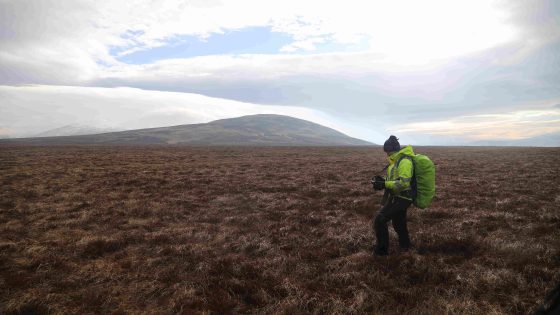
    BGS River Tweed groundwater survey: flood model lessons for infrastructure engineers

    July 8, 2026|

    Reviewed by Tom Sullivan

    BGS River Tweed groundwater survey: flood model lessons for infrastructure engineers

    First reported on New Civil Engineer

    30 Second Briefing

    The British Geological Survey has launched a four‑year ground investigation of the River Tweed catchment to characterise groundwater behaviour and its interaction with river levels for improved flood forecasting. Work will include installing new monitoring boreholes, logging groundwater heads and flow paths, and integrating hydrogeological data with existing river‑gauge and rainfall records across the cross‑border catchment. Findings are expected to refine flood models used by local authorities and infrastructure owners, particularly for groundwater‑dominated flood events and prolonged saturation of transport and drainage assets.

    Technical Brief

    • Safety focus is on earlier warning of groundwater‑driven flooding affecting access, evacuation routes and critical assets.
    • Similar integrated hydrogeological datasets are likely to become baseline inputs for flood‑risk assessments on major schemes.

    Our Take

    The British Geological Survey’s work on the River Tweed catchment sits alongside its new national geotechnical data service, suggesting Tweed groundwater observations are likely to be fed into a wider UK ground model that design teams can query for flood and foundation risk on future projects.

    Geotechnical Software for Modern Teams

    Centralise site data, logs, and lab results with GEODB-io, CMRR-io, and HYDROGEO-io.

    No credit card required.

    • Save and export unlimited calculations
    • Advanced data visualisation
    • Generate professional PDF reports
    • Cloud storage for all your projects

    Prepared by collating external sources, AI-assisted tools, and Geomechanics.io’s proprietary mining database, then reviewed for technical accuracy & edited by our geotechnical team.

    Related Articles

    Acorn adds commercial manager: implications for asbestos project delivery and safety
    Hazards
    22 days ago

    Acorn adds commercial manager: implications for asbestos project delivery and safety

    Asbestos management consultancy Acorn Analytical Services has appointed Ben James as commercial manager to lead its sales team and secure larger, more complex consultancy and removal projects. James, a former apprentice carpenter and joiner, moved into asbestos work in his early twenties after his grandfather died from asbestosis and has since progressed from trainee asbestos surveyor to contract manager over nine years. He will oversee new technical enquiries, key account management and site visits, and is qualified to deliver asbestos awareness, non-licensed removal and duty-to-manage training under a Level 3 teaching qualification.

    Coalsnaughton mine subsidence demolitions: geotechnical lessons for engineers
    Hazards
    24 days ago

    Coalsnaughton mine subsidence demolitions: geotechnical lessons for engineers

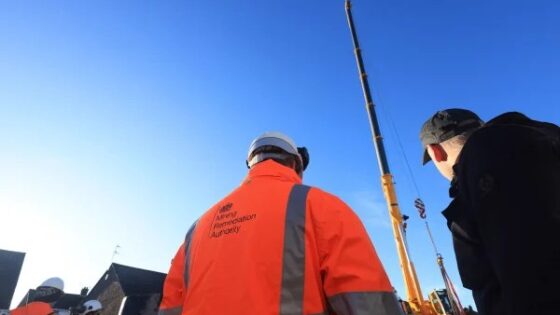
    Homes on Benbuck View and Dunmoss View in Coalsnaughton, Clackmannanshire are to be demolished after Mining Remediation Authority investigations confirmed historic underground workings had caused active mine subsidence beneath the two streets. The decision follows visible ground movement reported on 18 May and subsequent detailed geotechnical assessments that ruled out practical stabilisation options for the affected plots. Engineers will now need to manage demolition, backfilling and long-term ground monitoring, with implications for foundations and service corridors on adjacent properties built over former coal measures.

    LondonEnergy Wembley Waste Transfer Station fire: structural and fire design lessons
    Hazards
    28 days ago

    LondonEnergy Wembley Waste Transfer Station fire: structural and fire design lessons

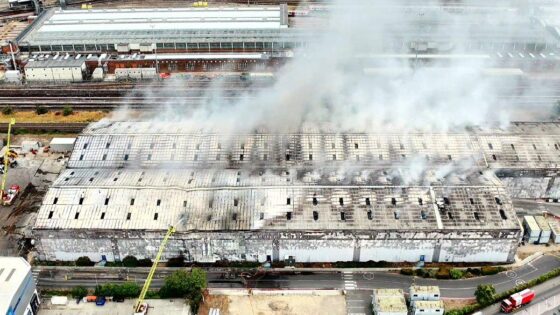
    A major fire at LondonEnergy’s Wembley Waste Transfer Station on Hannah Close, Neasden, has required 20 fire engines and about 125 firefighters to bring the blaze under control. The incident at the enclosed waste-handling facility raises immediate concerns over structural integrity of steel frames, cladding performance under high thermal loads, and potential damage to concrete slabs from prolonged heating and quenching. Engineers will need rapid assessment of fire spread pathways through waste stockpiles and building services to inform repairs, resilience upgrades and future fire-separation design.

    Related Industries & Products

    Construction

    Quality control software for construction companies with material testing, batch tracking, and compliance management.

    Mining

    Geotechnical software solutions for mining operations including CMRR analysis, hydrogeological testing, and data management.

    CMRR-io

    Streamline coal mine roof stability assessments with our cloud-based CMRR software featuring automated calculations, multi-scenario analysis, and collaborative workflows.

    HYDROGEO-io

    Comprehensive hydrogeological testing platform for managing, analysing, and reporting on packer tests, lugeon values, and hydraulic conductivity assessments.

    GEODB-io

    Centralised geotechnical data management solution for storing, accessing, and analysing all your site investigation and material testing data.

    AllGeotechnicalMiningInfrastructureMaterialsHazardsEnvironmentalSoftwarePolicy