Assessing dam failure risk with WTW: probabilistic insights for dam engineers
Reviewed by Tom Sullivan
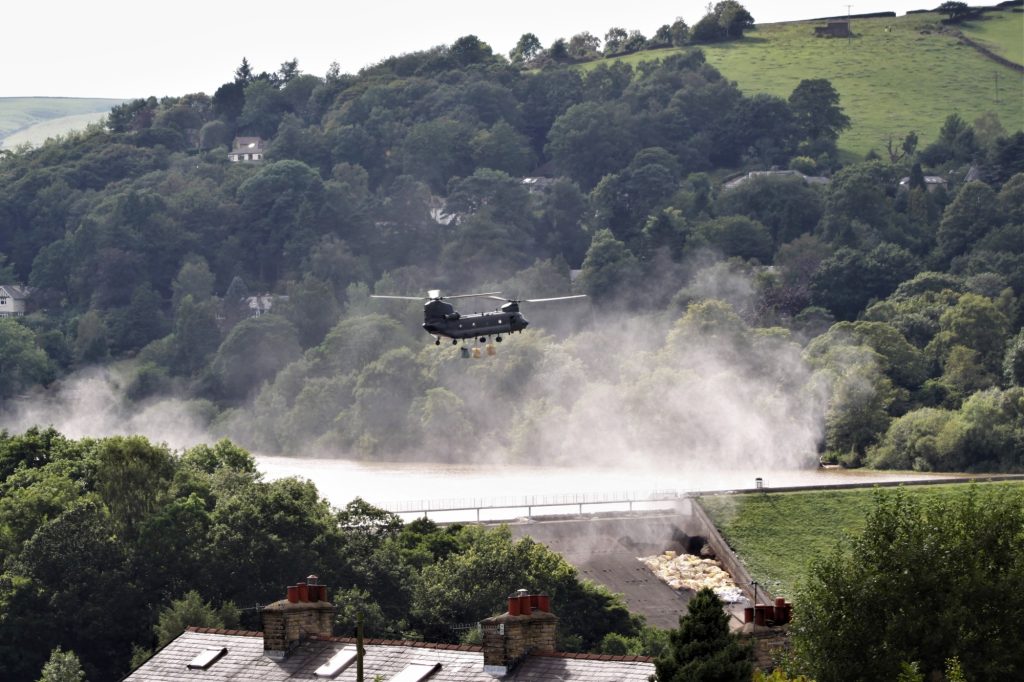
First reported on New Civil Engineer
30 Second Briefing
Assessing dam failure risk with WTW takes centre stage in the latest Engineers Collective podcast, focusing on how insurers and engineers jointly quantify breach probabilities and downstream consequences for large embankment and concrete gravity dams. Discussion covers use of probabilistic risk assessment, portfolio-level screening tools and event trees to evaluate failure modes such as overtopping, internal erosion and spillway degradation under extreme rainfall. The episode also examines how updated risk metrics influence capital maintenance planning, emergency drawdown provisions and prioritisation of dam safety upgrades.
Technical Brief
- Failure investigation emphasis is on internal erosion mechanisms, including concentrated leaks and backward erosion piping.
- WTW discuss combining historical incident databases with dam-specific condition assessments to refine mode likelihoods.
- Portfolio screening tools are described as triage, flagging structures needing detailed finite element or CFD analysis.
- Forensic back-analysis of past overtopping and spillway incidents is used to calibrate breach development assumptions.
- Monitoring focus includes piezometers, leakage flow meters and deformation surveys to detect early internal erosion signatures.
- Remediation options covered range from filter/drain retrofits and crest-raising to auxiliary spillways and fuse plugs.
- Insurance-led reviews reportedly push owners to formalise dam safety management systems and periodic independent risk audits.
- Discussion suggests regulators may increasingly expect probabilistic risk outputs to inform emergency planning and public communication.
Our Take
Within the 37 Hazards stories in our coverage, very few focus on third‑party risk advisers like WTW, signalling that insurers and brokers are only just starting to feature as active players in dam failure risk governance rather than sitting purely in the background on policy wording.
The combination of Failure, Safety and Projects tags aligns this piece with a subset of hazards coverage that typically deals with design-stage risk quantification, suggesting WTW’s methods may be most relevant for owners and EPCs trying to evidence ALARP and defensible risk registers to lenders and regulators.
Given that many of the 1,640 keyword‑matched pieces involve AI or artificial intelligence, WTW’s dam failure risk work is likely to be read alongside emerging AI‑enabled risk tools, which could push operators to reconcile traditional actuarial approaches with data‑driven, near‑real‑time monitoring of dam performance.
Prepared by collating external sources, AI-assisted tools, and Geomechanics.io’s proprietary mining database, then reviewed for technical accuracy & edited by our geotechnical team.
Related Articles

Related Industries & Products
Mining
Geotechnical software solutions for mining operations including CMRR analysis, hydrogeological testing, and data management.
Construction
Quality control software for construction companies with material testing, batch tracking, and compliance management.
CMRR-io
Streamline coal mine roof stability assessments with our cloud-based CMRR software featuring automated calculations, multi-scenario analysis, and collaborative workflows.
HYDROGEO-io
Comprehensive hydrogeological testing platform for managing, analysing, and reporting on packer tests, lugeon values, and hydraulic conductivity assessments.
GEODB-io
Centralised geotechnical data management solution for storing, accessing, and analysing all your site investigation and material testing data.