Geomechanics.io

  • Free Tools
Sign UpLog In
AllGeotechnicalMiningInfrastructureMaterialsHazardsEnvironmentalSoftwarePolicy

Geomechanics.io

Geomechanics, Streamlined.

© 2026 Geomechanics.io. All rights reserved.

Geomechanics.io

CMRR-ioGEODB-ioHYDROGEO-ioQCDB-ioFree Tools & CalculatorsBlogLatest Industry News

Industries

MiningConstructionTunnelling

Company

Terms of UsePrivacy PolicyLinkedIn
    Standard/Guideline
    Sustainability
    Projects

    UK–US AI fusion agreements: design and modelling takeaways for engineers

    September 14, 2026|

    Reviewed by Tom Sullivan

    UK–US AI fusion agreements: design and modelling takeaways for engineers

    First reported on New Civil Engineer

    30 Second Briefing

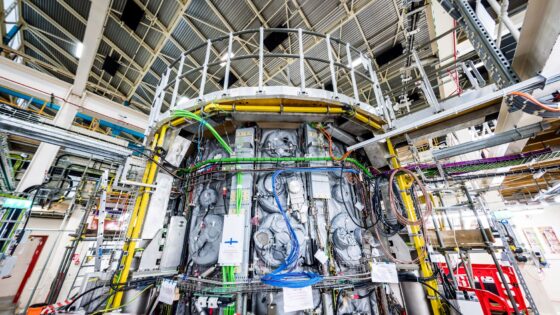
    UK and US governments are signing two agreements to accelerate commercial nuclear fusion development by combining national expertise in artificial intelligence and high‑performance computing. The pacts are expected to support faster optimisation of plasma confinement and reactor control algorithms, and to improve simulation of tokamak and stellarator designs that currently demand exascale‑class computing. For civil and nuclear engineers, this signals future design programmes where structural, thermal and neutronic load cases for fusion plants are iterated rapidly using shared AI‑driven modelling frameworks.

    Technical Brief

    • Regulatory engagement is baked in, with outputs intended to inform future fusion plant licensing pathways in both jurisdictions.

    Our Take

    For practitioners in the United Kingdom and United States, AI-focused fusion agreements signal that future project standards and guidelines may start to treat high-fidelity simulation, optimisation and digital twins as baseline requirements rather than optional tools.

    New Civil Engineer’s recent webinar on BIM, CDEs and the ‘data handover gap’ suggests that if AI is embedded into fusion projects early, UK and US regulators will likely push for more robust data governance frameworks spanning design, construction and long-term operations.

    Geotechnical Software for Modern Teams

    Centralise site data, logs, and lab results with GEODB-io, CMRR-io, and HYDROGEO-io.

    No credit card required.

    • Save and export unlimited calculations
    • Advanced data visualisation
    • Generate professional PDF reports
    • Cloud storage for all your projects

    Prepared by collating external sources, AI-assisted tools, and Geomechanics.io’s proprietary mining database, then reviewed for technical accuracy & edited by our geotechnical team.

    Related Articles

    Smarter risk-sharing for UK ageing infrastructure: key lessons for project engineers
    Policy
    2 days ago

    Smarter risk-sharing for UK ageing infrastructure: key lessons for project engineers

    Improved public–private collaboration, “smarter” financial risk sharing and better asset data are being urged by a new Lloyds Banking Group report to upgrade the UK’s ageing, climate-exposed infrastructure. The report calls for clearer allocation of construction, demand and climate risks between government, institutional investors and asset owners, moving beyond traditional PFI-style models. For engineers, this points to stronger requirements for whole-life performance data, climate stress testing of assets and more transparent condition information to unlock private capital for renewals and resilience upgrades.

    Government’s 10% biodiversity net gain ceiling: key planning risks for engineers
    Policy
    2 days ago

    Government’s 10% biodiversity net gain ceiling: key planning risks for engineers

    Environmental charity the Environmental Law Foundation has warned it may launch a judicial review against the government’s new biodiversity net gain (BNG) regime, arguing that the statutory 10% uplift risks being treated as a de facto cap rather than a minimum. The challenge would focus on how planning authorities apply the Environment Act 2021 BNG provisions and Natural England’s statutory metric in development consents. For civil and geotechnical schemes, this could affect habitat creation areas, earthworks footprints and off-site BNG land agreements already being negotiated.

    Carbon in procurement: practical tender implications for project engineers
    Policy
    3 days ago

    Carbon in procurement: practical tender implications for project engineers

    Carbon-focused procurement is emerging as a practical lever for low-carbon infrastructure, with clients increasingly writing embodied and whole-life carbon limits directly into tender documents alongside cost and programme. Contracting authorities are starting to require Environmental Product Declarations, PAS 2080-aligned carbon management plans and optioneering that compares low-clinker cements, recycled steel and alternative pavement designs on a carbon-per-functional-unit basis. For engineers and contractors, this shifts bid strategy towards quantifiable carbon performance, verifiable data and early supplier engagement rather than purely lowest capital cost.

    Related Industries & Products

    Construction

    Quality control software for construction companies with material testing, batch tracking, and compliance management.

    Mining

    Geotechnical software solutions for mining operations including CMRR analysis, hydrogeological testing, and data management.

    QCDB-io

    Comprehensive quality control database for manufacturing, tunnelling, and civil construction with UCS testing, PSD analysis, and grout mix design management.