Rio Tinto copper output rises: portfolio and M&A implications for mine planners
Reviewed by Joe Ashwell
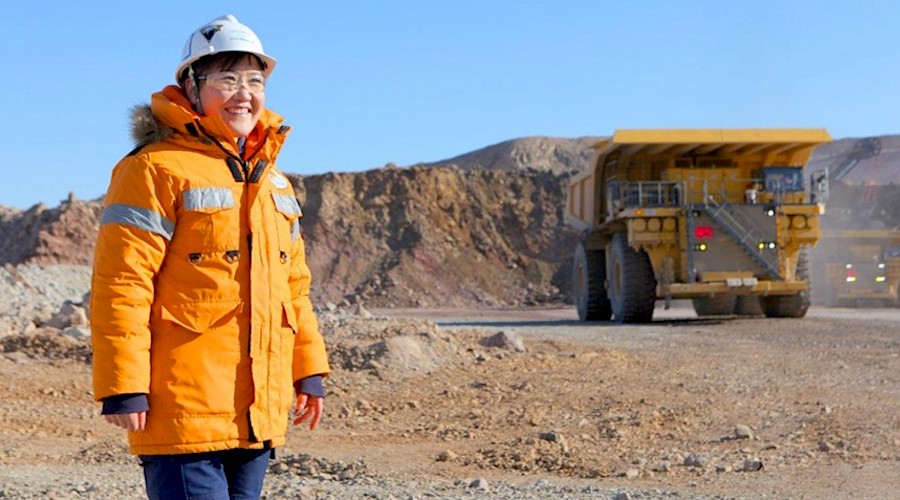
First reported on MINING.com
30 Second Briefing
Rio Tinto’s copper output rose 5% in Q4 2025 as a 57% year-on-year surge from the Oyu Tolgoi underground expansion in Mongolia more than offset a 10% production fall at Chile’s Escondida from lower grades and reduced concentrator throughput. The stronger copper performance, which now delivers about a quarter of group half-year profit, forms the backdrop to live takeover talks with Glencore ahead of a 5 February “put up or shut up” deadline, with options including a coal carve-out into a separately listed Australian vehicle. Pilbara iron ore shipments hit a quarterly record 91.3 Mt, Simandou exports commenced with 5–10 Mt targeted for 2026, while aluminium output rose 2%, lithium set a new production record and titanium volumes fell 6% as divestment plans advance.
Technical Brief
- Glencore’s coal portfolio would contribute ~8% of a combined group’s US$45.6 billion EBITDA.
- Trading activities at Glencore account for roughly 9% of combined earnings, complicating merger valuation and structure.
- UK takeover rules impose a 5 February “put up or shut up” deadline for any firm Glencore offer.
- A coal carve‑out into a separately listed Australian vehicle is being modelled, echoing BHP’s South32 demerger.
- Analysts have proposed alternatives including a pre‑deal Glencore coal spin‑off or a copper‑only acquisition focus for Rio.
Our Take
The earlier piece on Rio Tinto–Glencore talks (15 January 2026) noted a potential ASX-listed coal spin-off modelled on BHP’s South32, so the relatively modest 8% coal EBITDA share in the combined group would likely make it easier to hive off thermal coal without undermining the copper and iron ore investment case.
With Oyu Tolgoi’s 57% year-on-year copper growth and Escondida’s 10% quarterly decline both in focus, a merged Rio Tinto–Glencore would concentrate significant exposure in Mongolia and Chile, two jurisdictions that already dominate our copper project coverage and where permitting and community risk often drive schedule more than geology does.
The 4% copper production beat and strong Pilbara iron ore volumes, alongside Simandou’s 2026 ramp-up window, give Rio Tinto tangible organic growth options; in our database, that combination of near-term volume growth plus a large M&A option is unusual among the diversified majors and may strengthen Rio’s hand in any all-share bid negotiations flagged in the 18 January 2026 analysis.
Prepared by collating external sources, AI-assisted tools, and Geomechanics.io’s proprietary mining database, then reviewed for technical accuracy & edited by our geotechnical team.
Related Articles

Related Industries & Products
Mining
Geotechnical software solutions for mining operations including CMRR analysis, hydrogeological testing, and data management.
Tunnelling
Specialised solutions for tunnelling projects including grout mix design, hydrogeological analysis, and quality control.
CMRR-io
Streamline coal mine roof stability assessments with our cloud-based CMRR software featuring automated calculations, multi-scenario analysis, and collaborative workflows.
HYDROGEO-io
Comprehensive hydrogeological testing platform for managing, analysing, and reporting on packer tests, lugeon values, and hydraulic conductivity assessments.
GEODB-io
Centralised geotechnical data management solution for storing, accessing, and analysing all your site investigation and material testing data.