Geomechanics.io

  • Free Tools
Sign UpLog In
AllGeotechnicalMiningInfrastructureMaterialsHazardsEnvironmentalSoftwarePolicy

Geomechanics.io

Geomechanics, Streamlined.

© 2026 Geomechanics.io. All rights reserved.

Geomechanics.io

CMRR-ioGEODB-ioHYDROGEO-ioQCDB-ioFree Tools & CalculatorsBlogLatest Industry News

Industries

MiningConstructionTunnelling

Company

Terms of UsePrivacy PolicyLinkedIn
    Projects

    Professor Lyesse Laloui as ISSMGE President: priorities and signals for geotechnical engineers

    June 14, 2026|

    Reviewed by Joe Ashwell

    Professor Lyesse Laloui as ISSMGE President: priorities and signals for geotechnical engineers

    First reported on Geoengineer.org – News

    30 Second Briefing

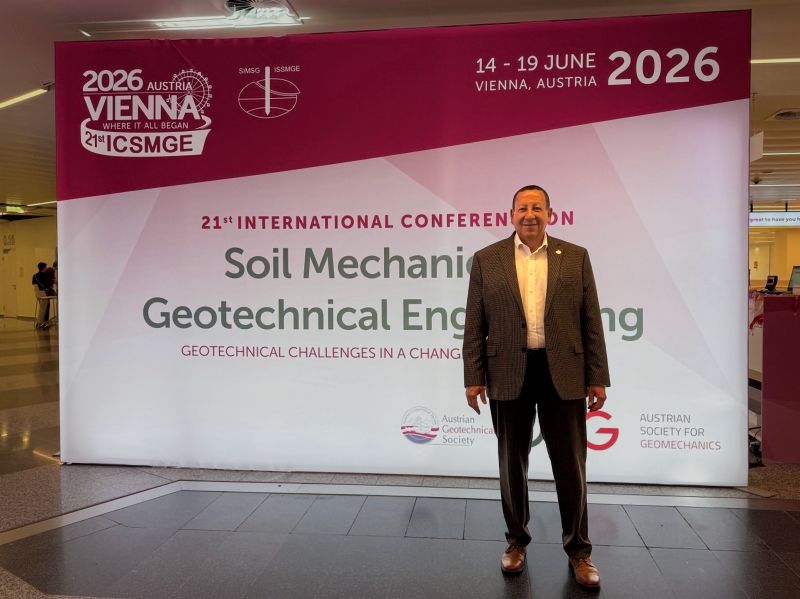
    Professor Lyesse Laloui has been elected President of the International Society for Soil Mechanics and Geotechnical Engineering (ISSMGE) for 2026–2029 at the Vienna Council Meeting held alongside the XXI ICSMGE 2026. Laloui, Chair Professor at EPFL and director of its Laboratory for Soil Mechanics, brings a portfolio of more than 560 publications and 19,000+ citations spanning constitutive modelling, energy geostructures, CO₂ storage and multiphase porous media. The Council also confirmed XXII ICSMGE for Shanghai in November 2029 and the next Council Meeting in Istanbul, 20–25 August 2028.

    Technical Brief

    • ISSMGE Council met on 14 June 2026 in Vienna, alongside XXI ICSMGE 2026.
    • Laloui founded and served as Honorary Editor-in-Chief of Elsevier’s “Geomechanics for Energy and the Environment”.
    • He has been based at EPFL since 1994, directing the Laboratory for Soil Mechanics.
    • Previous ISSMGE role included Vice President for Europe, providing continuity in Society governance.
    • Regional Vice Presidents 2026–2029: Ozoamalu (Africa), Joseph (Asia), Orense (Australasia), Batali (Europe).
    • Frost (North America) and Pollak Aguiló (South America) complete the six continental Vice Presidents.
    • Appointed Board Members for 2026–2029: Cazzuffi, Kalumba and Adam, adding three non-regional voices.
    • XXII ICSMGE confirmed for Shanghai, China, scheduled for November 2029.
    • Next ISSMGE Council Meeting fixed for Istanbul, Türkiye, 20–25 August 2028, with XIX ECSMGE.

    Our Take

    With EPFL and Elsevier both tied to Laloui’s publication record and editorial roles, his presidency is likely to strengthen the interface between ISSMGE technical committees and high-impact journals such as Geomechanics for Energy and the Environment, which can influence design guidance for projects in regions like North America and the UK.

    The Vienna council decision sets the leadership framework through the XXI and XXII ICSMGE cycles, meaning long-lead initiatives on topics like sinkhole risk (e.g. Bangkok) and seismic performance (e.g. Rann of Kutch-type events) can be planned as multi-conference programmes rather than isolated technical sessions.

    Geotechnical Software for Modern Teams

    Centralise site data, logs, and lab results with GEODB-io, CMRR-io, and HYDROGEO-io.

    No credit card required.

    • Save and export unlimited calculations
    • Advanced data visualisation
    • Generate professional PDF reports
    • Cloud storage for all your projects

    Prepared by collating external sources, AI-assisted tools, and Geomechanics.io’s proprietary mining database, then reviewed for technical accuracy & edited by our geotechnical team.
    Related Articles

    Growing foundations reuse: investigation, reliability and carbon lessons for engineers
    Geotechnical
    2 days ago

    Growing foundations reuse: investigation, reliability and carbon lessons for engineers

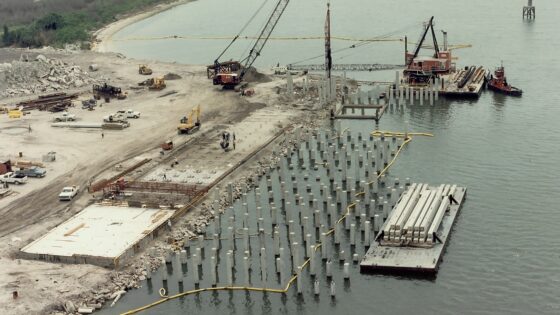
    Reuse of existing piled and raft foundations is accelerating on commercial property schemes as clients accept higher investigation spend in exchange for major embodied carbon and programme savings. Engineers are combining detailed pile integrity testing, targeted coring and advanced geotechnical back‑analysis with updated Eurocode‑based reliability methods to justify reusing legacy foundations originally designed for very different load cases. Planning and funding bodies are now more willing to accept partial reuse strategies, shifting project briefs away from default demolition and full replacement towards selective strengthening, load‑sharing and local pile augmentation.

    Chalk foundations in the UK: investigation and design lessons for engineers
    Geotechnical
    3 days ago

    Chalk foundations in the UK: investigation and design lessons for engineers

    Industry geotechnical specialists at the John Mitchell lecture warned that UK foundation design on chalk is still misjudging key behaviours such as solution features, variable weathering profiles and the risk of brittle collapse under cyclic loading. Speakers pointed to recent pile and shallow foundation projects where inadequate chalk characterisation, limited core recovery and over-reliance on generic SPT correlations led to unexpected settlements and construction delays. Attendees were urged to adopt more rigorous chalk-specific investigation, including targeted boreholes, high-quality sampling and site-specific load testing, before finalising foundation schemes.

    Network Rail £41M North West earthworks: design and risk notes for geotechnical teams
    Geotechnical
    3 days ago

    Network Rail £41M North West earthworks: design and risk notes for geotechnical teams

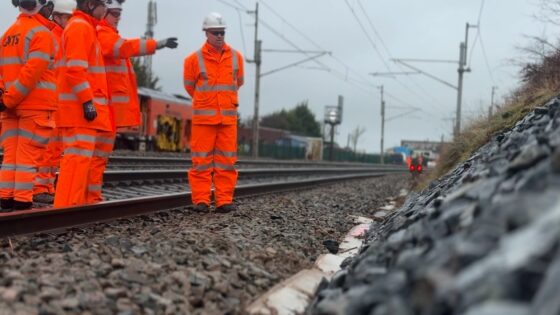
    Network Rail is delivering £41M of earthworks across key North West rail corridors to improve cuttings and embankments against winter rainfall, freeze–thaw and slope instability. Works are expected to include regrading and strengthening of existing earthwork assets, improved drainage systems and renewed trackside access to reduce washouts, slips and emergency speed restrictions. Geotechnical teams will need to manage construction around live traffic, legacy Victorian earth structures and variable ground conditions typical of the region’s glacial tills and weathered rock.

    Related Industries & Products

    Mining

    Geotechnical software solutions for mining operations including CMRR analysis, hydrogeological testing, and data management.

    GEODB-io

    Centralised geotechnical data management solution for storing, accessing, and analysing all your site investigation and material testing data.