Geomechanics.io

  • Free Tools
Sign UpLog In

Geomechanics.io

Geomechanics, Streamlined.

© 2026 Geomechanics.io. All rights reserved.

Geomechanics.io

CMRR-ioGEODB-ioHYDROGEO-ioQCDB-ioFree Tools & CalculatorsBlogLatest Industry News

Industries

MiningConstructionTunnelling

Company

Terms of UsePrivacy PolicyLinkedIn
    AllGeotechnicalMiningInfrastructureMaterialsHazardsEnvironmentalSoftwarePolicy
    Product
    Sustainability

    Paebbl’s Rebond 300 cement alternative: performance and design notes for engineers

    June 25, 2026|

    Reviewed by Joe Ashwell

    Paebbl’s Rebond 300 cement alternative: performance and design notes for engineers

    First reported on The Construction Index

    30 Second Briefing

    Paebbl has launched Rebond 300, a near‑white, carbon negative cement alternative with a footprint of -149kg CO2 per tonne that can replace up to 30% of conventional cement in standard mixes. The SCM-based binder delivers up to 40% reduction in embodied carbon at typical replacement ratios, a 10x improvement over Paebbl’s first‑generation material, while remaining compatible with existing ready‑mix and precast workflows. The Rebond Series is formulated to work across a family of silicate minerals and uses lower clinker process temperatures, reducing heat demand and permanently storing CO2.

    Technical Brief

    • Rebond 300’s near-white colour allows exposure as an architectural finish without additional coatings.
    • Supplementary cementitious materials are the primary reactive phase, reducing reliance on traditional Portland clinker.
    • Permanent CO₂ storage is achieved by mineral binding within a silicate-based matrix rather than reversible carbonation.
    • The Rebond Series is engineered to accept multiple silicate mineral feedstocks, improving raw material sourcing flexibility.
    • Lower clinker process temperatures directly cut kiln heat demand, with knock-on reductions in fuel-related emissions.
    • Compatibility with existing ready-mix and precast workflows avoids new batching, mixing or curing plant investment.

    Our Take

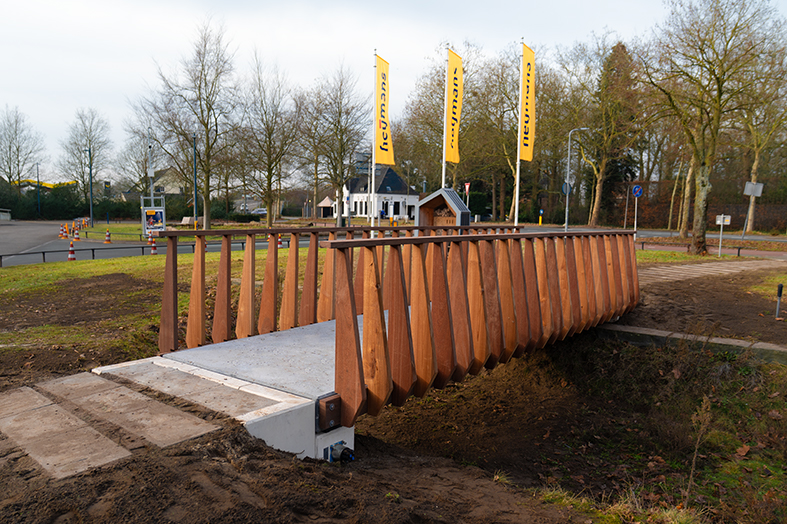
    The earlier 2026 piece on Paebbl’s olivine-based substitute highlighted pilot work with Dutch contractors Hakkers and Heijmans, suggesting Rebond 300 may now be targeting specification-ready mixes that can slot into mainstream UK and EU infrastructure supply chains rather than just demonstration pours.

    A claimed –149 kg CO2 per tonne footprint and up to 40% embodied carbon reduction positions Paebbl at the extreme end of the 44 Materials stories in our coverage, where most cementitious ‘low‑carbon’ products are still only offering incremental cuts rather than net‑negative performance.

    The 30% cement replacement ceiling for Rebond 300 implies that, in practice, large projects in the United Kingdom will need to combine it with other SCMs or design changes to hit deep decarbonisation targets, which could complicate mix design and standards compliance for conservative specifiers.

    Geotechnical Software for Modern Teams

    Centralise site data, logs, and lab results with GEODB-io, CMRR-io, and HYDROGEO-io.

    No credit card required.

    • Save and export unlimited calculations
    • Advanced data visualisation
    • Generate professional PDF reports
    • Cloud storage for all your projects

    Prepared by collating external sources, AI-assisted tools, and Geomechanics.io’s proprietary mining database, then reviewed for technical accuracy & edited by our geotechnical team.

    Related Articles

    Structural timber at Westminster: net-zero design takeaways for UK housebuilders
    Materials
    1 day ago

    Structural timber at Westminster: net-zero design takeaways for UK housebuilders

    Structural timber’s role in accelerating UK housebuilding was pushed at a Palace of Westminster panel chaired by Matt Turmaine MP and Baroness Ritchie, with senior figures from the Structural Timber Association, Egger UK, Lowfield Timber Frames and Places for People addressing major housebuilders and social housing providers. STA CEO Andrew Orriss noted that seven of the UK’s top 15 housebuilders plan to manufacture in timber frame, aligning with DEFRA’s Timber in Construction Roadmap and Net Zero 2050 targets. Timber’s lower embodied carbon and carbon sequestration were positioned as key advantages over traditional materials.

    Screencore picks RME for France: integrated crushing circuits for quarry engineers
    Materials
    3 days ago

    Screencore picks RME for France: integrated crushing circuits for quarry engineers

    Northern Ireland manufacturer Screencore has appointed RME Solutions as exclusive distributor for its full range of mobile screens and crushers, plus spare parts, across France. RME, led by managing director Benoît Roglet, will provide nationwide after-sales coverage, including service, maintenance and customer support for quarrying, recycling platforms, demolition sites and public works. The Screencore line will be integrated with RME’s existing sorting, grinding, sieving and cleaning equipment portfolio, giving French operators a single supplier for complete materials preparation circuits.

    Heidelberg cable backfill: thermal design implications for civil engineers
    Materials
    9 days ago

    Heidelberg cable backfill: thermal design implications for civil engineers

    Heidelberg has launched a new range of high-thermal-conductivity, low-resistivity backfill and bedding materials specifically engineered for high and ultra-high voltage underground power cables. The products are formulated to improve heat dissipation from cable systems, reducing localised temperature rise and associated ampacity constraints compared with conventional granular or cementitious surrounds. For civil and geotechnical designers, this allows tighter cable spacing, potentially shallower trench sections, and more reliable performance in dense urban corridors where thermal bottlenecks often limit circuit capacity.

    Related Industries & Products

    Mining

    Geotechnical software solutions for mining operations including CMRR analysis, hydrogeological testing, and data management.

    Construction

    Quality control software for construction companies with material testing, batch tracking, and compliance management.

    CMRR-io

    Streamline coal mine roof stability assessments with our cloud-based CMRR software featuring automated calculations, multi-scenario analysis, and collaborative workflows.

    HYDROGEO-io

    Comprehensive hydrogeological testing platform for managing, analysing, and reporting on packer tests, lugeon values, and hydraulic conductivity assessments.

    GEODB-io

    Centralised geotechnical data management solution for storing, accessing, and analysing all your site investigation and material testing data.