Geomechanics.io

  • Free Tools
Sign UpLog In

Geomechanics.io

Geomechanics, Streamlined.

© 2026 Geomechanics.io. All rights reserved.

Geomechanics.io

CMRR-ioGEODB-ioHYDROGEO-ioQCDB-ioFree Tools & CalculatorsBlogLatest Industry News

Industries

MiningConstructionTunnelling

Company

Terms of UsePrivacy PolicyLinkedIn
    Projects
    Sustainability

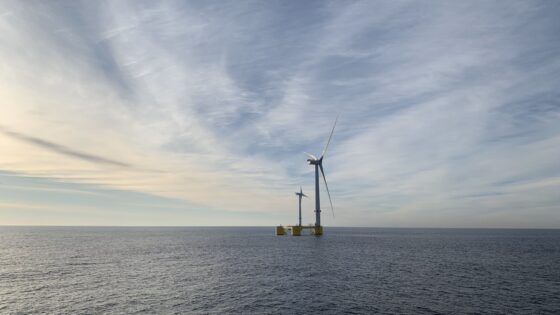
    ORE Catapult floating wind framework: design and cost notes for offshore engineers

    October 13, 2026|

    Reviewed by Joe Ashwell

    ORE Catapult floating wind framework: design and cost notes for offshore engineers

    First reported on New Civil Engineer

    30 Second Briefing

    ORE Catapult has issued an updated cost-reduction framework for floating offshore wind, targeting lower levelised cost of energy by standardising substructure design, mooring systems and dynamic cable configurations. The framework focuses on optimising fabrication and assembly in ports, modularising concrete and steel floaters, and rationalising installation strategies for deep-water sites beyond typical fixed-bottom depths. Developers and designers gain a structured route to compare platform concepts, refine geotechnical and anchoring solutions, and de-risk large-scale deployment in harsher metocean conditions.

    Technical Brief

    • Framework is issued by Offshore Renewable Energy (ORE) Catapult, focused on UK floating offshore wind deployment.

    Our Take

    Offshore Renewable Energy (ORE) Catapult is one of the few specialist organisations that appears repeatedly in our geotechnical coverage as a bridge between research and commercial deployment, so a cost-reduction framework from them is likely to be used as a reference point by multiple UK and EU floating wind demonstrators.

    Because ORE Catapult typically works at pre-commercial or early-commercial scales, a structured cost framework here will likely influence how developers and contractors package geotechnical investigations, monitoring, and life-cycle maintenance for floating foundations into bankable project models.

    Geotechnical Software for Modern Teams

    Centralise site data, logs, and lab results with GEODB-io, CMRR-io, and HYDROGEO-io.

    No credit card required.

    • Save and export unlimited calculations
    • Advanced data visualisation
    • Generate professional PDF reports
    • Cloud storage for all your projects

    Prepared by collating external sources, AI-assisted tools, and Geomechanics.io’s proprietary mining database, then reviewed for technical accuracy & edited by our geotechnical team.

    Related Articles

    Fens Reservoir earthworks trials: settlement and seepage lessons for engineers
    Geotechnical
    5 days ago

    Fens Reservoir earthworks trials: settlement and seepage lessons for engineers

    Consultation has opened on temporary earthworks trials by Anglian Water and Cambridge Water to test construction methods for a proposed £2.2bn strategic reservoir in the Cambridgeshire Fens. The trials will focus on how to build and compact large embankments in low-lying, soft ground typical of fenland, de-risking long-term settlement and seepage behaviour before full design is finalised. Outcomes will influence material selection, ground improvement strategy and construction sequencing for the main reservoir earthworks.

    Geobear stabilises Hackbridge Station: geopolymer injection lessons for ground engineers
    Geotechnical
    7 days ago

    Geobear stabilises Hackbridge Station: geopolymer injection lessons for ground engineers

    Geobear has stabilised foundations at Hackbridge Station in South London by injecting expanding geopolymer beneath an 1868 station extension instead of using traditional underpinning. More than 30 injection points at 1 m centres were drilled through the existing floor, with steel tubes delivering material at three treatment depths to about 3 m, targeting clay weakened by historic drainage failures and waterlogged conditions at 1.3–3.3 m depth. The non-vibratory, internal-only works avoided major excavation near live Southern and Thameslink infrastructure and reduced risk of inducing further differential movement.

    Former Australian coal mine solar and battery: geotechnical lessons for engineers
    Geotechnical
    10 days ago

    Former Australian coal mine solar and battery: geotechnical lessons for engineers

    A 176MW solar farm with a 100MWh battery system is being built on a former coal mine site near Muswellbrook in New South Wales, repurposing disturbed land for large-scale renewable generation. Converting the pit and spoil areas to PV arrays and battery pads will require detailed geotechnical validation of backfilled ground, settlement behaviour and drainage, along with management of any residual mine subsidence. For civil contractors, the project offers brownfield grid connection advantages but demands careful earthworks, foundation design and contamination control.

    Related Industries & Products

    Construction

    Quality control software for construction companies with material testing, batch tracking, and compliance management.

    Mining

    Geotechnical software solutions for mining operations including CMRR analysis, hydrogeological testing, and data management.

    CMRR-io

    Streamline coal mine roof stability assessments with our cloud-based CMRR software featuring automated calculations, multi-scenario analysis, and collaborative workflows.

    HYDROGEO-io

    Comprehensive hydrogeological testing platform for managing, analysing, and reporting on packer tests, lugeon values, and hydraulic conductivity assessments.

    GEODB-io

    Centralised geotechnical data management solution for storing, accessing, and analysing all your site investigation and material testing data.

    AllGeotechnicalMiningInfrastructureMaterialsHazardsEnvironmentalSoftwarePolicy