Geomechanics.io

  • Free Tools
Sign UpLog In

Geomechanics.io

Geomechanics, Streamlined.

© 2026 Geomechanics.io. All rights reserved.

Geomechanics.io

CMRR-ioGEODB-ioHYDROGEO-ioQCDB-ioFree Tools & CalculatorsBlogLatest Industry News

Industries

MiningConstructionTunnelling

Company

Terms of UsePrivacy PolicyLinkedIn
    AllGeotechnicalMiningInfrastructureMaterialsHazardsEnvironmentalSoftwarePolicy
    Projects
    Sustainability

    Ontario metals shift to defence: critical minerals strategy lens for engineers

    March 4, 2026|

    Reviewed by Joe Ashwell

    Ontario metals shift to defence: critical minerals strategy lens for engineers

    First reported on MINING.com

    30 Second Briefing

    Ontario is shifting its critical minerals strategy away from a pure EV focus towards defence and aerospace, adding high-purity iron ore and aluminium to its critical minerals list, which now totals 35 commodities. Major EV-linked projects are being delayed or reprofiled, including Honda’s roughly $15‑billion EV and battery complex pushed back about two years, Ford’s $2‑billion Oakville plant reverting to Super Duty trucks, and GM suspending BrightDrop van output at the $1‑billion‑retooled CAMI plant. Toronto is also bidding to host a NATO‑backed international defence bank, with Ontario targeting a revised critical minerals strategy by 2027 after new consultations with industry and First Nations.

    Technical Brief

    • The Stellantis–LG Energy Solution NextStar battery plant in Windsor is a $5‑billion investment that was temporarily halted in 2023 amid subsidy and policy disputes.
    • Volkswagen’s PowerCo battery plant in St. Thomas, costed between $7–14 billion, is scheduled to commence production in 2027.
    • Ontario is aligning its minerals policy with a proposed NATO‑backed international defence bank to channel security-related capital into extractive projects.
    • Lecce cited U.S. tariffs, supply chain disruptions and rising protectionism as key drivers for reweighting Ontario’s minerals strategy.

    Our Take

    Ontario’s move to classify high‑purity iron ore and aluminium as critical minerals aligns with a small subset of Policy pieces in our database where jurisdictions expand lists to capture defence and grid-hardening materials, not just battery metals, which tends to unlock bespoke permitting and infrastructure support for upstream projects.

    The scale of committed auto and battery investments in Ontario – multiple projects in the C$1–15 billion range from Honda, Stellantis–LG Energy Solution, Volkswagen’s PowerCo, Ford and GM – positions the province near the top of our Policy coverage for EV‑linked manufacturing capex, which gives provincial regulators unusually strong leverage to tie critical mineral offtake to local processing conditions.

    Referencing only 5% investment by NATO nations into defence‑related supply chains signals that Ontario’s copper, rare earths and broader critical minerals push is likely to be pitched as a security asset to U.S. and European buyers, which in our database has often translated into long‑dated offtake or co‑funded infrastructure rather than simple spot sales.

    Geotechnical Software for Modern Teams

    Centralise site data, logs, and lab results with GEODB-io, CMRR-io, and HYDROGEO-io.

    No credit card required.

    • Save and export unlimited calculations
    • Advanced data visualisation
    • Generate professional PDF reports
    • Cloud storage for all your projects

    Prepared by collating external sources, AI-assisted tools, and Geomechanics.io’s proprietary mining database, then reviewed for technical accuracy & edited by our geotechnical team.

    Related Articles
    UK steel imports cut 60% from July: cost and design impacts for project teams
    Policy
    about 3 hours ago

    UK steel imports cut 60% from July: cost and design impacts for project teams

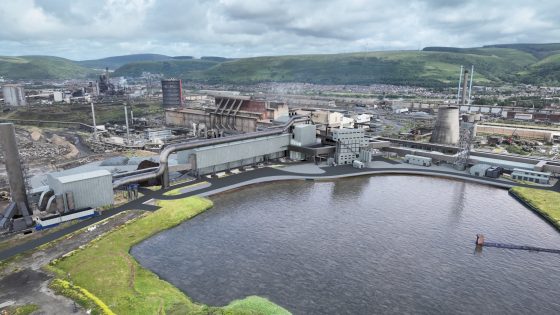
    UK steel imports will be cut by 60% from 1 July under the government’s new Steel Strategy, with any volumes above the reduced tariff-rate quotas facing a 50% duty. The move is likely to raise prices for rebar, structural sections and plate used in major UK infrastructure and building projects, particularly where designs rely on imported grades or mill sizes. Contractors and designers may need to recheck cost plans, procurement schedules and material specifications for projects tendering or breaking ground in late 2026.

    Geoscience Australia 80‑year strategy: data and risk takeaways for miners
    Policy
    about 15 hours ago

    Geoscience Australia 80‑year strategy: data and risk takeaways for miners

    Geoscience Australia is marking 80 years of geological and geophysical operations by launching a new 10‑year national geoscience strategy to guide exploration, resource assessment and hazard mapping. The strategy is expected to steer federal investment in continent‑scale datasets such as deep seismic profiles, gravity and magnetics surveys, and national drilling programs that support critical minerals targeting. For miners and consultants, the roadmap signals continued access to pre‑competitive data to de‑risk greenfields exploration and infrastructure planning across remote basins.

    UK cash retentions ban: commercial and risk implications for project teams
    Policy
    about 21 hours ago

    UK cash retentions ban: commercial and risk implications for project teams

    The UK government’s proposed ban on cash retentions in construction, following a year-long consultation, is being hailed by trade bodies such as the ECA and NFRC as a long-fought win for specialist contractors previously exposed to withheld payments used as free working capital. Legal and commercial advisers including Kennedy’s Amanda Hanmore and Osborne Clarke’s Daniel Cashmore warn the ban could drive higher project costs via performance bonds, more back‑loaded payment schedules and milestone‑only payments, and trigger more disputes over incomplete or defective works. BCIS chief economist David Crosthwaite points to project bank accounts and alternative defects and quality mechanisms as critical to maintaining delivery standards and payment security across supply chains.

    Related Industries & Products

    Mining

    Geotechnical software solutions for mining operations including CMRR analysis, hydrogeological testing, and data management.

    Construction

    Quality control software for construction companies with material testing, batch tracking, and compliance management.

    QCDB-io

    Comprehensive quality control database for manufacturing, tunnelling, and civil construction with UCS testing, PSD analysis, and grout mix design management.