Geomechanics.io

  • Free Tools
Sign UpLog In

Geomechanics.io

Geomechanics, Streamlined.

© 2026 Geomechanics.io. All rights reserved.

Geomechanics.io

CMRR-ioGEODB-ioHYDROGEO-ioQCDB-ioFree Tools & CalculatorsBlogLatest Industry News

Industries

MiningConstructionTunnelling

Company

Terms of UsePrivacy PolicyLinkedIn
    AllGeotechnicalMiningInfrastructureMaterialsHazardsEnvironmentalSoftwarePolicy
    Sustainability
    Projects

    Circular steel in modern construction: whole-life carbon notes for engineers

    February 20, 2026|

    Reviewed by Joe Ashwell

    Circular steel in modern construction: whole-life carbon notes for engineers

    First reported on New Civil Engineer

    30 Second Briefing

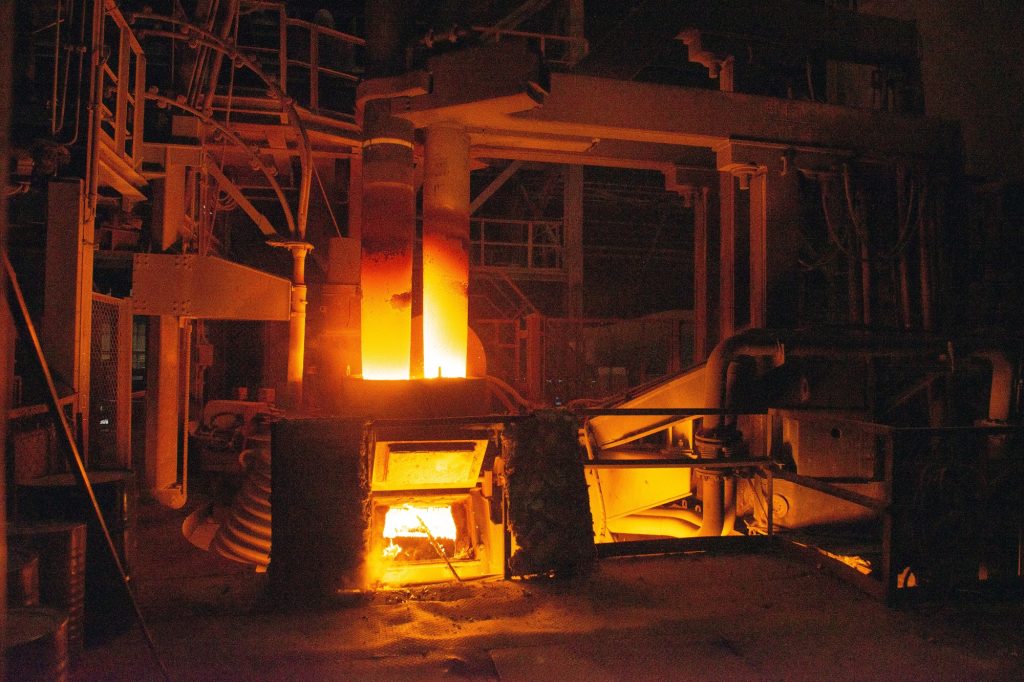
    Circular, UK-made steel is being promoted as a route to cut embodied carbon in buildings and infrastructure while reducing exposure to volatile global supply chains. By using scrap-based electric arc furnace production and designing for disassembly and reuse of beams, columns and plate, contractors can lower lifecycle emissions compared with imported basic oxygen furnace steel. For geotechnical and civil teams, specifying circular steel in piles, retaining structures and frames will increasingly be driven by client net-zero targets and whole-life carbon assessments.

    Technical Brief

    • Circular steel relies on high scrap content feedstock, demanding robust UK scrap collection and grading logistics.
    • Electric arc furnace production enables flexible batch sizes, suiting phased infrastructure and retrofit works.
    • Shorter domestic supply chains reduce lead-time risk for critical-path elements such as bridge girders and bearing plates.
    • UK-made circular sections can be procured to existing BS EN steel grades, avoiding redesign of connection details.
    • Design for disassembly requires bolted rather than welded primary connections to preserve future reuse potential.
    • Reusable beams and columns need traceable mill certificates and marking so structural capacity is verifiable decades later.
    • Contractors must coordinate early with fabricators to standardise section sizes, maximising future interchangeability across projects.

    Our Take

    Steel is one of the few construction materials in our database that appears both in carbon-intensity discussions and in circular-economy case studies, so circular steel in the United Kingdom is likely to intersect with emerging client requirements on embodied carbon reporting rather than just waste reduction.

    Within the 39 Materials stories, steel-linked pieces are among the most frequently tagged with Sustainability, suggesting that UK contractors adopting circular steel approaches may find it easier to align with the ESG frameworks now being written into major project tenders.

    Across the 2059 tag-matched pieces on Sustainability and Projects, steel is one of the recurring materials where procurement strategy (e.g. specifying scrap content or reuse of structural members) is increasingly treated as a design decision rather than a late-stage supply-chain issue.

    Geotechnical Software for Modern Teams

    Centralise site data, logs, and lab results with GEODB-io, CMRR-io, and HYDROGEO-io.

    No credit card required.

    • Save and export unlimited calculations
    • Advanced data visualisation
    • Generate professional PDF reports
    • Cloud storage for all your projects

    Prepared by collating external sources, AI-assisted tools, and Geomechanics.io’s proprietary mining database, then reviewed for technical accuracy & edited by our geotechnical team.
    Related Articles

    Carbon-catching concrete: Paebbl’s CO₂ mineralisation explained for engineers
    Materials
    1 day ago

    Carbon-catching concrete: Paebbl’s CO₂ mineralisation explained for engineers

    Nordic–Dutch startup Paebbl is producing an olivine-based cement substitute via accelerated CO2 mineralisation in low-energy reactors, claiming a net negative footprint of –14.4kg CO2‑equivalent per tonne (cradle-to-gate) and storage of about 21kg CO2 per m³ of concrete at typical replacement rates. The material has moved from gramme-scale tests to an operational pilot in 18 months and has already been used in a Rotterdam quay wall grout by Hakkers, the 1917 Veerhuis restoration, and a 7m-span “carbon-neutral” concrete footbridge by Heijmans. Classified as CCUS, the process permanently binds captured industrial CO2 into stable carbonate minerals that remain locked in even after demolition, offering structural-grade, carbon-storing concrete mixes rather than purely low-embodied-carbon variants.

    Turning sawdust into fire‑resistant boards: design notes for materials engineers
    Materials
    5 days ago

    Turning sawdust into fire‑resistant boards: design notes for materials engineers

    Researchers at ETH Zurich and Empa have developed a recyclable sawdust–struvite composite board that is stronger in compression perpendicular to grain than spruce and shows cone calorimeter ignition times of 45 seconds, around three times longer than untreated timber. The material uses an enzyme from watermelon seeds to control crystallisation of struvite from newberyite, forming large crystals that infill voids between sawdust particles and act as an inorganic flame retardant, potentially matching cement‑bonded particleboard fire classes with only 40% binder by weight. Panels can be mechanically ground, heated to just over 100°C to release ammonia, and fully separated for reuse or as a phosphorus fertiliser, with future cost reductions possible by sourcing struvite from sewage treatment plant deposits.

    Atlas Copco hybrid generators: design, duty-cycling and CO₂ cuts for site engineers
    Materials
    6 days ago

    Atlas Copco hybrid generators: design, duty-cycling and CO₂ cuts for site engineers

    Atlas Copco has launched QHS integrated hybrid generators that combine battery storage and a diesel genset in a single canopy unit, capable of grid charging, self-charging via the engine, and optional solar panel input. The system automatically manages multiple energy sources to minimise engine runtime, claiming up to 80% fuel and CO₂ reductions and more than 95% less engine operating time versus diesel-only sets at low or variable loads. Rental-focused features include multiple socket configurations, external fuel connections, a terminal board and FleetLink telemetry for remote monitoring, diagnostics and fleet management.

    Related Industries & Products

    Construction

    Quality control software for construction companies with material testing, batch tracking, and compliance management.

    QCDB-io

    Comprehensive quality control database for manufacturing, tunnelling, and civil construction with UCS testing, PSD analysis, and grout mix design management.