Geomechanics.io

  • Free Tools
Sign UpLog In

Geomechanics.io

Geomechanics, Streamlined.

© 2026 Geomechanics.io. All rights reserved.

Geomechanics.io

CMRR-ioGEODB-ioHYDROGEO-ioQCDB-ioFree Tools & CalculatorsBlogLatest Industry News

Industries

MiningConstructionTunnelling

Company

Terms of UsePrivacy PolicyLinkedIn
    AllGeotechnicalMiningInfrastructureMaterialsHazardsEnvironmentalSoftwarePolicy
    Op-Ed
    Projects
    Safety

    Ayesa 3D ground modelling for tunnelling: practice and training lessons for engineers

    February 25, 2026|

    Reviewed by Tom Sullivan

    Ayesa 3D ground modelling for tunnelling: practice and training lessons for engineers

    First reported on New Civil Engineer

    30 Second Briefing

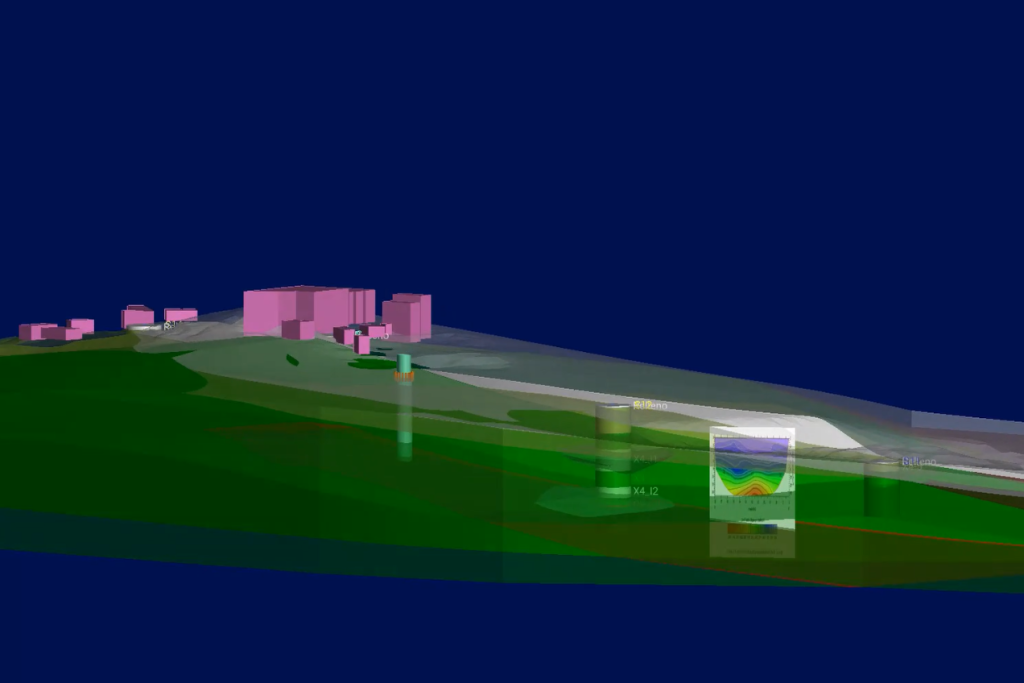
    Ayesa head of ground engineering and tunnelling Cláudio Cabral Dias is pushing wider adoption of subsurface 3D ground modelling to de‑risk next‑generation tunnelling, but warns that success depends on structured retraining rather than simply buying new software. He points to integrated 3D geological models that combine borehole logs, geophysics and historical excavation data to predict fault zones and variable rock mass behaviour ahead of TBM drives. Dias stresses that design teams, site engineers and contractors must all learn to interrogate and update these models in real time if they are to influence alignment, support classes and construction sequencing.

    Technical Brief

    • Subsurface 3D mapping is framed as a safety‑critical design tool, not just visualisation output.
    • Dias stresses that without structured retraining, engineers misinterpret 3D ground models, creating new safety risks.
    • He argues for formal workflows defining who updates models, when, and under which site triggers.
    • Data governance is highlighted: consistent coding of logs and geophysics is needed to avoid unsafe model artefacts.
    • Safety culture is expected to shift from static ground assumptions to continuously revised subsurface risk registers.
    • Contractors are urged to embed 3D model interrogation into method statements and temporary works checks.
    • Dias links model literacy to incident prevention, especially where TBM drives intersect poorly constrained faulted ground.
    • Wider implication: clients may begin specifying 3D ground modelling competence as a pre‑qualification safety requirement.

    Our Take

    Ayesa’s role on HS2 Track Systems Lots 1–3, as noted in our coverage of the Ayesa–Egis JV, suggests its 3D ground modelling tools are already being exercised on some of the UK’s most complex rail tunnelling interfaces, giving the software a high-stress proving ground.

    Within the 33 Software stories in our database, Ayesa is one of the few engineering consultancies appearing both as a digital tools proponent and as a delivery-side designer, which typically allows faster feedback loops between site experience and software feature development.

    For tunnelling-focused safety work, our tag-matched pieces show far more attention on construction methods than on pre-construction modelling, so Ayesa’s emphasis on 3D ground models signals a shift towards moving risk controls upstream into design and planning rather than relying mainly on procedural controls on site.

    Geotechnical Software for Modern Teams

    Centralise site data, logs, and lab results with GEODB-io, CMRR-io, and HYDROGEO-io.

    No credit card required.

    • Save and export unlimited calculations
    • Advanced data visualisation
    • Generate professional PDF reports
    • Cloud storage for all your projects

    Prepared by collating external sources, AI-assisted tools, and Geomechanics.io’s proprietary mining database, then reviewed for technical accuracy & edited by our geotechnical team.

    Related Articles

    Sumitomo and NEC AI near-miss analysis: safety and data lessons for site engineers
    Software
    about 3 hours ago

    Sumitomo and NEC AI near-miss analysis: safety and data lessons for site engineers

    Sumitomo Heavy Industries and NEC are jointly developing an AI and computer vision system that uses camera feeds from hydraulic excavators and SHI’s SHICuTe ICT/IoT platform data to automatically detect “risk scenes” and generate structured near-miss reports. NEC’s 2023 video recognition and generative AI technology, previously used for road traffic accident analysis, will fuse time- and location-stamped video with machine operating logs as multimodal data to characterise hazardous and prohibited behaviours. Following a successful proof of concept in September 2025, full development starts April 2026, with global deployment targeted for broader construction-site safety management.

    Software
    about 5 hours ago

    Datamine–Mineware acquisitions: integrated mine management explained for engineers

    Datamine has acquired Mineware Africa and Mineware Consulting to expand its mine management software suite and in‑house advisory capability across exploration, resource modelling, mine planning and operations control. The deal adds Mineware’s production accounting, dispatch and short-interval control tools, along with its implementation consultants, into Datamine’s existing end-to-end digital mining platform. For engineers, the move signals tighter integration between planning, fleet management and production data, potentially simplifying brownfield system upgrades and multi-site standardisation.

    Deswik’s Indonesia expansion: mine planning implementation insights for engineers
    Software
    2 days ago

    Deswik’s Indonesia expansion: mine planning implementation insights for engineers

    Deswik has opened a new office in Jakarta, Indonesia, backed by a local consulting team to support deployment of its mine planning and scheduling software across the country’s open-pit and underground operations. The company will host Deswik Exchange Jakarta on 16 April to showcase practical workflows and case studies drawn from real‑world mining projects. A permanent in‑country team should shorten implementation cycles, improve on‑site training and support, and allow closer integration of Deswik tools with Indonesian regulatory, geotechnical and production planning requirements.

    Related Industries & Products

    Tunnelling

    Specialised solutions for tunnelling projects including grout mix design, hydrogeological analysis, and quality control.

    Construction

    Quality control software for construction companies with material testing, batch tracking, and compliance management.

    QCDB-io

    Comprehensive quality control database for manufacturing, tunnelling, and civil construction with UCS testing, PSD analysis, and grout mix design management.