Ontario mining red tape cuts: project permitting impacts for engineers
Reviewed by Joe Ashwell
First reported on MINING.com
30 Second Briefing
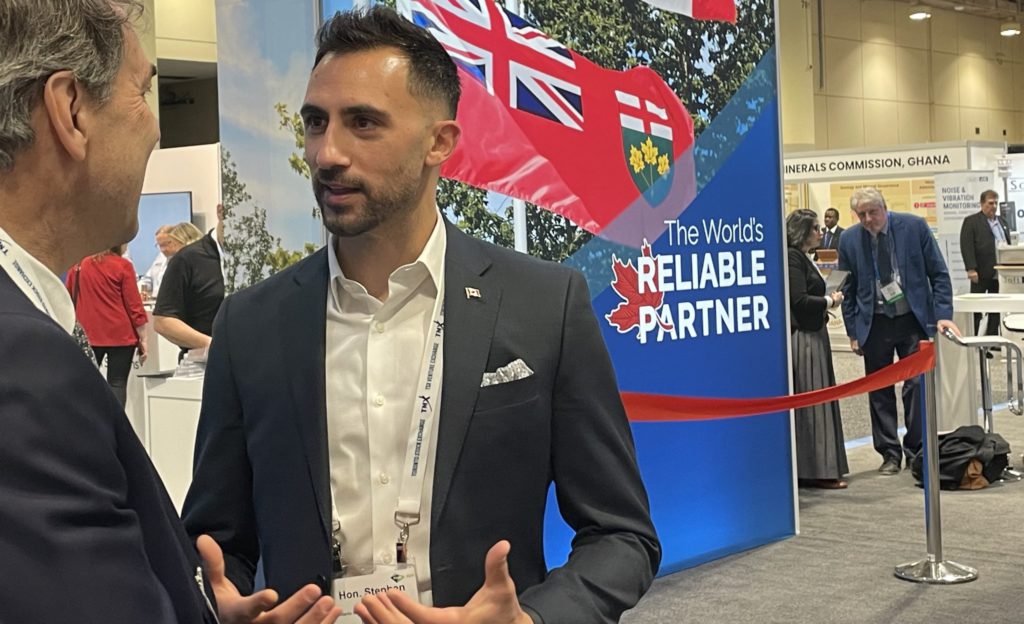
Ontario’s Progressive Conservative government plans a large legislative package this autumn to cut permitting timelines by up to half for early and advanced exploration, mine expansions and projects in its One Project, One Process stream, which already covers Frontier Lithium’s PAK, Canada Nickel’s C$2‑billion Crawford and Kinross’s Great Bear. Energy and Mines Minister Stephen Lecce is tying the reforms to a new defence-focused minerals strategy for 2027 and Toronto’s bid to host Nato’s Defence, Security and Resilience Bank. The policy push emphasises domestic processing of nickel and other critical minerals, reduced federal–provincial duplication, and faster roads and transmission to the Ring of Fire.
Technical Brief
- One Project, One Process already covers Frontier Lithium’s PAK, Canada Nickel’s C$2‑billion Crawford and Kinross’s Great Bear.
- Ontario ranks second globally to Nevada in Fraser Institute’s latest mining jurisdiction survey, supporting investment risk assessments.
- Province cites 50% of Canada’s manufacturing base and 36% of defence employment as justification for defence‑minerals focus.
- About 40% of the world’s public mining companies are TSX‑listed, with ~50% of sector equity capital raised there.
- Ontario supplies roughly 50% of nickel entering the US market, strengthening arguments for local processing commitments.
- Ring of Fire build‑out priorities explicitly include new roads and higher‑capacity transmission lines to prospective mine sites.
- Trade positioning leverages alternative demand from Asia‑Pacific and Europe if US CUSMA outcomes constrain critical mineral exports.
Our Take
Ontario’s move to streamline early-stage approvals for projects like Crawford and PAK contrasts with Peru’s recent permit revocation at Tía María, underscoring how permitting stability is becoming a competitive differentiator for copper and critical minerals investment in our Policy coverage.
With Ontario already supplying about half of the nickel going into the US and hosting major auto and battery investments from Honda, Stellantis–LG’s NextStar and Volkswagen’s PowerCo, any reduction in front-end red tape is likely to reinforce the province’s role in North American CUSMA-aligned EV and defence supply chains highlighted across recent critical minerals pieces.
In our database of 161 Policy stories, relatively few combine defence metals, autos and critical minerals in one jurisdiction as Ontario does here, signalling that the province’s ‘One Project, One Process’ concept is being framed as both a mining competitiveness tool and a defence-industrial policy lever rather than a pure resources reform.
Prepared by collating external sources, AI-assisted tools, and Geomechanics.io’s proprietary mining database, then reviewed for technical accuracy & edited by our geotechnical team.
Related Articles
Related Industries & Products
Mining
Geotechnical software solutions for mining operations including CMRR analysis, hydrogeological testing, and data management.
Construction
Quality control software for construction companies with material testing, batch tracking, and compliance management.
CMRR-io
Streamline coal mine roof stability assessments with our cloud-based CMRR software featuring automated calculations, multi-scenario analysis, and collaborative workflows.
QCDB-io
Comprehensive quality control database for manufacturing, tunnelling, and civil construction with UCS testing, PSD analysis, and grout mix design management.
HYDROGEO-io
Comprehensive hydrogeological testing platform for managing, analysing, and reporting on packer tests, lugeon values, and hydraulic conductivity assessments.