Geomechanics.io

  • Free Tools
Sign UpLog In

Geomechanics.io

Geomechanics, Streamlined.

© 2026 Geomechanics.io. All rights reserved.

Geomechanics.io

CMRR-ioGEODB-ioHYDROGEO-ioQCDB-ioFree Tools & CalculatorsBlogLatest Industry News

Industries

MiningConstructionTunnelling

Company

Terms of UsePrivacy PolicyLinkedIn
    AllGeotechnicalMiningInfrastructureMaterialsHazardsEnvironmentalSoftwarePolicy
    Standard/Guideline
    Projects

    ECITB levy approved by parliament: funding, exemptions and skills impact for engineers

    July 15, 2026|

    Reviewed by Joe Ashwell

    ECITB levy approved by parliament: funding, exemptions and skills impact for engineers

    First reported on The Construction Index

    30 Second Briefing

    Parliament has approved the Engineering Construction Industry Training Board’s 2026 Industrial Training Levy Order, maintaining levy rates at 0.33% of off-site payroll and 1.2% of on-site payroll, expected to raise £137.9m for 2026–28 and support an estimated additional 40,000 workers. Employers with off-site wage bills under £1m and on-site wage bills under £275,000 remain exempt but still eligible for ECITB training grants, preserving support for SMEs. The levy will be collected in 2027–29, with a separate decision on a proposed ECITB–CITB merger due later this year.

    Technical Brief

    • Statutory Instrument “Industrial Training Levy (ECITB) Order 2026” has been affirmed by both Houses, unopposed.
    • Levy applies to engineering construction wage bills relating to 2026–28 but is payable in 2027–29.
    • Employers remain exempt if off-site annual wage bill is under £1m, or on-site under £275,000.
    • Exempt employers that are in-scope to ECITB still qualify for ECITB-funded training grants.
    • Ministers explicitly link levy-funded skills to delivery of major energy and industrial infrastructure across Great Britain.
    • Government statements tie ECITB’s role to clean energy, energy security and wider economic growth objectives.
    • Industry consultation in November saw engineering construction companies “overwhelmingly” back the proposed levy structure.

    Our Take

    The ECITB levy framework for 2026–2028 underpins skills initiatives already flagged in our coverage, such as the forecast 47% rise in welding demand and associated upskilling programmes, signalling that levy payers in Great Britain will be funding very specific capacity gaps rather than generic training.

    The linkage to the Energy Transition Skills Hub and ECITB-backed schemes like Aurora’s “Military to Wind” pilot suggests that, for UK engineering contractors, a material share of levy-funded training is likely to be steered towards low‑carbon and offshore wind skills, which may influence workforce planning on major energy and infrastructure projects from 2026 onwards.

    Geotechnical Software for Modern Teams

    Centralise site data, logs, and lab results with GEODB-io, CMRR-io, and HYDROGEO-io.

    No credit card required.

    • Save and export unlimited calculations
    • Advanced data visualisation
    • Generate professional PDF reports
    • Cloud storage for all your projects

    Prepared by collating external sources, AI-assisted tools, and Geomechanics.io’s proprietary mining database, then reviewed for technical accuracy & edited by our geotechnical team.

    Related Articles

    US Department of Energy $65.5M oil and gas push: infrastructure and digital twin lens
    Policy
    1 day ago

    US Department of Energy $65.5M oil and gas push: infrastructure and digital twin lens

    US Department of Energy is offering up to $65.5 million in cost-shared funding for projects that convert stranded, flared or contaminant-limited oil and gas streams into high-value, transportable products and field-test modular gas conversion and sour gas processing units in active basins. Additional funding targets advanced materials and equipment—compressors, valves, piping, storage tanks, coatings and alloys—to cut product losses and harden midstream infrastructure. A third track backs digital twins, continuous monitoring and full-scale smart test sites to optimise upstream and midstream operations, building on a separate $150 million programme for unconventional reservoirs and hydraulic fracture characterisation.

    Nista’s 2025–26 Major Projects report: planning constraints and delivery lessons for engineers
    Policy
    3 days ago

    Nista’s 2025–26 Major Projects report: planning constraints and delivery lessons for engineers

    Nista’s second Major Projects Annual Report, covering 1 April 2025 to 31 March 2026, reports improving delivery confidence on parts of the £700bn-plus National Infrastructure and Construction Pipeline but flags persistent schedule and cost risks on complex rail, energy and digital schemes. The authority backs tighter portfolio management, earlier constructability input and stronger use of digital twins and alliancing contracts, yet stops short of calling for statutory planning reform or changes to Development Consent Order processes. For engineers, the message is to plan for prolonged consenting and stakeholder engagement as a fixed constraint rather than a variable.

    Crucitas revival in Costa Rica: policy, royalties and ESG risks for mine planners
    Policy
    4 days ago

    Crucitas revival in Costa Rica: policy, royalties and ESG risks for mine planners

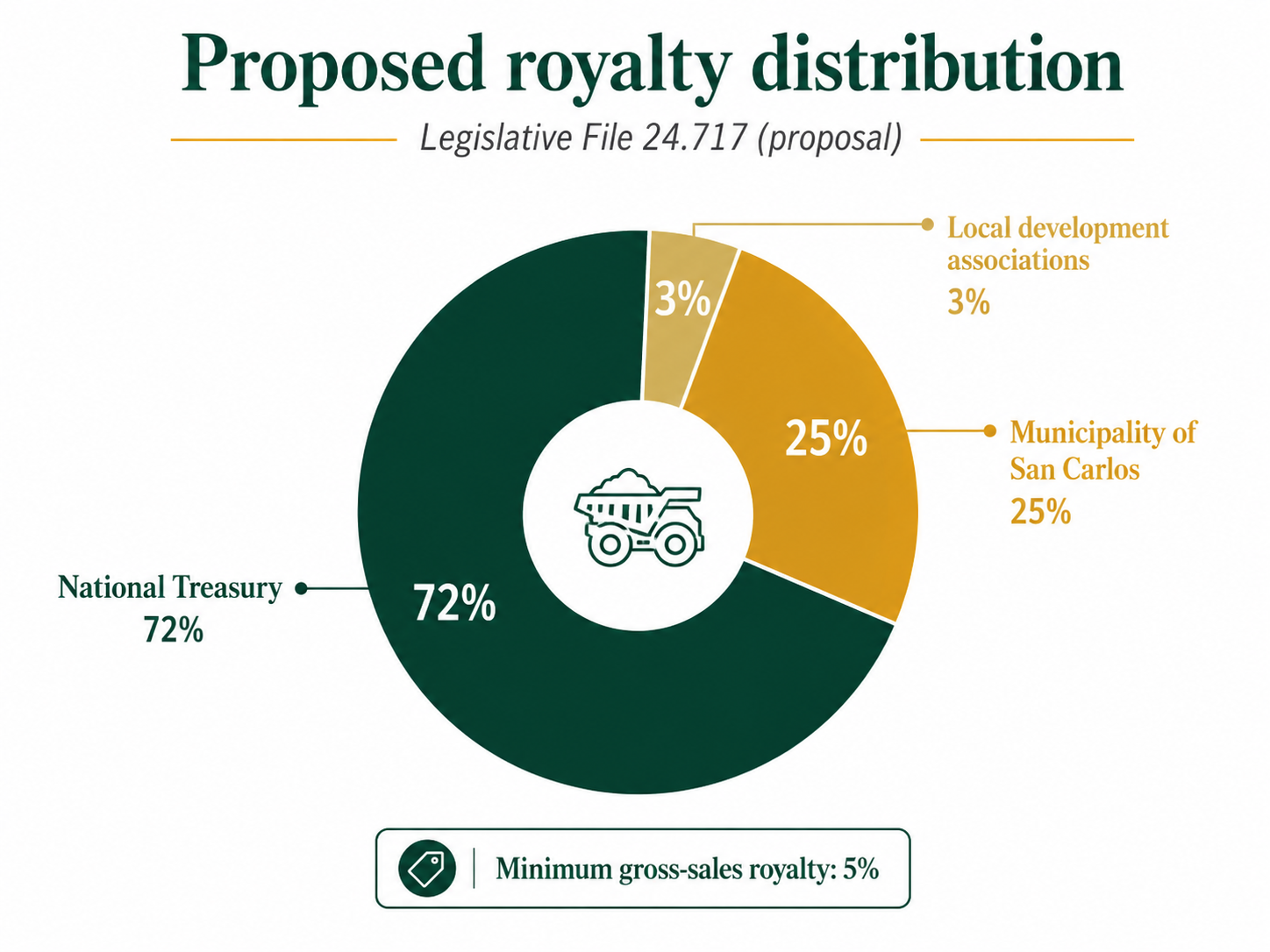
    Costa Rica’s President Laura Fernández is pushing Bill 24.717 to reopen the Crucitas gold deposit by allowing metallic mining only within the 84,800-hectare Cutris de San Carlos district, while keeping the national open-pit metal mining ban elsewhere. The bill proposes public auctions run by the Directorate of Geology and Mines, minimum 5% gross-sales royalties and strict technical, financial and environmental pre-qualification, aiming to displace mercury- and cyanide-based illegal mining. Analysts warn that investor interest will hinge less on Crucitas’ mid-sized geology and more on territorial control, gold traceability and long-term ESG and legal stability.

    Related Industries & Products

    Construction

    Quality control software for construction companies with material testing, batch tracking, and compliance management.

    Mining

    Geotechnical software solutions for mining operations including CMRR analysis, hydrogeological testing, and data management.

    QCDB-io

    Comprehensive quality control database for manufacturing, tunnelling, and civil construction with UCS testing, PSD analysis, and grout mix design management.